Quranic Answer
The concept of life after death is a central theme in the Holy Quran, serving as an essential element of faith for believers. The Quran articulates, with remarkable clarity and detail, the realities that await humanity after the cessation of earthly existence. These assurances provided in the Quran are pivotal, not only for understanding the afterlife but also for shaping the moral framework by which Muslims navigate their daily lives. The verses concerning life after death, especially, inspire believers to adhere to the moral imperatives of their faith with the promise of divine reward or punishment. In Surah Al-Baqarah, verse 154, Allah conveys a powerful message regarding those who give their lives in the name of faith. The verse states, "Do not think of those who have been killed in the way of Allah as dead; rather, they are alive with their Lord and receive sustenance." This profound assertion highlights the vitality of the soul post-mortem and suggests that there is a different realm of existence that awaits believers. The imagery of receiving sustenance implies a form of divine care and provision that transcends the physical status of life on earth. In Arabic, the word "مَوت" (mawt) often translates to death; however, the Quran indicates that for the believers who die in the path of Allah, this concept is transformed. Instead of the finality often associated with death, the Quran presents them as alive—living a reality that remains unknown to us in this world. This perspective encourages individuals to embrace the notion of sacrifice, instilling a sense of purpose and honor in lives devoted to faith. Adding another layer to the discussion of life after death, Surah Al-Imran, verse 169, reiterates this truth about martyrs. The verse explicitly states, "Do not think that those who have died in the way of Allah are dead; they are alive and are with their Lord, receiving sustenance." This assurance alleviates fear about mortality and highlights a shared belief within the faith community: death is not an end but a transition into a more profound existence. The Quran thus nurtures a significant connection between the believer and the divine, emphasizing that martyrdom is honored and rewarded by Allah. The language and concepts presented in these verses not only affirm life after death but also serve to motivate believers. This promise of continued existence with Allah invites Muslims to view worldly struggles and sacrifices through a lens of hope and reward. The incentive is powerful—it has incited many to pursue a path of righteousness even in the face of adversity, fostering a culture where goodness is pursued with dedication and faith. Moreover, the Quran does not solely focus on the rewards for the righteous but also elaborates on the consequences of one's actions leading to punishment for the wicked. In Surah Al-Mu’minun, verses 99-100, Allah asserts, "Until, when death comes to one of them, he says, 'My Lord, send me back so that I might do righteousness in that which I left behind.' No! It is only a word he is saying; and behind them is a barrier until the Day they are resurrected." This specific set of verses underscores the finality of death—once a person departs from this world, they cannot return to amend their actions or seek redemption. Instead, they must face the ultimate outcome of their choices, whether it be reward in paradise or punishment in hellfire. The permanence of this separation serves to instill a sense of urgency within believers. The days of life on Earth must be treasured and utilized for good deeds, faith, and compassion. The Quran's insistence on the irreversible nature of death compels believers to act justly and ethically, contemplating their actions with consideration of the consequences in the hereafter. This powerful reminder acts as a moral compass guiding believers toward a life of integrity and faithfulness in their practices. Furthermore, the Quran's discussions on paradise and punishment provide a vivid depiction of life after death. For instance, in Surah Al-Kahf, verse 107, Allah promises, "Indeed, those who have believed and done righteous deeds - they will have the gardens of paradise as a lodging." This verse presents paradise not merely as a reward but as a residence filled with comfort and bliss for those who strive to uphold their faith and perform righteous acts. The idea of paradise as a dwelling reflects the hope of eternal peace and reward, contrasting sharply with the consequences of those who choose to disregard faith and morality. The text emphasizes that belief accompanied by righteous deeds intertwines with the fate of the soul after death. Paradise is depicted as a luxurious abode, underscoring the importance of both faith and action in achieving this ultimate reward. The promise of such a haven creates a compelling motivation for believers, urging them to pursue good consistently. On the contrary, the descriptions of hellfire and punishment serve as cautionary tales reinforcing the necessity of adhering to divine commands. The intertwining of reward and punishment within the Quran showcases its holistic approach to life after death. It encourages Muslims to lead lives grounded in moral principles while fostering attachments to their communities and enhancing relationships with fellow beings through compassion and justice. By providing a roadmap toward a meaningful existence, the Quran speaks to the fundamental human desire for understanding one's purpose and destiny beyond the grave. In conclusion, the Holy Quran profoundly addresses the theme of life after death, offering believers a comprehensive overview of what lies beyond this world. Through promises of an afterlife filled with sustenance for martyrs, the descriptions of paradise for the righteous, and the stern warnings for those who stray from the path of faith, the Quran emphasizes the significance of our earthly conduct. These teachings cultivate a transformational approach to life, instilling a sense of accountability and fostering a deeper commitment to righteousness among the followers. By understanding and internalizing these Quranic messages, individuals can navigate life with purpose, aligning their actions with the divine principles outlined within the text, all while aspiring toward the eternal rewards that await them in the life beyond.
Related Verses
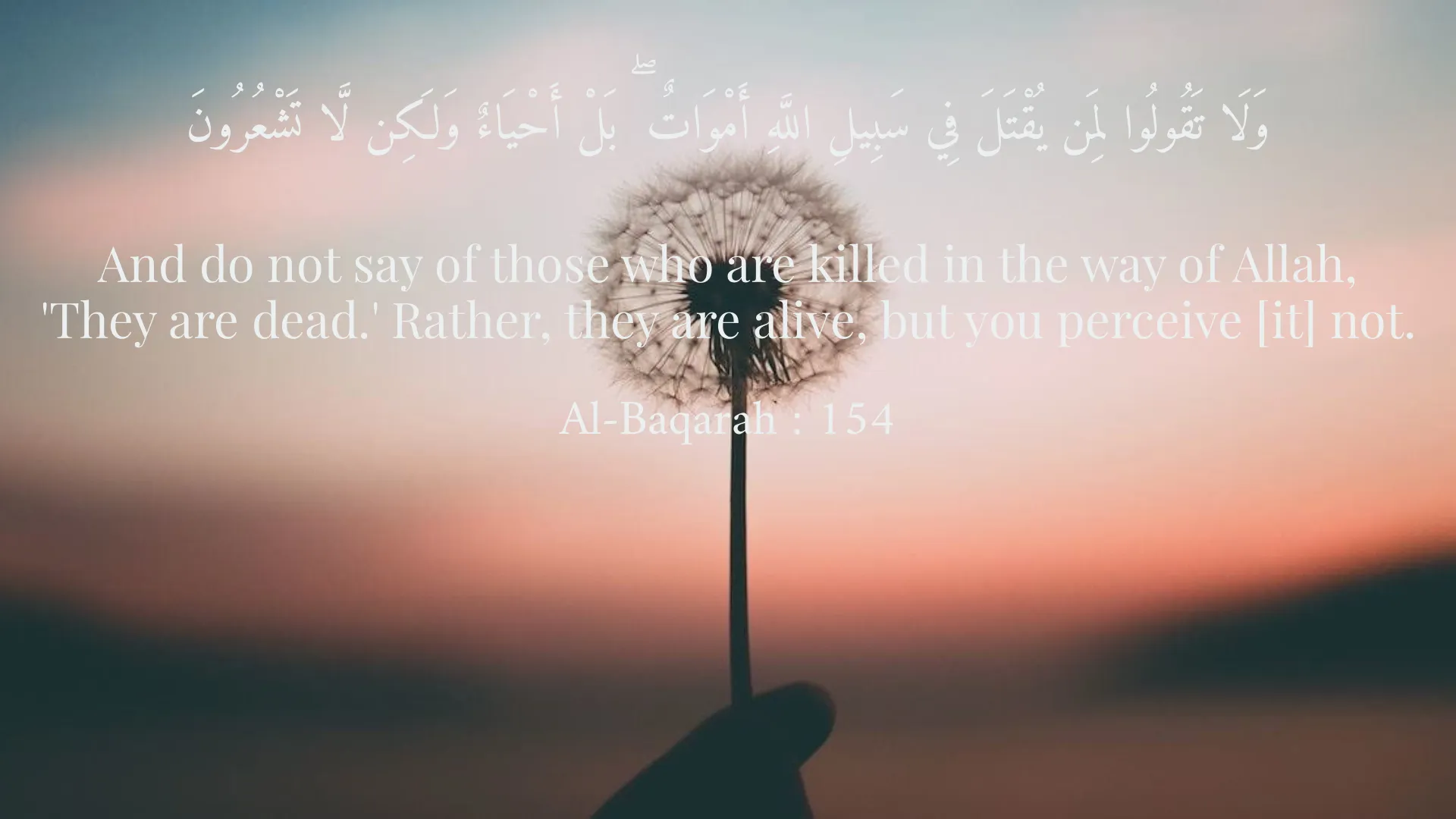
وَلَا تَقُولُوا لِمَن يُقْتَلَ فِي سَبِيلِ اللَّهِ أَمْوَاتٌ ۖ بَلْ أَحْيَاءٌ وَلَكِن لَّا تَشْعُرُونَ
And do not say of those who are killed in the way of Allah, 'They are dead.' Rather, they are alive, but you perceive [it] not.
Al-Baqarah : 154
وَلَا تَحْسَبَنَّ الَّذِينَ قُتِلُوا فِي سَبِيلِ اللَّهِ أَمْوَاتًا ۖ بَلْ أَحْيَاءٌ عِندَ رَبِّهِمْ يُرْزَقُونَ
And do not think of those who have been killed in the cause of Allah as dead. Rather, they are alive with their Lord, receiving provision.
Al-Imran : 169
حَتَّى إِذَا جَاءَ أَحَدَهُمُ الْمَوْتُ قَالَ رَبِّ ارْجِعُونِ
Until, when death comes to one of them, he says, 'My Lord, send me back.'
Al-Mu’minun : 99
Short Story
One day, a man named Hasan was reflecting on his life. He recalled the verses of the Quran and decided to focus more on his good deeds. He knew that the afterlife is a reality and thus he worked hard to enhance his life after death by practicing goodness and establishing a connection with God. After some time, he felt that his existence in this world became more vibrant through good deeds and love for God and others.