Quranic Answer
The relationship between food and spirituality is a nuanced subject, often overlooked in contemporary discourse. While the Quran does not explicitly address how food impacts the soul, it provides a wealth of guidance surrounding nutrition and wellness, urging a holistic approach that encompasses both the body and the spirit. In the modern age where fast food and unhealthy eating habits have gained popularity, it is particularly valuable to explore the timeless wisdom encapsulated in Islamic teachings on consumption. This article delves deeper into the Quran’s perspectives on nutrition and the implications they have for emotional and spiritual well-being. One of the foundational principles in the Quran is the distinction between what is lawful (halal) and pure (tayyib) compared to what is prohibited (haram). This concept is vital in guiding not only dietary choices but also ethical living. Surah Al-Ma'idah, verse 88, states: 'And eat of the good things which We have provided for you and be grateful to Allah if it is Him that you worship.' This verse emphasizes the importance of consuming wholesome and lawful food, implying that our choices play a critical role in our physical and spiritual health. The practice of eating halal connects with a broader Islamic ethos focused on purity and intentionality. Each aspect of one’s diet serves a purpose that transcends mere sustenance—it becomes a matter of faith and a vehicle for spiritual elevation. When believers consume food with the awareness of divine provision, they cultivate gratitude, which in turn nurtures the soul. This connection points towards the idea that what we eat and how we eat can lead to a more profound sense of inner peace and spiritual fulfillment. Moreover, the Quran’s emphasis on healthful eating can be seen in its numerous exhortations to consume what is good and pure. In Surah Al-Baqarah, verse 172 urges believers further by saying: 'O you who have believed, eat from the good things which We have provided for you.' This instruction is not merely about physical nourishment but also highlights the significance of moral and ethical considerations in the choices one makes. The modern approach to eating, often characterized by convenience and speed, frequently detracts from the mindful consumption encouraged by the Quran. Fast foods, laden with preservatives and artificial ingredients, often contribute to physical ailments and can lead to a disconnection from the self and from spirituality. Conversely, foods that are organic, fresh, and prepared with love and intention can heighten the senses and foster a sense of community and belonging—important elements for spiritual nourishment. It is also relevant to mention the detrimental effects of unhealthy eating habits on mental states. Research has shown that diets high in sugars and processed foods can lead to lethargy, anxiety, and a lack of focus. This detracts from one’s ability to connect spiritually, as a muddled mind may struggle to engage in practices such as prayer or meditation. On the other hand, balanced and nutritious meals can enhance feelings of vitality and alertness, promoting better emotional health. Incorporating the Quranic insights into dietary practices can lead to significant changes in individuals’ lives. The act of choosing nutritious foods aligned with divine guidance can foster a sense of responsibility and mindfulness. For example, when Muslims prepare meals, they often do so with intention, taking care to select ingredients that are halal and tayyib. This process can become an act of worship in itself, bridging the gap between the physical and spiritual realms. Furthermore, communal aspects of eating in Islam offer significant spiritual advantages. Sharing meals, participating in communal prayers, and engaging in discussions around food can strengthen personal bonds and build community. These interactions serve to remind individuals of their social responsibilities and their connections to each other and to God. By fostering a deeper understanding of how food can impact our psyche and spirituality, Muslim communities can cultivate a culture that not only values sustenance but also the blessings that come from mindful consumption. In the journey of spirituality, reflection on our dietary practices can serve as a catalyst for personal growth. By adhering to the principles laid out in the Quran, individuals are encouraged to not only care for their physical bodies but also nourish their souls. The act of eating is transformed from a mundane chore into a sacred practice, reflecting the appreciation of God’s bounties. As we navigate the complexities of modern diets and lifestyles, returning to the Quranic principles surrounding nutrition can ground us and provide a sense of direction. Balancing dietary choices with spiritual mindfulness allows not just for improved health but also for elevated consciousness. In essence, following the divine guidance regarding food and nutrition is a step towards holistic well-being, fostering a sense of community, and nurturing the everlasting bond with the Creator. In conclusion, while the Quran may not directly discuss the implications of food on the soul, its teachings promote a lifestyle that recognizes the interconnectedness of body and spirit. Through practicing gratitude, mindfulness, and ethical consumption as advised by the Quran, individuals can work towards achieving not only physical health but also spiritual fulfillment. Thus, even in the simple act of eating, believers have the opportunity to connect deeper with their faith and enhance their spiritual journey.
Related Verses
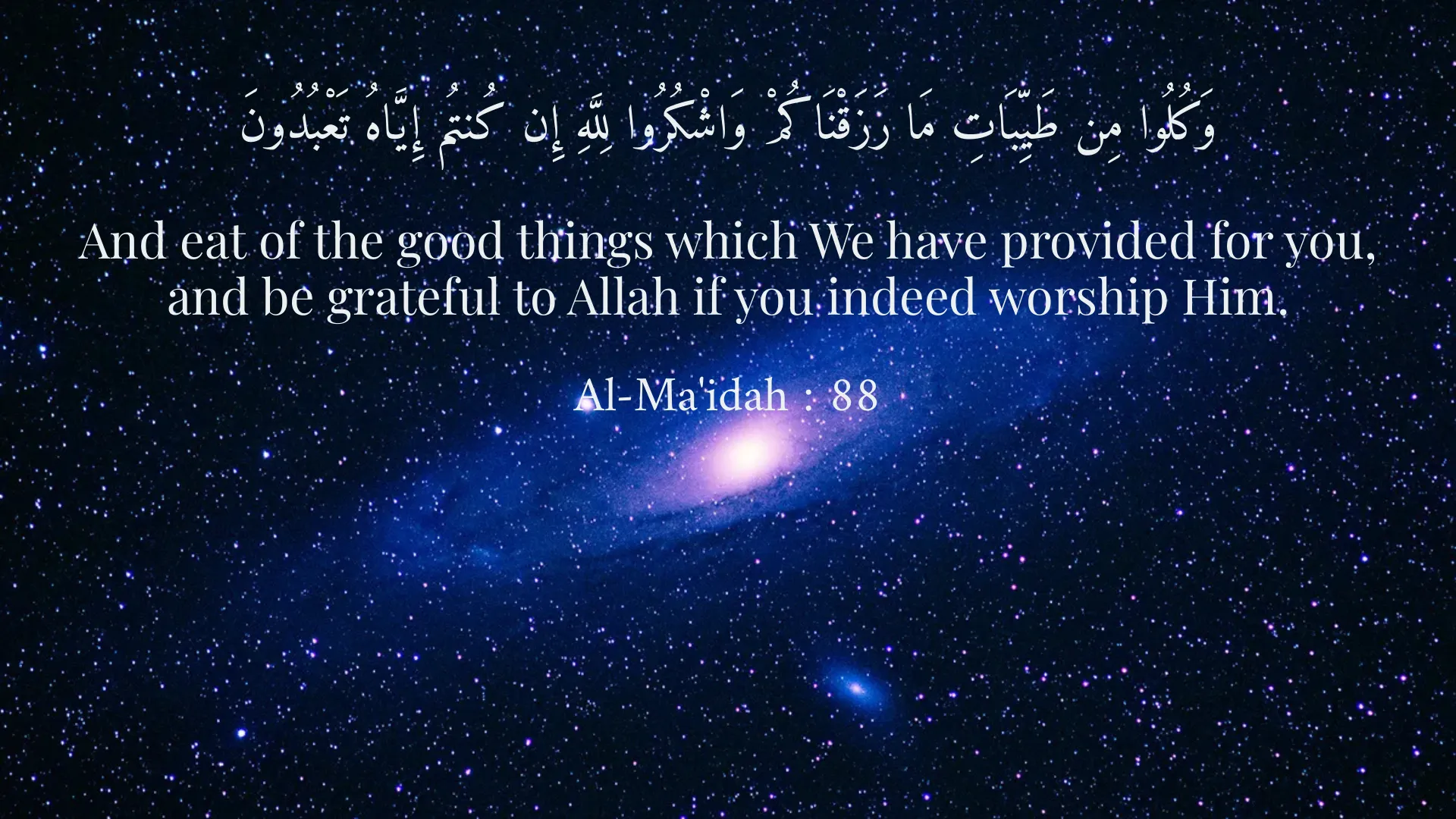
وَكُلُوا مِن طَيِّبَاتِ مَا رَزَقْنَاكُمْ وَاشْكُرُوا لِلَّهِ إِن كُنتُم إِيَّاهُ تَعْبُدُونَ
And eat of the good things which We have provided for you, and be grateful to Allah if you indeed worship Him.
Al-Ma'idah : 88
يَا أَيُّهَا الَّذِينَ آمَنُوا كُلُوا مِن طَيِّبَاتِ مَا رَزَقْنَاكُمْ
O you who have believed, eat from the good things which We have provided for you.
Al-Baqarah : 172
Short Story
One day, a young man named Sajjad reflected upon whether his choices in life were fostering his spirit adequately. He recalled the verses of the Quran and decided to adopt a diet consisting of halal and pure foods. After some time, he felt more vibrant and realized that his spirit had also transformed with this dietary adjustment.