Quranic Answer
Transmitting faith to others goes far beyond merely articulating beliefs and knowledge; this process is deeply intertwined with one's lifestyle, ethics, behavior, and genuine understanding of faith. The Holy Quran provides comprehensive and highly effective strategies for inviting people to the truth and disseminating the divine message, which can be utilized for transmitting faith. First and foremost, the most crucial and impactful method is to be an 'exemplar' and to 'live out one's faith.' People are influenced more by actions and practical conduct than by words. If an individual who claims to have faith genuinely lives by its teachings—is truthful, trustworthy, kind, patient in adversity, and grateful—they automatically become a symbol of the beauty and truthfulness of faith. This is the 'beautiful example' (Uswah Hasanah) highlighted in the Quran concerning Prophet Muhammad (PBUH). Good character and admirable conduct form a universal language that, without needing translation, captivates hearts and prepares the ground for the reception of the message of faith. When people observe the practical fruits of faith in a believer's life, they naturally become inclined to understand and accept it. This is why the practical conduct of the infallible Imams and divine saints has always been one of the strongest tools of guidance. This type of invitation is vital not only for those who are distant from religion but also for establishing faith in the hearts of children and close relatives. Children, more than being influenced by their parents' words, learn from their way of life and actions. If parents prioritize prayer at home, are truthful, and practice forgiveness and love, faith is naturally transmitted to the next generation. This gentle and gradual approach builds strong foundations for accepting faith and avoids any form of coercion or imposition. The second fundamental step is to employ 'wisdom and good instruction' (Hikmah and Maw'izah Hasanah). Allah states in Surah An-Nahl, verse 125: "Invite to the way of your Lord with wisdom and good instruction, and argue with them in a way that is best. Indeed, your Lord is most knowing of who has strayed from His way, and He is most knowing of who is [rightly] guided." This verse is a comprehensive charter for inviting people to God. Wisdom implies using logic, rationality, a correct understanding of the audience's circumstances, and choosing the best time and place for discussion. Wisdom means saying every word appropriately and according to the listener's comprehension. Good instruction means presenting the divine message in a gentle, friendly, compassionate manner, far from reproach, humiliation, or imposition. Good instruction must stem from genuine goodwill, not merely to prove superiority or impose one's view. This approach requires a deep understanding of religious teachings to articulate them attractively and relevantly to the audience's needs. Debate and argumentation, though permissible, are only so if conducted 'in a way that is best' (bi'llati hiya ahsan); that is, in the most peaceful and respectful manner, avoiding harshness and insult, and aiming for truth, not just triumphing over the opponent. This approach opens hearts to listen, allowing the light of truth to gently penetrate. Conversely, harshness, violence, imposing beliefs, and any form of coercion not only fail to transmit faith but also cause aversion and alienation from religion. The Quran explicitly states in Surah Al-Baqarah, verse 256: "There shall be no compulsion in [acceptance of] the religion. The right course has become clear from the wrong." There is no compulsion in religion because the right path has been clearly distinguished from error. Faith must arise from freedom and conscious choice, and compulsion contradicts the very essence of faith. The believer's duty is to articulate the truth and invite with logic and kindness, not to impose it. Third, 'patience and reliance on God' are crucial. Transmitting faith is not an overnight process. Sometimes, it takes years for the seed of faith to be planted in a heart and bear fruit. The inviter must possess patience and steadfastness and avoid despair. Even prophets of God faced resistance and denial but never despaired. In addition to patience, reliance on God (Tawakkul) is vitally important. As stated in Surah Al-Qasas, verse 56: "Indeed, you do not guide whom you like, but Allah guides whom He wills. And He is most knowing of the [rightly] guided." You do not guide whom you love, but Allah guides whom He wills, and He is most knowing of the guided. This verse reminds us that our duty is to invite and state the truth, but ultimate guidance is in God's hands. This insight removes a heavy burden from the inviter, freeing them from excessive worry about outcomes. The individual should convey the message with sincerity and effort but entrust the outcome to Allah. This attitude prevents any despair or frustration in the path of inviting and helps the individual to always continue their efforts with energy and hope. Finally, 'benevolent prayer' and 'heartfelt connection' also play significant roles in transmitting faith. A believer can pray for the guidance of others and ask Allah to open their hearts to the light of truth. Furthermore, establishing a sincere and loving relationship with others can melt the ice of distrust and pave the way for hearing and understanding the message of faith. People are usually more influenced by those they love and trust. Therefore, showing genuine affection and compassion, before any words are spoken, can open doors for the acceptance of faith. This comprehensive approach, encompassing action, wisdom, kindness, patience, and reliance on God, is the path outlined by the Quran for transmitting faith to others. This path not only benefits the invited but is also highly beneficial for strengthening the faith and spiritual growth of the inviter. In this way, faith is transmitted as a vital and influential current from one generation to another and from one heart to another, building a society based on divine values. This process is applicable not only at the individual level but also at the family, societal, and global levels, requiring a deep understanding of the spirit of Quranic teachings and their application in all aspects of life.
Related Verses
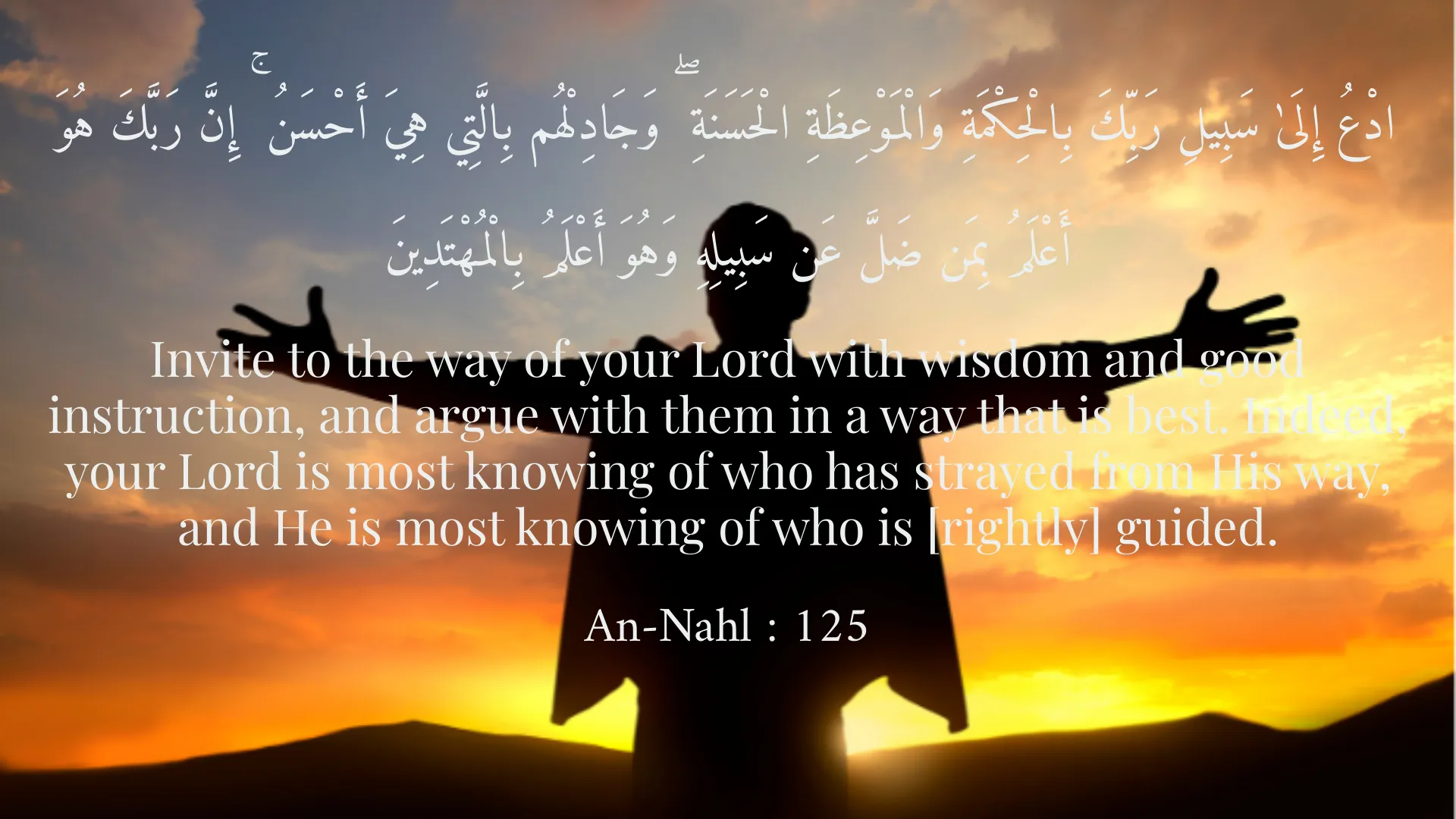
ادْعُ إِلَىٰ سَبِيلِ رَبِّكَ بِالْحِكْمَةِ وَالْمَوْعِظَةِ الْحَسَنَةِ ۖ وَجَادِلْهُم بِالَّتِي هِيَ أَحْسَنُ ۚ إِنَّ رَبَّكَ هُوَ أَعْلَمُ بِمَن ضَلَّ عَن سَبِيلِهِ وَهُوَ أَعْلَمُ بِالْمُهْتَدِينَ
Invite to the way of your Lord with wisdom and good instruction, and argue with them in a way that is best. Indeed, your Lord is most knowing of who has strayed from His way, and He is most knowing of who is [rightly] guided.
An-Nahl : 125
لَا إِكْرَاهَ فِي الدِّينِ ۖ قَد تَّبَيَّنَ الرُّشْدُ مِنَ الْغَيِّ ۚ فَمَن يَكْفُرْ بِالطَّاغُوتِ وَيُؤْمِن بِاللَّهِ فَقَدِ اسْتَمْسَكَ بِالْعُرْوَةِ الْوُثْقَىٰ لَا انفِصَامَ لَهَا ۗ وَاللَّهُ سَمِيعٌ عَلِيمٌ
There shall be no compulsion in [acceptance of] the religion. The right course has become clear from the wrong. So whoever disbelieves in Taghut and believes in Allah has grasped the most trustworthy handhold with no break in it. And Allah is Hearing and Knowing.
Al-Baqarah : 256
إِنَّكَ لَا تَهْدِي مَنْ أَحْبَبْتَ وَلَٰكِنَّ اللَّهَ يَهْدِي مَن يَشَاءُ ۚ وَهُوَ أَعْلَمُ بِالْمُهْتَدِينَ
Indeed, you do not guide whom you like, but Allah guides whom He wills. And He is most knowing of the [rightly] guided.
Al-Qasas : 56
Short Story
It is narrated that Sheikh Saadi was passing through a desert one night when he came across a man who was very agitated and, with shouts and harshness, was trying to bring someone to the right path. Saadi asked, "O man, with this shouting and anger, how do you expect to soften a heart?" The man replied, "I want to turn him away from crookedness." Saadi smiled and said, "Do you not know that dry bread is softened by water, and fire only increases its hardness? If you wish to convey faith to hearts, first drink from the ocean of love and wisdom yourself, so that your being becomes fragrant like rosewater, and whoever smells your good scent comes to you. Gentle words and good deeds reveal a hundred hidden treasures, while harsh words can even dry up flowing water." The man pondered, and from then on, instead of shouting, he began to invite with good deeds and mild speech, and he saw that hearts, like snow under the sun of affection, melted and found the path of truth.