Quranic Answer
Attracting lawful provision is of utmost importance for every believer, as emphasized in the teachings of the Holy Quran. The quest for halal sustenance is more than just a means of survival—it embodies the principles of faith, ethics, and piety that govern a Muslim's life. The Quran, a fundamental source of guidance for Muslims, continuously underscores the importance of seeking provisions that are not only lawful but also pure and good. In a world where materialism often overshadows spiritual concerns, it becomes increasingly vital for believers to grasp the significance of attracting halal sustenance in their lives and the implications it carries for their spiritual well-being. To begin with, the Quran explicitly advocates for the consumption of halal provisions, which refers to what is lawful and permissible according to Islamic law. Surah Al-Ma'idah, verse 88 reminds believers to consume the good things Allah has provided, as indicated by the verse, 'Eat of the good things We have provided for you.' This directive serves as a foundational principle for Muslims, urging them to steer clear of anything that contradicts Islamic law. The importance of prioritizing lawful provisions cannot be overstated, as Allah's pleasure is linked directly to the means through which one earns their sustenance. Any form of earnings, if derived unlawfully, is not only displeasing to Allah but also detrimental to one's spiritual health. The first step towards attracting lawful provision, as illustrated in the Quran, is firmly grounded in upholding divine commandments and steering clear of sins. This echoes a broader ethos within Islam, which promotes an ethical lifestyle consistent with the moral teachings found in the Quran. Believers are therefore encouraged to pursue professions and practices that align with their faith. Honest employment practices reflect integrity and a commitment to righteousness. By avoiding professions that result from deceit or wrongdoing, such as fraud, theft, or any unethical dealings, believers create a solid foundation upon which lawful earnings can be built. In a world where shortcuts and unethical practices are often glamorized, opting for an honest livelihood is a form of worship that brings one closer to Allah. Moreover, Surah Al-Baqarah, verse 172 further emphasizes the significance of consuming what is pure and lawful. The guidance outlined in this verse encourages believers not only to seek halal sustenance but also to express gratitude to Allah for the blessings received. The act of gratitude is a powerful spiritual exercise that resonates with the core teachings of Islam. When a believer acknowledges Allah's provisions, it cultivates a sense of appreciation and recognition of His blessings. This gratitude can be instrumental in attracting more halal sustenance, as Allah loves those who express gratitude: 'If you are grateful, I will surely increase your favor upon you' (Surah Ibrahim, verse 7). Another critical aspect of attracting lawful provision is the emphasis on piety and consciousness of Allah (taqwa). Taqwa is a holistic term that incorporates righteousness, mindfulness, and a profound sense of accountability to Allah. In Surah Al-An'am, verse 151, Allah commands believers to adhere to lawful and good things. It indicates a direct connection between piety and the quality of one’s sustenance. When one practices piety, Allah creates avenues for them to receive provisions from where they least expect it. This divine mechanism is a testament to Allah’s generosity and omniscience; when believers maintain a relationship rooted in piety, Allah ensures that their needs are met in miraculous ways, affirming His promise to sustain those who fear Him. Additionally, Islamic teachings encourage believers to maintain a mindset of interdependence with their community. Engaging in acts of charity, supporting local businesses that adhere to halal practices, and fostering relationships based on mutual respect and integrity are crucial components of attracting lawful provisions. When individuals contribute to the welfare of their community while adhering to ethical principles, they not only secure their livelihood but also partake in a collectivist approach that enhances the overall growth of the community. As the relationship between ethical practices and sustenance is profoundly interlinked, believers are reminded through various Quranic verses that their conduct impacts not only their own lives but also the lives of others around them. This highlights the significance of collective responsibility and the ramifications of individual actions within society. Each effort made towards pursuing halal sustenance can accumulate, fostering an atmosphere of integrity and righteousness within the community, ultimately leading to a prosperous and harmonious social structure. In conclusion, attracting lawful provision is a significant pursuit in the life of a believer, essential for spiritual growth and fulfillment. The guidelines set forth in the Quran provide a comprehensive framework that outlines how piety, gratitude, ethical conduct, and community engagement can all contribute to securing halal sustenance. It is a conscious effort that requires integrity, faithfulness to divine command, and a reminder to consistently seek goodness. By fostering a lifestyle centered around ethical principles and honoring the divine commandments, individuals not only enhance their potential to attract lawful provisions but also elevate their spiritual journey. Ultimately, the pursuit of halal sustenance stands as a testimony to one’s faith, a commitment to ethical living, and a pathway to achieving a fulfilling life in accordance with Allah’s will.
Related Verses
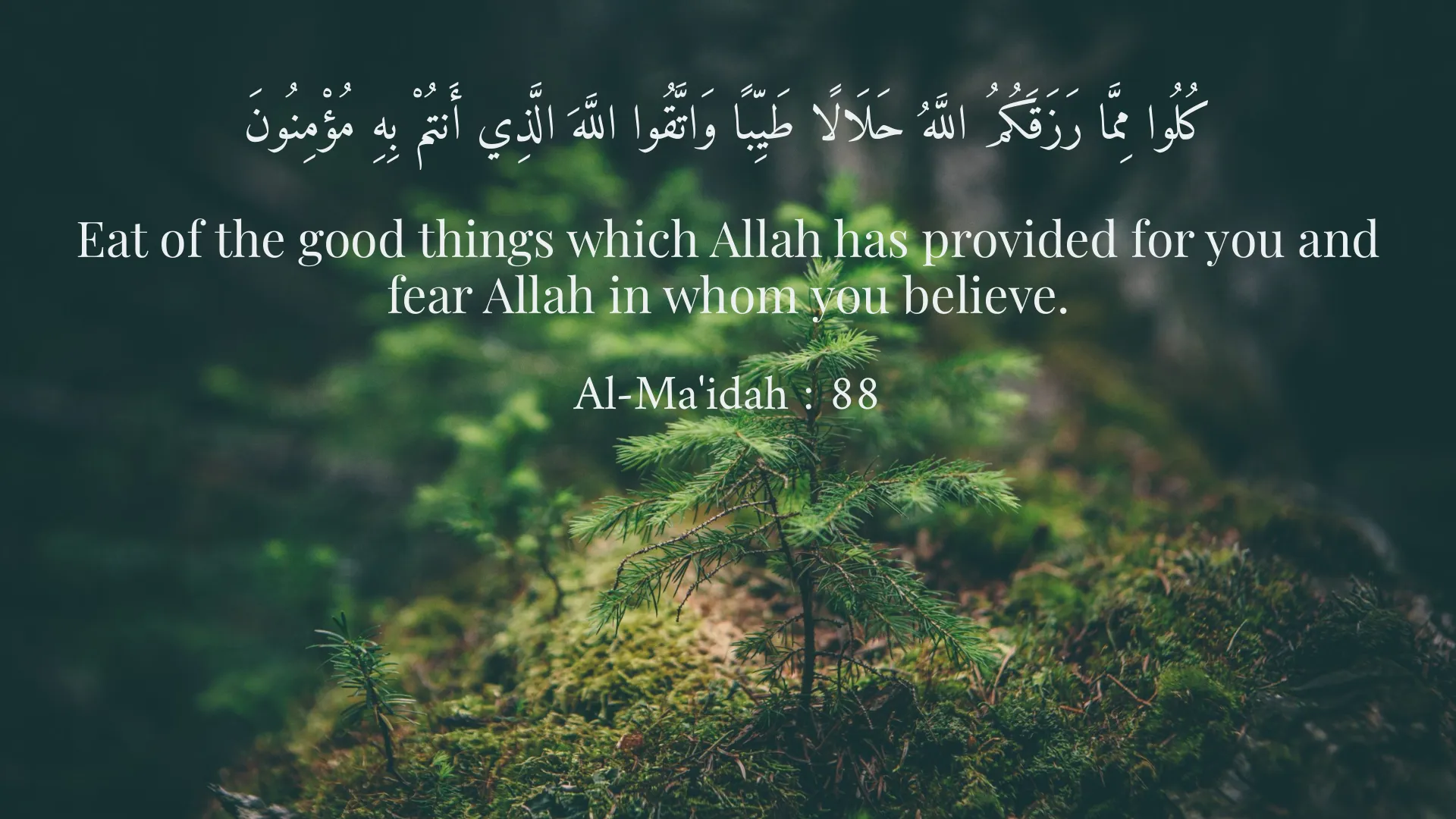
كُلُوا مِمَّا رَزَقَكُمُ اللَّهُ حَلَالًا طَيِّبًا وَاتَّقُوا اللَّهَ الَّذِي أَنتُمْ بِهِ مُؤْمِنُونَ
Eat of the good things which Allah has provided for you and fear Allah in whom you believe.
Al-Ma'idah : 88
يَا أَيُّهَا الَّذِينَ آمَنُوا كُلُوا مِنْ طَيِّبَاتِ مَا رَزَقْنَاكُمْ وَاشْكُرُوا لِلَّهِ إِن كُنتُمْ إِيَّاهُ تَعْبُدُونَ
O you who have believed, eat from the good things which We have provided for you and be grateful to Allah if it is indeed Him that you worship.
Al-Baqarah : 172
قُلْ تَعَالَوْا أَتْلُ عَلَيْكُمْ مَا حَرَّمَ رَبُّكُمْ عَلَيْكُمْ أَلَّا تُشْرِكُوا بِهِ شَيْئًا وَبِالْوَالِدَيْنِ إِحْسَانًا وَأَنْ لَا تَقْرَبُوا مَفَاسِدَ الْبَصَائِرِ
Say, 'Come, I will recite what your Lord has prohibited to you - that you not associate anything with Him, and to parents, good treatment. And do not approach the orphan's property except in a way that is best until he reaches maturity.'
Al-An'am : 151
Short Story
On a beautiful day, Hasan was striving to make a change in his life. He decided to seek honorable jobs instead of engaging in illicit activities. Reflecting on the verses of the Quran, he realized that by donning the cloak of piety and performing good deeds, he could attain lawful sustenance. After some time, Hasan found a suitable job and was blessed abundantly. Every day, he felt greater satisfaction and made gratitude to God a constant habit in his life.