Quranic Answer
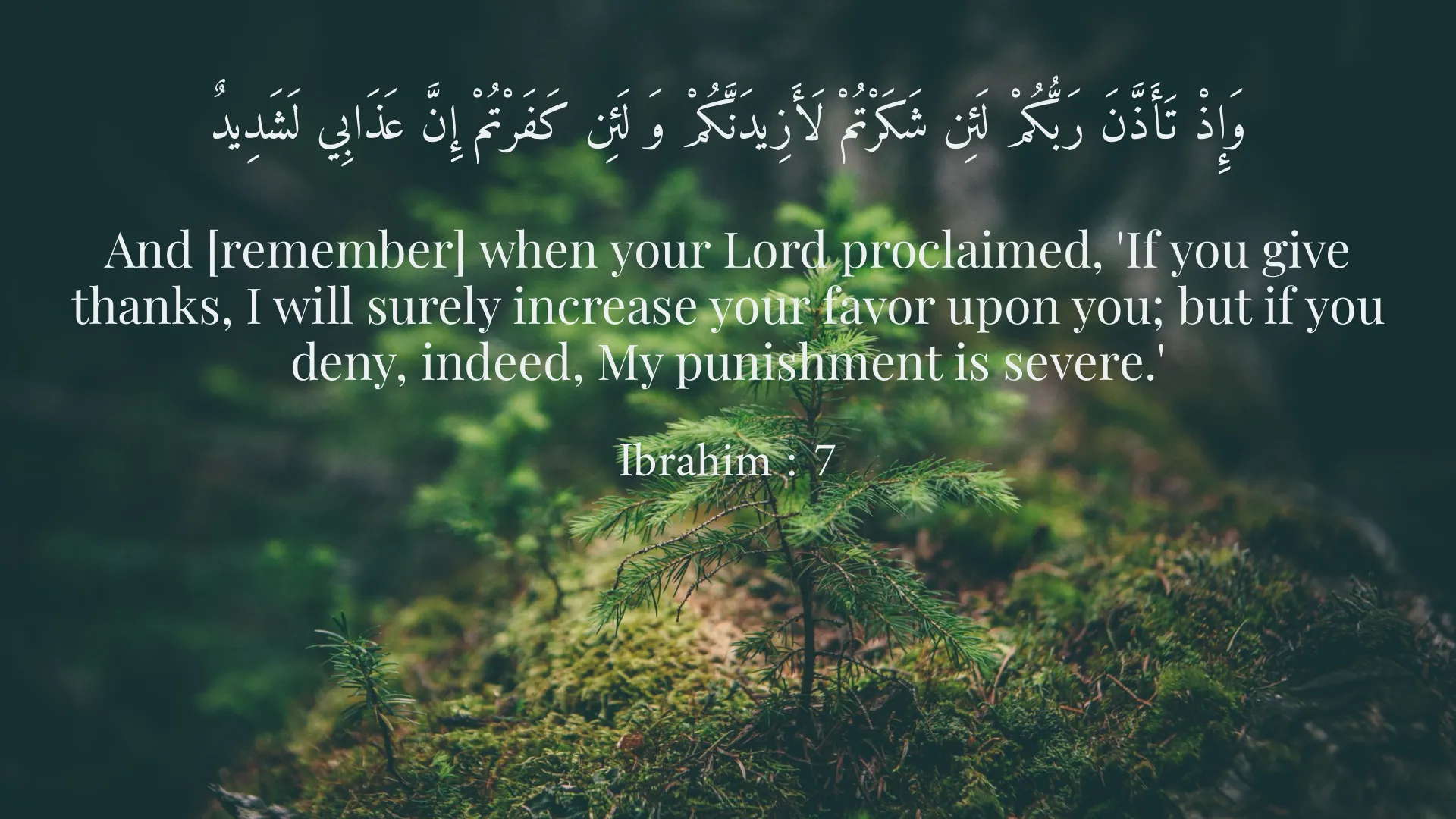
Gratitude is one of the most esteemed and beloved qualities in the sight of Allah, and its significance is extensively highlighted in the Holy Quran. This spiritual virtue not only fosters a strong relationship between the individual and the Creator, but it also enriches human interactions and enhances one's life experience. In a world often riddled with challenges and hardships, cultivating gratitude can serve as a transformative power that shapes our perspectives and responses to life's situations. To delve deeper into the concept of gratitude, we must first understand the divine encouragement to practice it and the profound consequences it holds for our lives. The concept of gratitude in Islam is intimately connected to the acknowledgment of God's countless blessings. The Quran, as the ultimate guide for Muslims, lays the foundation for this understanding. One prominent verse that embodies this principle is found in Surah Ibrahim, verse 7, which states: "And [remember] when your Lord proclaimed, 'If you give thanks, I will surely increase your favor upon you; but if you deny, indeed, My punishment is severe.'" This verse vividly captures the essence of gratitude: a sincere expression of thanks to Allah results in an increase of His bounties in our lives. The reciprocal nature of gratitude is both profound and humbling. It suggests that the act of recognizing and appreciating the blessings can catalyze further positive experiences. In contrast, ingratitude can lead to dire consequences. To be a truly grateful servant of Allah, the first step we ought to take is to engage in deep contemplation of God’s manifold blessings bestowed upon us. These blessings can be as grand as good health, wealth, and family, or as subtle as the comfort of a warm bed or a refreshing breeze on a hot day. It is crucial to acknowledge these aspects in our daily lives. Reflection enables us to develop a firm attitude of gratitude that nurtures serenity and satisfaction within our souls, regardless of our circumstances. In Surah Az-Zumar, verse 66, Allah instructs, "But worship Allah and be among the grateful." This verse illustrates that the act of worship is intertwined with gratitude. Worship is not a mere ritualistic performance; it can serve as an expression of our thankfulness toward Allah. The emotional fervor and enthusiasm we invest in our acts of worship reflect our gratitude for the countless divine gifts we receive. When we approach our prayers, supplications, and other forms of worship with a grateful heart, we deepen our spiritual connection with Allah and embrace a path of continual growth and improvement. Practicing gratitude is not solely a personal task, but it also extends to the community at large. One potent way we can express our gratitude is by helping others and performing good deeds. Allah's word resonates strongly with this notion in Surah Al-Insan, verses 8 and 9, stating: "Indeed, we only feed you for the sake of Allah. We wish not from you reward or gratitude." This act of selflessness exemplifies what it means to embody gratitude. When we serve others and assist those in need, we not only engage in acts of charity but we also nurture a culture of appreciation and care, reflective of the abundance we have received from Allah. Moreover, engaging in good deeds and acts of kindness solidifies our sense of community and fosters a spirit of cooperation and mutual respect. We derive the greatest satisfaction not in the accolades received for these actions but rather in understanding that these deeds please Allah and protect us from the pitfalls of selfishness and ingratitude. Helping others serves as a testament to the transformative effects of gratitude—not just for ourselves, but for the entire society. Gratitude in Islam is also a path toward developing a positive mindset. Psychological studies demonstrate that individuals who practice gratitude regularly experience greater levels of happiness and satisfaction in life. It encourages us to focus on what we have rather than what we lack. This shift in perspective can lead to numerous beneficial outcomes, including stronger relationships, enhanced emotional well-being, and improved physical health. Furthermore, the ability to express gratitude opens the door to recognizing the beauty in our struggles. Life is replete with challenges, but a grateful mindset allows us to view these hardships as opportunities for growth and development. Acknowledging that even our trials can enhance our resilience and contribute positively to our personal journey paves the way for a more fulfilling life. In conclusion, gratitude is a multifaceted quality entrenched in Islamic teachings and integral to the human experience. It compels us to appreciate the innumerable blessings provided by Allah, enhances our worship practices, and inspires us to aid those around us. By recognizing the vital role gratitude plays in our lives, we can begin to cultivate this quality every day. Ultimately, the ability to show gratitude is one of the greatest gifts we must continuously ask Allah for, striving to embody an attitude of gratitude in everything we do. As we cultivate this essential virtue, we not only enrich our own lives but also contribute to the well-being and happiness of those in our communities, forging a bond of benevolence that enhances our shared humanity.
Related Verses
وَإِذْ تَأَذَّنَ رَبُّكُمْ لَئِن شَكَرْتُمْ لَأَزِيدَنَّكُمْ وَ لَئِن كَفَرْتُمْ إِنَّ عَذَابِي لَشَدِيدٌ
And [remember] when your Lord proclaimed, 'If you give thanks, I will surely increase your favor upon you; but if you deny, indeed, My punishment is severe.'
Ibrahim : 7
بَلِ اللَّهَ فَاعْبُدْ وَكُن مِّنَ الشَّاكِرِينَ
But worship Allah and be among the grateful.
Az-Zumar : 66
إِنَّمَا نُطْعِمُكُمْ لِوَجْهِ اللَّهِ لَا نُرِيدُ مِنكُمْ جَزَاءً وَلَا شُكُورًا
Indeed, we only feed you for the sake of Allah. We wish not from you reward or gratitude.
Al-Insan : 8
Short Story
One day, a man named Reza was traveling and thinking about how many blessings he had. Along the way, he encountered a poor man who was hungry. Reza decided to help him and gave him some food. When he saw the man's joy and received his prayer, he felt that this was his way of being grateful. Reza thought to himself, "Thank God, I too have duties to be grateful and help others!"