Quranic Answer
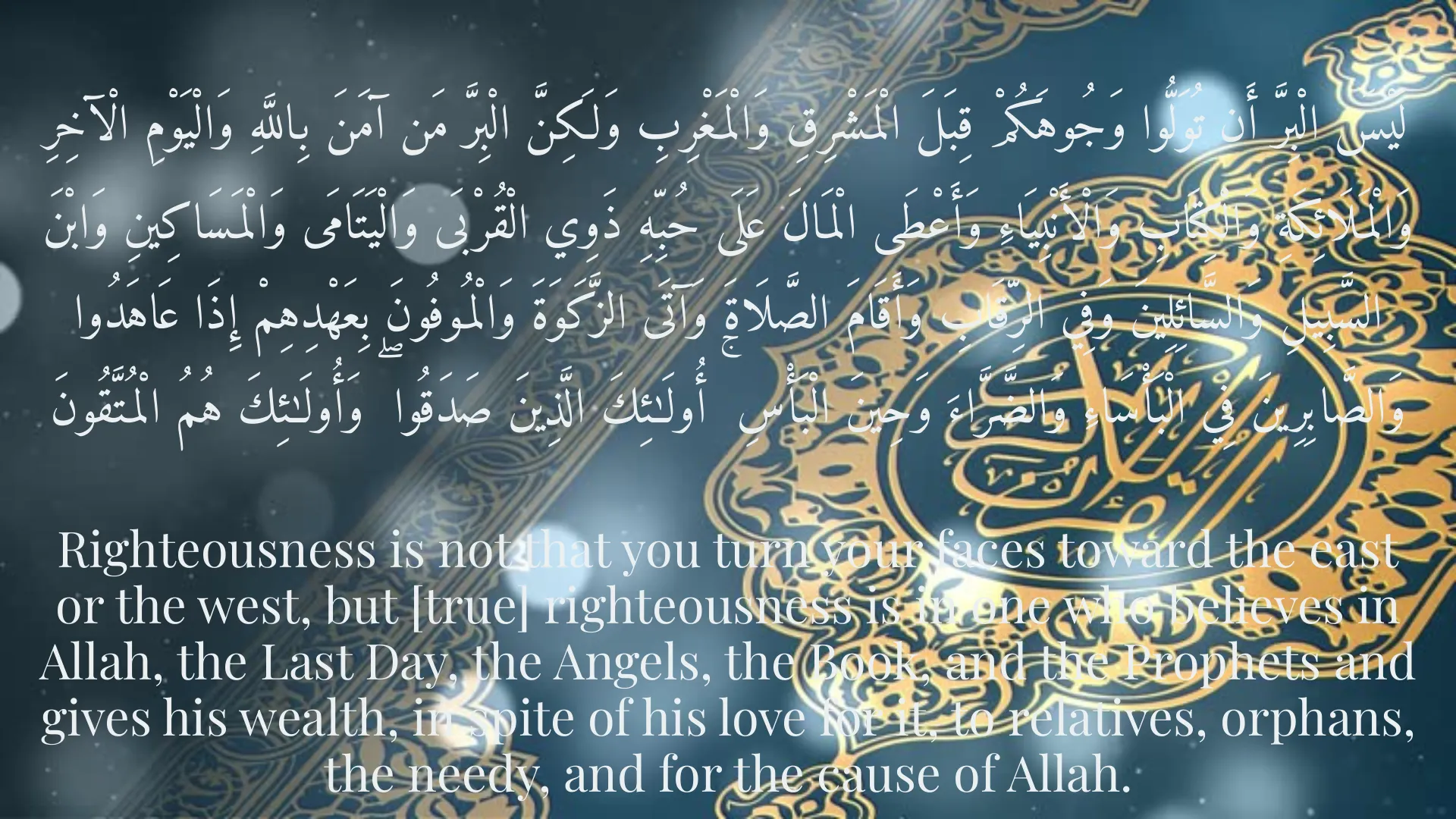
In the Holy Quran, the pursuit of gaining God's satisfaction is emphasized through various teachings that highlight the significance of good deeds and acts of kindness in our everyday lives. These teachings serve not only as guidance for personal growth but also as a roadmap to enrich our interactions within our communities and the world at large. The resulting impact of adhering to these principles can serve to create a more compassionate and morally responsible society, ultimately leading to a harmony that resonates with divine approval. One primary reference to this concept is found in Surah Al-Baqarah, verse 177, where the Quran enlightens believers that righteousness is not merely defined by the physical act of facing certain directions for prayer, but rather, it encompasses a much broader and deeper understanding of faith and action. This verse outlines that true righteousness stems from a profound belief in Allah, the Last Day, the Angels, the Books, and the Prophets. Consequently, the essence of faith is to inspire individuals to allocate part of their wealth—regardless of their fondness for it—towards altruistic causes, particularly for the sake of supporting relatives, orphans, and the needy. This particular verse articulates that the essence of true piety is reflected in the actions one takes to uplift others, showcasing that mere verbal declarations of faith must be translated into tangible actions that contribute to societal well-being. Such acts are not only seen as mere duties but are elevated to forms of worship that earn one God's delight and are even vital for personal spiritual development. It reinforces the idea that the practice of charity, benevolence, and social responsibility are spiritual manifestations that pave a pathway to divine pleasure. Furthermore, Surah Al-An'am, verse 160, reiterates this notion, where Allah assures believers that every good deed performed will be rewarded in kind. This promise instills a sense of accountability and motivation among individuals. The understanding that one's efforts toward kindness will not go unnoticed contributes significantly to creating an environment where generosity, empathy, and social consciousness flourish. The act of performing good deeds should not only be perceived as a personal obligation but as a divine command that shapes the very fabric of a harmonious society. In the context of daily life, individuals must endeavor to embody these principles in their interactions, striving to cultivate good behavior, honesty, and respect. By treating others with kindness, practicing patience, especially in adverse circumstances, and exercising integrity will ultimately reflect the teachings of the Quran in every affable exchange. These behaviors are crucial in fostering positive relationships and creating an atmosphere of trust within families, friendships, and communities. Moreover, mandatory practices such as offering prayers or Salah, engaging in the remembrance of God through Dhikr, and invoking supplications through Du'a are spiritual acts aimed at reinforcing an individual's commitment to seeking precision in everyday activities that are pleasing to God. Rituals like these serve as reflections of inner spirituality, channeling divine blessings into one's life while also providing a foundation of humility and mindfulness that balances personal aspirations with service towards humanity. Building strong relationships with family, attending to the needs of the less fortunate, participating in charitable causes, and maintaining a spirit of patience during turbulent times are profoundly significant in winning God's pleasure. It is worth noting that these practices are interconnected, creating a cycle of goodness and positivity that can be contagious, inspiring others to adopt similar behaviors that contribute to a collective elevation in moral standards. In the light of contemporary society, which often faces challenges such as greed, materialism, and social indifference, revisiting these principles holds substantial relevance. As individuals confront daily challenges, there is a profound need for encouraging acts of kindness and generosity as a counterbalance to negativity and self-interest. The principles stated in the Quran are timeless, providing guidance on how to navigate life while upholding moral values that align with divine satisfaction. In conclusion, by immersing ourselves in the teachings of the Quran and integrating the tenets of righteousness, positive conduct, and social responsibility into our daily lives, we pave the way to gaining God’s satisfaction. The multifaceted approach towards performing good deeds—whether through financial contributions, ethical behavior, communal support, or personal spirituality—creates pathways not only to spiritual enrichment but also to a more compassionate society. Striving to reflect these values consistently allows individuals to harmonize their lives in accordance with divine intention, ensuring a legacy of goodness and integrity that impacts future generations. As we encourage one another to embrace acts of kindness and selflessness, we simultaneously build a world reflective of peace and mutual respect, ultimately drawing ourselves closer to the satisfaction of God.
Related Verses
لَيْسَ الْبِرَّ أَن تُوَلُّوا وَجُوهَكُمْ قِبَلَ الْمَشْرِقِ وَالْمَغْرِبِ وَلَكِنَّ الْبِرَّ مَن آمَنَ بِاللَّهِ وَالْيَوْمِ الْآخِرِ وَالْمَلَائِكَةِ وَالْكِتَابِ وَالْأَنْبِيَاءِ وَأَعْطَى الْمَالَ عَلَى حُبِّهِ ذَوِي الْقُرْبَى وَالْيَتَامَى وَالْمَسَاكِينِ وَابْنَ السَّبِيلِ وَالسَّائِلِينَ وَفِي الرِّقَابِ وَأَقَامَ الصَّلَاةَ وَآتَى الزَّكَوَةَ وَالْمُوفُونَ بِعَهْدِهِمْ إِذَا عَاهَدُوا وَالصَّابِرِينَ فِي الْبَأْسَاءِ وَالضَّرَّاءَ وَحِينَ الْبَأْسِ ۚ أُولَـٰئِكَ الَّذِينَ صَدَقُوا ۖ وَأُولَـٰئِكَ هُمُ الْمُتَّقُونَ
Righteousness is not that you turn your faces toward the east or the west, but [true] righteousness is in one who believes in Allah, the Last Day, the Angels, the Book, and the Prophets and gives his wealth, in spite of his love for it, to relatives, orphans, the needy, and for the cause of Allah.
Al-Baqarah : 177
مَن جَاءَ بِالْحَسَنَةِ فَلَهُ عَشْرُ أَمْثَالِهَا ۖ وَمَن جَاءَ بِالسَّيِّئَةِ فَلَا يُجْزَى إِلَّا مِثْلَهَا وَهُم لَا يُظْلَمُونَ
Whoever brings a good deed will have ten times its like; and whoever brings an evil deed will not be recompensed except by its equivalent, and they will not be wronged.
Al-An'am : 160
Short Story
One day, a man named Hassan was walking down a street when he saw an old man sitting by the side of the road, extending his hand. Hassan remembered the verses of the Quran and decided to give a little of his meager money to him. When he did this, he felt a profound joy and satisfaction in his heart. Hassan realized that by performing this small act, he not only helped the old man but also garnered God's satisfaction.