Quranic Answer
In the Holy Quran, Allah teaches us that to achieve the good of both this world and the Hereafter, we must focus on two important aspects: righteous deeds and faith in God. This message resonates throughout several verses in the Quran, intricately weaving a narrative about the significance of living a life that harmoniously balances the ephemeral nature of worldly existence with the eternal rewards of faith and good actions. In this article, we shall delve deeper into these teachings, exploring their implications for our daily lives, and emphasizing the necessity of integrating faith and righteous deeds as pathways to fulfillment and success. The Quran emphasizes the transient nature of worldly life and the importance of preparing for the Hereafter. One particularly poignant verse that encapsulates this doctrine is found in Surah Al-Imran (3:185): 'Every soul will taste death, and you will be fully compensated on the Day of Resurrection. So whoever is removed from the Fire and admitted to Paradise has certainly succeeded; and what is the worldly life except the enjoyment of delusion.' This profound statement brings to light the understanding that the journey of life is ultimately leading to an inevitable end – death. This notion serves not to instill fear but to inspire awareness. The fleeting pleasures and distractions of worldly life can often cloud our perception of what is truly significant. Here, Allah reminds us that the rewards of our faith and actions are eternal, transcending the physical limitations of our existence. Moreover, understanding the temporary nature of worldly pleasures enables individuals to cultivate a more profound sense of purpose. By recognizing that this life is ultimately a test, a means to attain a higher status in the Hereafter, believers are motivated to seek righteousness. Allah, in His infinite mercy, offers the hope of eternal paradise for those who combine faith with righteous deeds, as articulated in Surah An-Nisa (4:57): 'And those who believe and do righteous deeds - We will admit them to gardens beneath which rivers flow, wherein they will abide eternally.' This verse underlines the dual requirement for believers: not only must one have faith in God, but they must also actively engage in actions that reflect that faith. Faith, in this context, serves as the foundation upon which righteous actions are built. It is not merely a belief that resides in the heart but an active engagement in promoting good conduct in all aspects of life. The Quran encourages believers to anchor themselves in the knowledge of God's existence, presence, and attributes, which, in turn, fosters a sense of accountability. This accountability is key in motivating individuals to engage in righteous deeds, ranging from acts of charity and kindness to fulfilling personal responsibilities and upholding justice. The relationship between faith and righteous deeds is symbiotic. Righteous actions fortify one's faith, reinforcing the belief that a higher purpose exists beyond the material world. On the other hand, faith instills the motivation to engage in those actions, driving individuals to seek opportunities for goodness and service to others. As highlighted in the Quran, successful individuals are those who realize the interconnected nature of their faith and deeds, understanding that both elements are necessary to attain a fulfilling life, both in the present and in the Hereafter. One cannot overlook the significance of daily striving towards righteousness. Engaging in small acts of kindness, being just and truthful, and nurturing relationships rooted in compassion are all ways of responding to Allah's call for righteous behavior. Remembering Allah throughout one's daily activities not only provides a reminder of His presence but also acts as a protective barrier against negative influences that can detract from our spiritual path. Regular prayers, reading the Quran, and engaging in dhikr (remembrance of Allah) are vital practices that strengthen our connection with God and orient our lives towards righteousness. The encouragement to perform good deeds is not limited to individual actions; it extends to influencing others positively. One of the most beautiful aspects of this journey is that the impact of our righteous behavior can inspire those around us. Through acts of integrity, generosity, and kindness, believers can contribute to building a culture that values and promotes goodness. This collective striving towards righteousness is integral for both societal development and individual growth. It creates an environment where good deeds thrive, strengthening communities and reflecting the values of Islam. Furthermore, achieving balance between worldly ambitions and spiritual responsibilities is essential for a well-rounded life. The pressures of modern life can lead individuals away from their spiritual obligations, often prioritizing temporary gains over eternal aspirations. For many, the pursuit of material wealth and success can overshadow the pursuit of righteousness, resulting in a hollow existence. Yet, the Quran reminds us that it is possible to engage with the world without losing sight of the Hereafter. By approaching our worldly actions with the intention of serving God and positively impacting the world, we can turn our endeavors into acts of worship. Thus, balancing our ambitions with our spiritual commitments becomes a means of attaining both worldly success and divine favor. In conclusion, the profound teachings of the Holy Quran regarding faith and righteous deeds stand as a timeless guide for humanity. The balance between engaging with the material world and nurturing one’s spiritual life is a delicate yet attainable goal. By focusing on the eternal nature of our actions and reinforcing our faith through good deeds, we nurture a holistic life that promises fulfillment both in this life and the Hereafter. It is an urgent yet comforting reminder that our existence is not merely a transient phase but a pathway leading towards ultimate success. By striving for goodness and maintaining a strong connection with Allah, we can open the doors to mercy, blessings, and a life of purpose. Therefore, let us remain vigilant in our commitment to righteousness and faith, knowing that they are the keys to unlock the true essence of our existence.
Related Verses
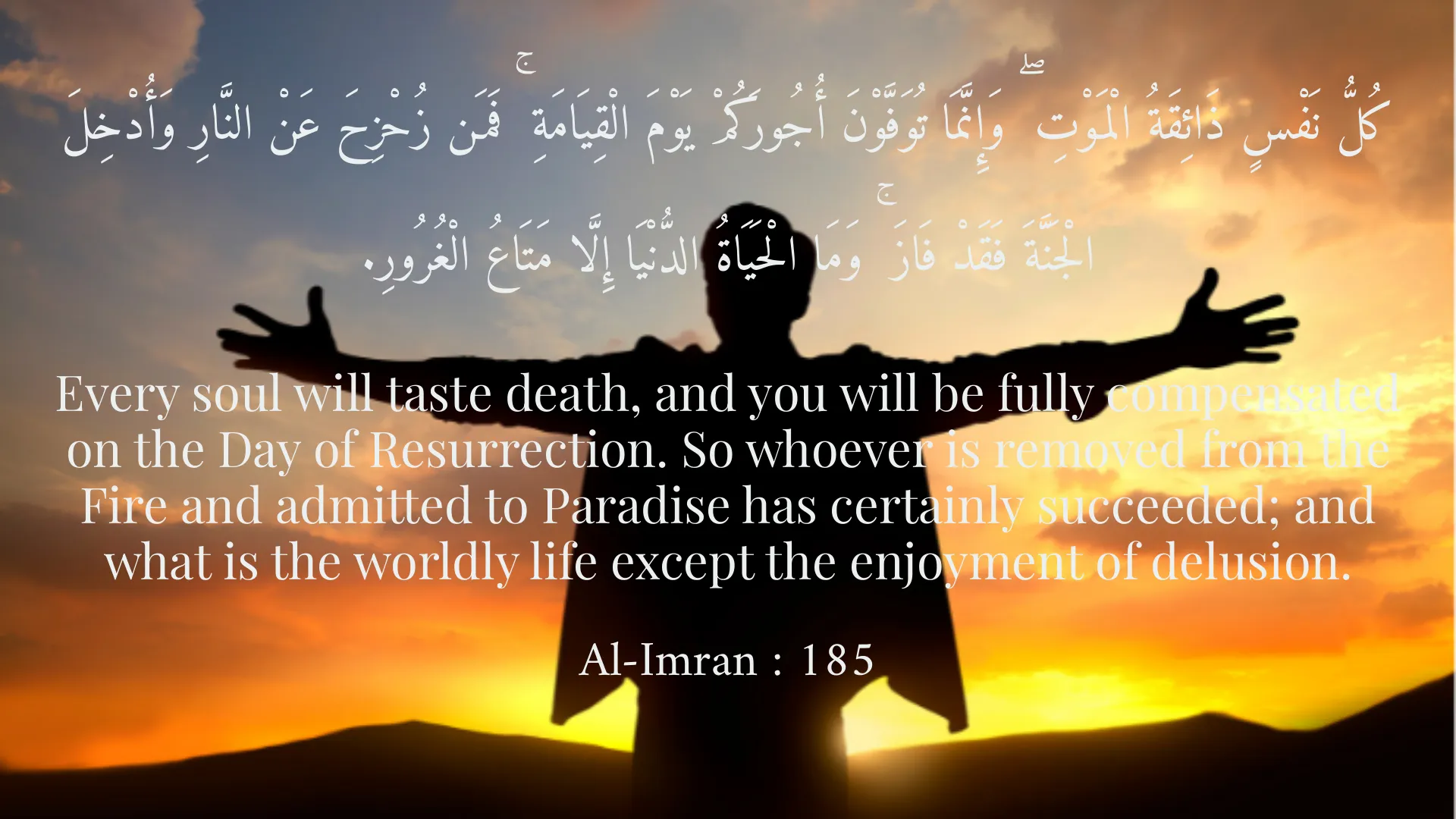
كُلُّ نَفْسٍ ذَائِقَةُ الْمَوْتِ ۖ وَإِنَّمَا تُوَفَّوْنَ أُجُورَكُمْ يَوْمَ الْقِيَامَةِ ۚ فَمَن زُحْزِحَ عَنْ النَّارِ وَأُدْخِلَ الْجَنَّةَ فَقَدْ فَازَ ۚ وَمَا الْحَيَاةُ الدُّنْيَا إِلَّا مَتَاعُ الْغُرُورِ.
Every soul will taste death, and you will be fully compensated on the Day of Resurrection. So whoever is removed from the Fire and admitted to Paradise has certainly succeeded; and what is the worldly life except the enjoyment of delusion.
Al-Imran : 185
وَالَّذِينَ آمَنُوا وَعَمِلُوا الصَّالِحَاتِ سَنُدْخِلُهُمْ جَنَّاتٍ تَجْرِي مِن تَحْتِهَا الْأَنْهَارُ خَالِدِينَ فِيهَا أَبَدًۭا.
And those who believe and do righteous deeds - We will admit them to gardens beneath which rivers flow, wherein they will abide eternally.
An-Nisa : 57
Short Story
Once upon a time, there was a young man named Ali who was in search of happiness and prosperity. He realized that through good deeds and serving others, he could have a meaningful and blessed life. Ali decided to help his parents and assist those in need. Each time he acted kindly, he felt his heart grow calmer and his life became more blessed. He came to understand that along with obeying God's commands, helping others was also the key to achieving the good of both this world and the Hereafter.