Quranic Answer
The Holy Quran serves as a guiding beacon for millions around the world, providing not only spiritual wisdom but also practical guidelines for living a meaningful life. One of the most significant aspects emphasized in the Quran is the acceptance of one's deeds, which is intricately tied to the intentions behind those actions. In this article, we will delve into the criteria for acceptance of deeds according to the Holy Quran, particularly focusing on the role of intentions, faith, and righteous actions as outlined in various verses. The essence of acceptable deeds begins with having a pure and God-pleasing intention. In Surah Al-Baqarah, verse 225, it is stated, 'Allah knows your intentions.' This profound statement underscores the importance of one's inner motivation when performing any act, whether mundane or spiritual. It implies that the evaluation of human behaviors by Allah is not merely based on the outward actions, but significantly hinges on the true intentions behind those actions. A person may engage in charitable acts or rituals, but if the underlying motivation is not sincere and aimed at pleasing God, then such deeds may not reach the desired level of acceptance. This serves as a powerful reminder for individuals to consistently assess their intentions in every facet of their lives. Sincerity in intentions not only has implications for the acceptance of deeds but also helps individuals cultivate a deeper relationship with Allah. When believers act with a heart that is pure and intentions that are clear, they foster a sense of spirituality that transcends the act itself. The real reward comes when they embody the spirit of their intentions, allowing them to align their actions with their faith in Allah. This harmony leads to a profound sense of fulfillment that goes beyond the immediate results of their actions. In Surah Al-Ma'idah, verse 27, Allah emphasizes the coexistence of belief and righteous deeds: 'Believe in Allah and do righteous deeds.' This verse beautifully illustrates that faith and actions are not independent of one another; rather, they are interdependent. To genuinely believe in Allah necessitates not only verbal affirmation but also a commitment to act in accordance with His guidance. This synergy between belief and action reinforces the idea that a complete and fulfilling faith is expressed through the things one does. To this end, it becomes imperative for individuals to engage in self-reflection regarding their motivations. Daily life presents various situations where choices must be made about how to act. People often find themselves at a crossroads, questioning whether their actions are aimed at earning the pleasure of Allah or merely to gain the approval of their peers. This self-inquiry aids in maintaining purity of intention and allows individuals to redirect their focus from seeking worldly recognition to pursuing divine acceptance. Moreover, an action that stems from a sincere intention can leave lasting impressions not only on the external environment but also within oneself. A righteous deed can evoke feelings of joy and contentment in the heart, leading to a sense of self-approval that further solidifies the acceptance of the deed in the eyes of Allah. According to the teachings of Islam, doing good not only benefits others but is therapeutic for oneself; it enriches the spirit and provides a sense of purpose. Alongside maintaining pure intentions and engaging in righteous deeds, supplication and piety play critical roles in the journey towards the acceptance of actions. In Surah Taha, verse 82, Allah assures us: 'And whoever fears Allah, He will make for him a way out.' This verse emphasizes that the fear of Allah, which embodies both reverence and a sense of accountability, will lead to divine guidance and solutions in times of difficulty. Therefore, supplication becomes an essential tool for believers to seek help and guidance from their Creator, nurturing their relationship with Allah, and aligning their intentions and actions. The act of supplication allows believers to express their innermost thoughts, concerns, and desires to Allah. It serves as a reminder that reliance on Allah is paramount, especially when navigating the complexities of life. By invoking Allah's mercy and help, individuals are better equipped to keep their intentions on the righteous path and fulfill their obligations toward His creation. In summary, the acceptance of actions in Islam is anchored in the purity of intention, the demonstration of faith through righteous deeds, and the continuous practice of supplication and piety. The teachings of the Quran guide adherents to cultivate a sincere approach to their actions, encouraging a reflective attitude that seeks divine approval. Each individual is invited to maintain awareness of their intentions in everyday life, consistently asking themselves if their actions are done for God or to gain others’ favors. Ultimately, it is through the amalgamation of these principles—pure intentions, meaningful faith, righteous actions, and heartfelt supplication—that believers can strive towards the acceptance of their deeds. The journey of faith is not merely about the deeds themselves but transcends into the realm of the heart, where the true essence of worship lies. By following the divine guidance encapsulated within the Holy Quran, individuals can embark on a transformative path that leads to inner peace, righteousness, and the eventual acceptance of their actions in the sight of Allah.
Related Verses
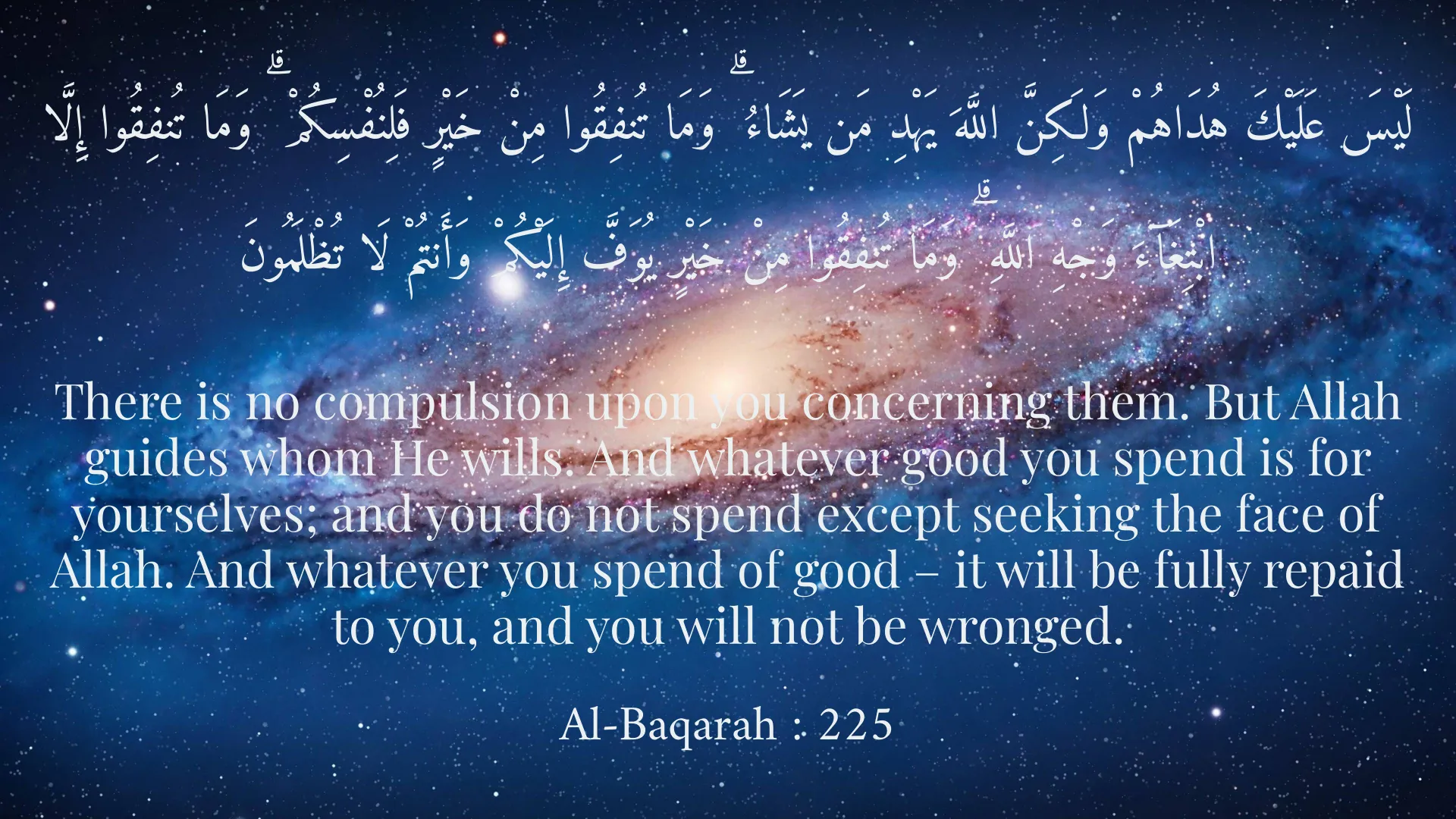
لَيْسَ عَلَيْكَ هُدَاهُمْ وَلَكِنَّ اللَّهَ يَهْدِ مَن يَشَاءُ ۗ وَمَا تُنفِقُوا مِنْ خَيْرٍ فَلِنُفْسِكُمْ ۗ وَمَا تُنفِقُوا إِلَّا ابْتِغَآءَ وَجْهِ اللَّهِ ۗ وَمَا تُنفِقُوا مِنْ خَيْرٍ يُوَفَّ إِلَيْكُمْ وَأَنتُمْ لَا تُظْلَمُونَ
There is no compulsion upon you concerning them. But Allah guides whom He wills. And whatever good you spend is for yourselves; and you do not spend except seeking the face of Allah. And whatever you spend of good – it will be fully repaid to you, and you will not be wronged.
Al-Baqarah : 225
يَا أَيُّهَا الَّذِينَ آمَنُوا آمِنُوا بِاللَّهِ وَرَسُولِهِ وَالْكِتَابِ الَّذِي نَزَّلَ عَلَى رَسُولِهِ وَالْكِتَابِ الَّذِي أَنزَلَ مِن قَبْلُ ۚ وَمَن يَكْفُرْ بِاللَّهِ وَمَلَائِكَتِهِ وَكُتُبِهِ وَرُسُلِهِ وَالْيَوْمِ الآخِرِ فَقَدْ ضَلَّ ضَلَالًا بَعِيدًا
O you who have believed, believe in Allah and His Messenger and the Book which He has revealed to His Messenger and the Scripture which He revealed before. And whoever disbelieves in Allah and His Angels and His Books and His Messenger and the Last Day has certainly gone far astray.
Al-Ma'idah : 27
وَأَنَا رَبُّكُمْ فَاعْبُدُونِ ۖ وَأَقِيمُوا الصَّلَاةَ لِذِكْرِي
And I am your Lord, so worship Me and establish prayer for My remembrance.
Ta-Ha : 82
Short Story
One day, Ali sought to understand the true meaning of his actions. He reflected on the Quran and concluded that his intention behind every deed should be pure. Following this, Ali began helping others with a good intention, and a sense of satisfaction filled his heart. He would tell himself, 'If my efforts are for Allah’s pleasure, they are certainly accepted.' In this way, Ali found true peace and contentment.