Quranic Answer
Determining whether your path is divine is one of the most crucial concerns in a person's life. For many, the search for meaning and purpose drives our actions and decisions. The Holy Quran, considered the ultimate guidance for Muslims, through its verses provides signs and guidance for identifying what a divine path entails. Those who seek to align their lives with God's will often look for indicators of righteousness, for it is in the fulfillment of divine commandments that one may find true direction and purpose. One primary indication of a divine path is adherence to divine commandments and maintaining ethical principles. In Surah Al-Baqarah, verse 177, it is stated: 'Righteousness is not that you turn your faces toward the east or the west, but [true] righteousness is in one who believes in Allah, the Last Day, the Angels, the Book, and the Prophets and gives his wealth, in spite of love for it, to relatives, orphans, the needy, the traveler, those who ask [for help], and for freeing slaves.' This profound verse encapsulates the essence of spirituality and the true markers of righteousness, emphasizing that it is not merely about outward practices or rituals, but about cultivating faith and engaging in charitable acts. The Quran insists that true righteousness stems from belief in the unseen realities and manifests through acts of kindness and generosity. The Quran reminds us of the importance of balancing both faith and actions. Believing in Allah, the Last Day, the Angels, the Book, and the Prophets forms the bedrock of a divine path; these beliefs are what anchor one’s spiritual journey. The act of giving wealth—despite a natural attachment to it—to those in need is a reflection of a person’s commitment to ethical values and a sign that they are aligned with a divine purpose. Therefore, reflecting on one’s actions and intentions in light of these divine commandments can serve as a gateway to understanding if one is walking a divine path. Moreover, the experience of inner peace and satisfaction significantly contributes to our understanding of divinity in our lives. Surah At-Tawbah, verse 51 mentions that 'If we put our trust in Allah, He will grant us greatness and peace.' This highlights a critical aspect of the divine journey—trust in God. When a follower places their complete trust in Allah amidst life's challenges, they often experience inexplicable tranquility. This peace is not only comforting, but it may also serve as a barometer for one's spiritual state. Those walking a divinely inspired path—characterized by submission to the will of Allah—might often find themselves overcoming obstacles with a sense of calm and resolution, attributable to their faith. Additionally, the importance of community and seeking knowledge cannot be overlooked when determining whether one’s path is divine. Surah Ash-Shura, verse 38 counsels believers to consult one another in their affairs. Engaging with knowledgeable individuals such as scholars, imams, or fellow believers can provide valuable insights. These interactions are not merely exchanges of information but transformative moments of learning and guidance that can illuminate our understanding of divine commandments and the path ahead. The importance of consulting others is significant as it promotes a culture of mutual support and shared wisdom. It reflects the Islamic principle of ummah, or community, wherein individual growth is fostered through collective knowledge, advice, and experience. In a society where multiple perspectives exist, conversing with others about their understanding of the Quran and its application can broaden one’s horizons and enrich one’s spiritual journey. Moreover, it is critical to ensure that one fulfills obligations and avoids prohibitions in order to stay true to the divine path. Engaging with ethical and moral principles reinforces a sandcastles' commitment to divine guidance. From refraining from dishonesty to honoring familial responsibilities, maintaining integrity and adhering to the sacred commands of Allah serves to affirm beliefs in action. Each commandment of Allah is designed not merely to dictate behavior but to propel believers towards holistic development—spiritually, mentally, and socially. Ultimately, self-reflection plays a vital role in determining whether one is aligned with a divine path. The Quran encourages believers to engage in deep introspection to assess their adherence to divine commands. Reflective practices, such as regular prayer and meditation, allow individuals to connect deeply with their spiritual selves and the essence of divine wisdom. By cultivating mindfulness and awareness of our actions, we may find clarity in our pursuits and greater alignment with our fundamental beliefs. As we navigate through life’s journey, testing our spiritual paths becomes paramount. The divine path, as described in the Quran, is multifaceted and intertwined with faith, peace, community engagement, knowledge, and ethical conduct. It reminds us that righteousness transcends mere routines or customs, beckoning believers towards a profound commitment to faith and compassion. In conclusion, walking a divine path is neither simplistic nor merely ritualistic. It encompasses a commitment to faith, selfless acts of charity, an understanding of community wisdom, and deep self-reflection. In a world rife with distractions and competing beliefs, maintaining one's focus on divine guidance through the Quran serves as a critical tool for establishing a meaningful and fulfilling life. Thus, those seeking divine understanding should frequently reflect on their actions and interactions while remaining anchored in their faith, trusting in Allah’s plan, and continuously adhering to the teachings of the Quran.
Related Verses
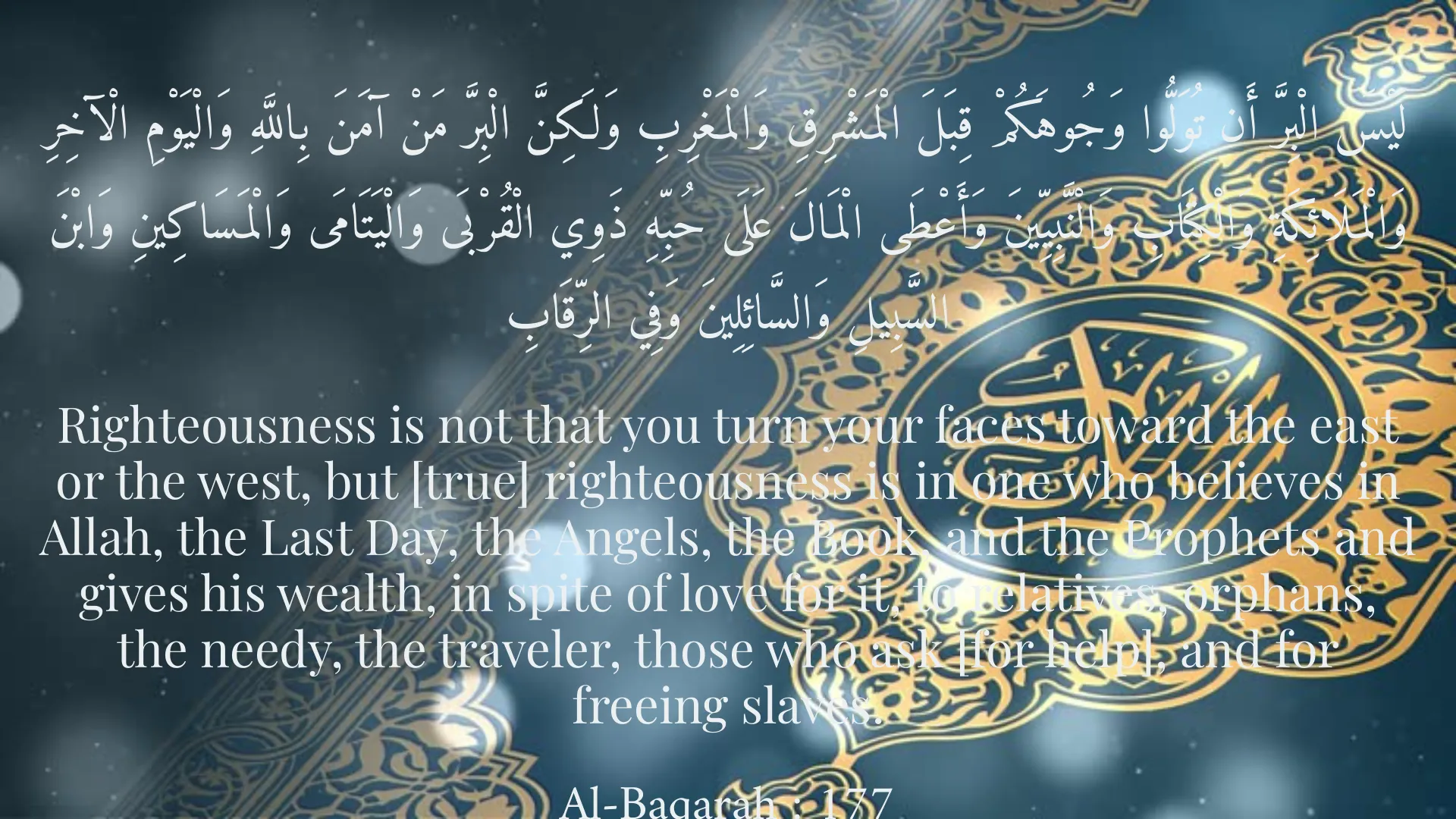
لَيْسَ الْبِرَّ أَن تُوَلُّوا وَجُوهَكُمْ قِبَلَ الْمَشْرِقِ وَالْمَغْرِبِ وَلَكِنَّ الْبِرَّ مَنْ آمَنَ بِاللَّهِ وَالْيَوْمِ الْآخِرِ وَالْمَلَائِكَةِ وَالْكِتَابِ وَالْنَّبِيِّينَ وَأَعْطَى الْمَالَ عَلَى حُبِّهِ ذَوِي الْقُرْبَى وَالْيَتَامَى وَالْمَسَاكِينِ وَابْنَ السَّبِيلِ وَالسَّائِلِينَ وَفِي الرِّقَابِ
Righteousness is not that you turn your faces toward the east or the west, but [true] righteousness is in one who believes in Allah, the Last Day, the Angels, the Book, and the Prophets and gives his wealth, in spite of love for it, to relatives, orphans, the needy, the traveler, those who ask [for help], and for freeing slaves.
Al-Baqarah : 177
قُل لَّن يُصِيبَنَا إِلَّا مَا كَتَبَ اللَّهُ لَنَا هُوَ مَوْلَانَا وَعَلَى اللَّهِ فَلْيَتَوَكَّلِ الْمُؤْمِنُونَ
Say, 'Never will we be struck except by what Allah has decreed upon us; He is our protector.' And upon Allah, let the believers rely.
At-Tawbah : 51
وَالَّذِينَ اسْتَجَابُوا لِرَبِّهِمْ وَأَقَامُوا الصَّلَاةَ وَأَمْرُهُمْ شُورَى بَيْنَهُمْ وَمِمَّا رَزَقْنَاهُمْ يُنفِقُونَ
And those who have responded to [their] lord and established prayer and whose affair is [determined by] consultation among themselves, and from what We have provided them, they spend.
Ash-Shura : 38
Short Story
Once upon a time in a village, there was a man named Amir who had always wanted to understand his divine path since the day he was born. He recited many prayers and studied the Quran but never found certainty in his heart. One day, while reading a verse from the Quran that led him to the truth, he decided to put his trust in God and follow His commands in all his actions. He felt peace and satisfaction, and subsequently, his love for family and those around him grew. Over time, others recognized him as a person with a divine spirit.