Quranic Answer
In the Holy Quran, the sacred text of Islam, there exists an intricate framework that aids believers in making decisions that garner both divine approval and spiritual satisfaction. Understanding the criteria specified within these verses is crucial for any follower of Islam who seeks to live a life in accordance with God’s will. This article will explore several crucial verses from the Quran, analyzing how they guide individuals in discerning correct decisions aligned with truth and the goodwill of Allah. To begin with, the essence of truthful communication and actions is emphasized in Surah Al-Kahf, verse 29. This verse states: "And say, 'The truth is from your Lord, so whoever wills - let him believe; and whoever wills - let him disbelieve.'" This passage serves as a foundational criterion for decision-making by encouraging adherents to speak the truth and act consistently with it. Truthfulness is not merely a moral virtue, but a divine principle that aligns a person's actions with God's commands. This implies that any decisions made in conformity with truth and the teachings of the Quran are more likely to attract divine approval. This notion continues to be reinforced in Surah Al-Ma'idah, verse 3, where Allah proclaims, "This day have I perfected your religion for you, completed My favor upon you, and have chosen for you Islam as your religion." Here, it is emphasized that Allah has completed His guidance and provided believers with a complete framework for life. This completion implies that every decision within the ambit of Islamic teachings is aligned with God's will. A practical example of this context is choosing a profession that not only fulfills personal ambitions but also contributes positively to the community; such a decision resonates with divine intent and is surely favored by God. The principles of charity and community service intertwined in the practice of one’s profession echo the ideals set forth in various verses of the Quran, establishing a pathway through which believers can please their Creator. Moreover, Surah As-Sajdah, verse 16 adds depth to the discussion of decision-making by stating: "Verily, only those who believe are the ones who, when Allah is mentioned, feel a tremor in their hearts, and when His verses are recited unto them, it increases their faith; and they put their trust in their Lord." This verse highlights the believers’ connection to divine presence and guidance through the remembrance of Allah. It prompts adherents to ensure that their hearts and minds remain open to divine instruction. In making life choices, this verse urges believers to seek solace and guidance from God, enhancing their decision-making process. The tranquility promised in this verse is pivotal because it allows followers to discern the right course of action even in the midst of life’s chaos. Continuing the exploration of Quranic guidance, Surah Al-Baqarah, verse 186 states, "And when My servants ask you concerning Me, indeed I am near. I respond to the invocation of the supplicant when he calls upon Me." Herein lies a profound encouragement for believers to pray and seek God’s direction in all matters. This verse not only acknowledges the responsiveness of Allah but also serves as a reminder that consistent prayer is instrumental in guiding correct decisions. The call to supplication reiterates the importance of acquiring divine involvement in one's life, thereby ensuring alignment with God's pleasure. To further elucidate this discussion, maintaining a constant connection with God through regular prayer, remembrance (dhikr), and reflection on the Quran fosters a spiritual landscape conducive to making decisions that resonate with divine approval. It is through this connection that a believer can receive clarity and understanding, which are essential for navigating the complexities of life. Moreover, it is strongly encouraged to seek counsel from wise and dedicated individuals within the community, who can provide insights that complement divine guidance. Engaging in meaningful discussions about choices and ethical dilemmas with those who uphold Islamic values further strengthens the adherence to God’s will. In this sense, the Quran presents a comprehensive roadmap that emphasizes the significance of truth, community service, divine remembrance, prayer, and consultation as pathways to attain divine pleasure. The teachings found within these verses span across various facets of life and stress how one's decisions should not merely revolve around personal gain, but rather consider their broader implications on society and the alignment with God’s expectations. As a closing reflection, it becomes evident that the Quran serves as an eternal guide for believers in discerning the appropriate path in life’s many decisions. The criteria set forth in the verses analyzed here fortify one's understanding of truth, spirituality, and moral responsibility. By prioritizing elements such as honesty, community benefit, remembrance of God, and seeking divine assistance in decision-making, followers can ensure that their lives are not only productive but also pleasing to Allah. Thus, the pursuit of a life grounded in these principles not only elevates one’s spiritual state but also reinforces a collective society based on mutual respect and divine guidance. In the end, these divine directives empower one to navigate through life with moral clarity and purpose, ultimately leading to divine pleasure and fulfillment.
Related Verses
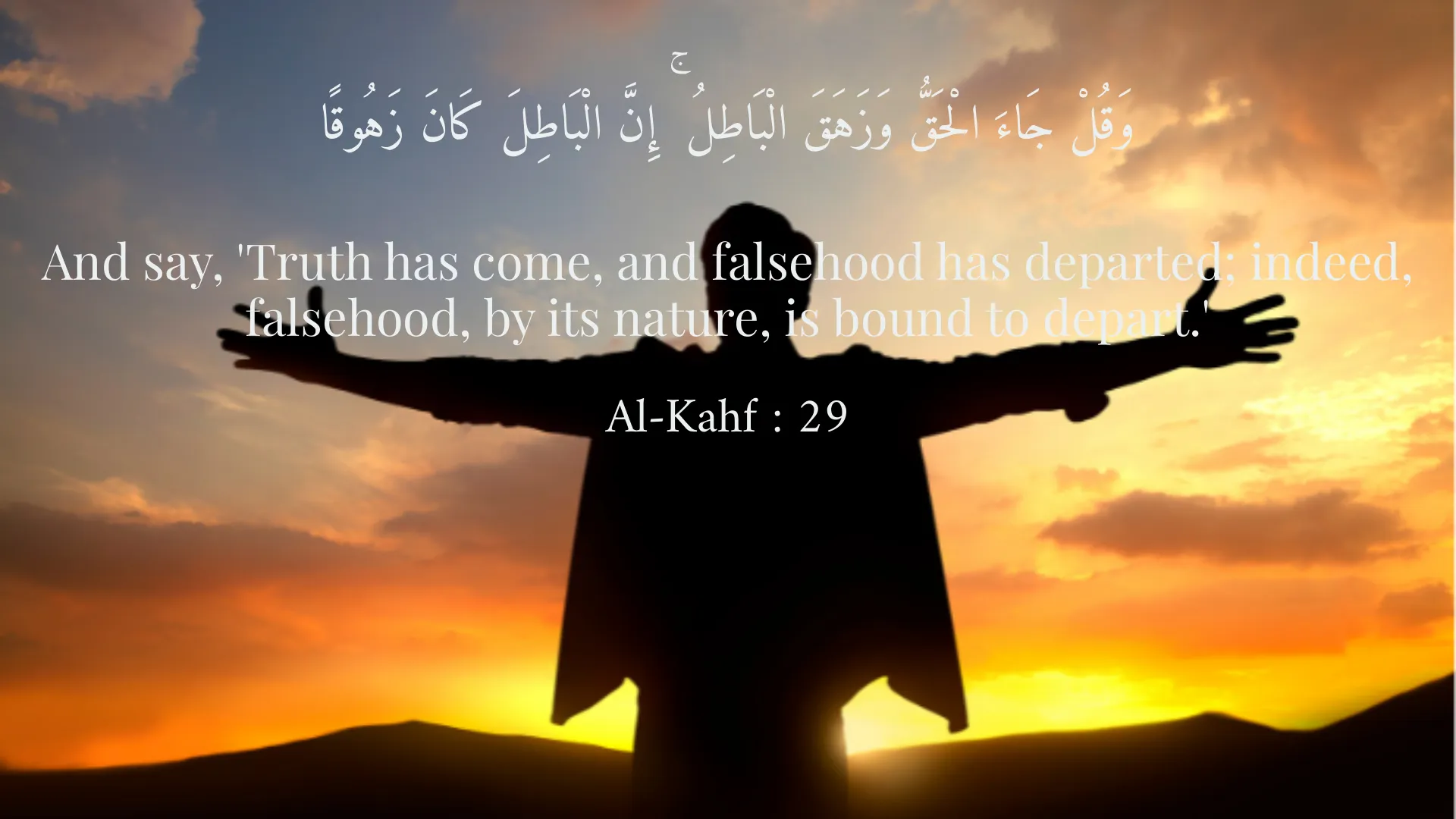
وَقُلْ جَاءَ الْحَقُّ وَزَهَقَ الْبَاطِلُ ۚ إِنَّ الْبَاطِلَ كَانَ زَهُوقًا
And say, 'Truth has come, and falsehood has departed; indeed, falsehood, by its nature, is bound to depart.'
Al-Kahf : 29
الْيَوْمَ أُكْمِلْتُ لَكُمْ دِينَكُمْ وَأَتْمَمْتُ عَلَيْكُمْ نِعْمَتِي وَرَضِيتُ لَكُمُ الْإِسْلَامَ دِينًا
This day I have perfected your religion for you and completed My favor upon you and have chosen for you Islam as religion.
Al-Ma'idah : 3
وَإِذَا سَأَلَكَ عِبَادِي عَنِّي فَإِنِّي قَرِيبٌ ۖ أُجِيبُ دَعْوَةَ الدَّاعِ إِذَا دَعَانِ
And when My servants ask you concerning Me, indeed I am near. I respond to the invocation of the supplicant when he calls upon Me.
Al-Baqarah : 186
Short Story
Once upon a time, there was a young man named Amir, who was contemplating his future. He wanted to choose a profession that would help both himself and his community. As he reflected on the Quranic verses, he became aware of the importance of connecting with God and following Him. Amir decided to pursue only those endeavors that brought God’s pleasure. After a while, he found himself on a path that not only brought God’s approval but also his own satisfaction.