Quranic Answer
Sin is an inherent aspect of the human experience. From the very beginnings of our existence, every individual has faced the challenges of temptation, wrongdoing, and moral failure. Sin often manifests itself not just as actions deemed wrong, but also as thoughts, intentions, and desires that stray from the righteous path. The consequences of sin can lead to a profound sense of despair, hopelessness, and a feeling of separation from God. It is within these moments of darkness that the teachings of the Holy Quran shine the brightest, offering guidance, wisdom, and the assurance of God's infinite mercy and forgiveness. In Surah Az-Zumar, verse 53, Allah emphasizes this point succinctly when He says: 'Say, O My servants who have believed, fear your Lord. For those who do good in this world is good, and the earth of Allah is spacious. Indeed, the patient will be given their reward without account.' This verse serves as a beacon of hope for those who have faltered. It begins with a call to the believers, reminding them to fear their Lord—a recognition of God's greatness and the truth of His power and might. Yet, it is quickly followed by the comforting assurance that goodness exists in this world, and that there is ample space for such goodness to flourish. The phrase 'the patient will be given their reward without account' echoes a profound principle in Islam: the idea that perseverance and resilience in the face of hardship and sin yields immense rewards. It suggests that, regardless of one's past misdeeds, the door to forgiveness remains open for those who strive to do good and maintain patience. Here, the Quran weaves a narrative that recognizes human fallibility while simultaneously urging believers to rise above their sins and pursue righteousness. Moreover, Surah At-Tawbah, verse 102, provides further comfort to believers who may feel overwhelmed by their shortcomings. Allah states: 'I forgive the sinners.' This simple yet powerful declaration highlights the availability of divine mercy. Recognizing that one's sins can be forgiven is vital for nurturing hope and tranquility within the heart. The message is unequivocal: no matter how far one may have strayed, the path back to God is always open. The act of returning to God requires humility, acknowledgment of one's mistakes, and a sincere intention to change. Practically, an individual seeking to cultivate hope after a sin can do so by engaging in good deeds and consistent prayer. These acts not only serve as a form of atonement but also reinforce one's connection with Allah. Good deeds can take many forms, including helping others, engaging in community service, educating oneself and others about Islam, and simply striving to improve one's character. Each of these actions serves as a stepping stone toward spiritual renewal. In Surah Al-A'raf, verse 56, Allah urges humanity to 'not cause corruption upon the earth after its reformation.' This highlights the responsibility of believers to foster not just their own growth, but also the well-being of the community and the earth. It is a reminder of the positive impact that righteous behavior can have on the world around us. In invoking Him 'in fear and aspiration,' believers are encouraged to approach Allah with a balanced mindset—being mindful of His power and authority while also holding onto hope for His mercy. These verses collectively illustrate that regardless of the weight of our sins, we have the power to change our narrative. God's mercy encompasses all, and a sincere heart that seeks forgiveness will find it. This divine assurance is a cornerstone of the Islamic faith—a faith centered not on despair over sins but on the hope and patience that fosters spiritual growth. Moreover, this hope is not based on wishful thinking; rather, it stems from a deeply rooted faith in God's nature as the Most Merciful and the Most Compassionate. The Quran serves as a reminder of both justice and mercy—a balance that is essential for a comprehensive understanding of the divine character. In acknowledging our sins and seeking repentance, we are not merely bowing down to the weight of guilt; instead, we are rising to the occasion with the intention to be better and do better. In conclusion, sin is indeed one of the significant challenges faced by humans, but it does not have to lead us to despair or hopelessness. The teachings of the Quran powerfully counteract the burdens of sin by reminding us of God's mercy and the transformative power of repentance. As believers, when we confront our shortcomings sincerely, engaging actively in prayer and good deeds, we pave the way for personal change and a deeper relationship with our Creator. Every sin is an opportunity for growth, and every act of forgiveness is a reminder of the boundless grace of God. Therefore, let us take these lessons to heart, cherish the hope they provide, and strive toward a life filled with awareness, compassion, and obedience.
Related Verses
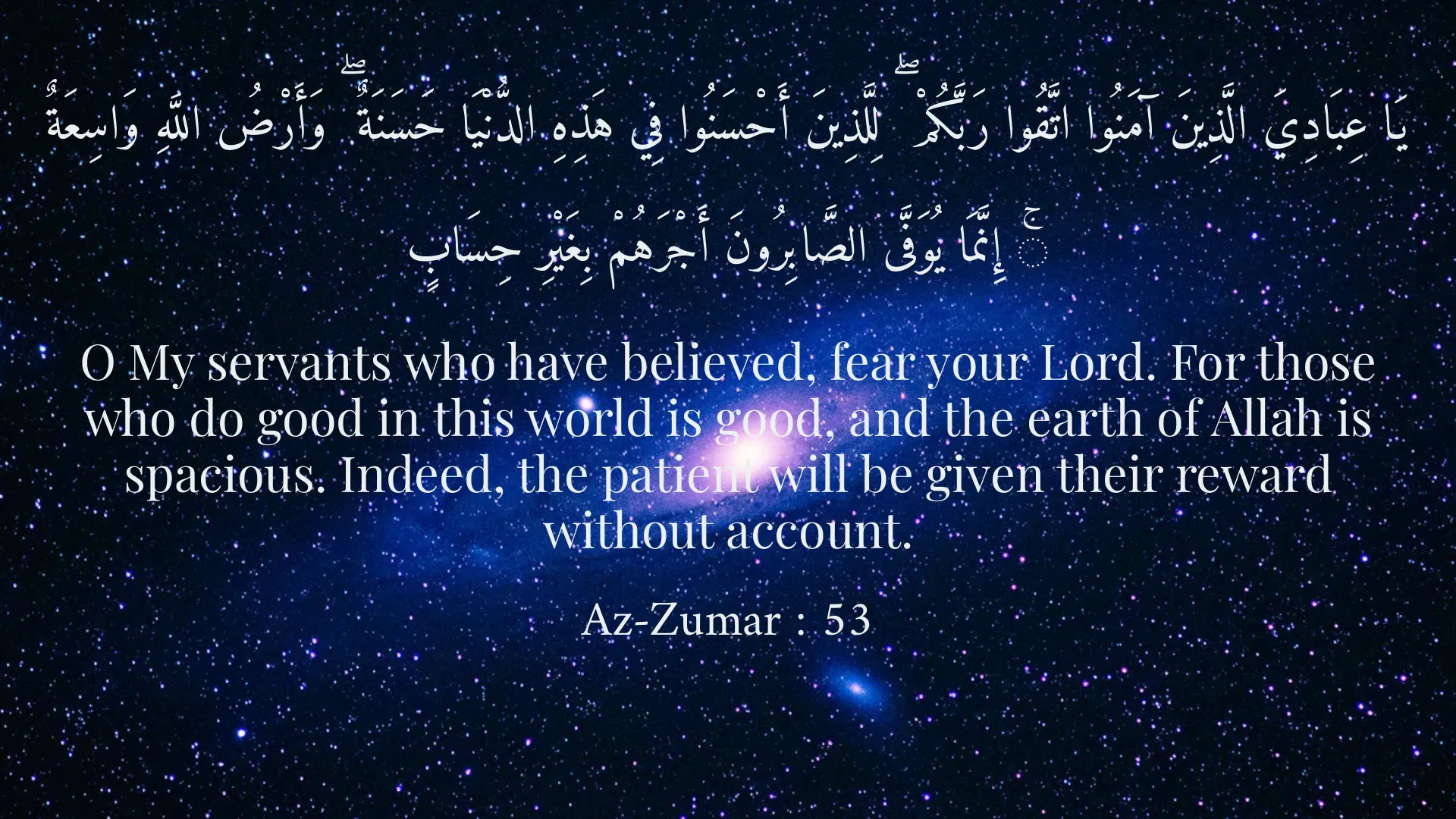
يَا عِبَادِيَ الَّذِينَ آمَنُوا اتَّقُوا رَبَّكُمْ ۖ لِلَّذِينَ أَحْسَنُوا فِي هَذِهِ الدُّنْيَا حَسَنَةٌ ۖ وَأَرْضُ اللَّهِ وَاسِعَةٌ ۚ إِنَّمَا يُوَفَّى الصَّابِرُونَ أَجْرَهُمْ بِغَيْرِ حِسَابٍ
O My servants who have believed, fear your Lord. For those who do good in this world is good, and the earth of Allah is spacious. Indeed, the patient will be given their reward without account.
Az-Zumar : 53
وَآخَرُونَ اعْتَرَفُوا بِذُنُوبِهِمْ خَلَطُوا عَمَلًا صَالِحًا وَآخَرَ سَيِّئًا ۚ عَسَى اللَّهُ أَن يَتُوبَ عَلَيْهِمْ ۚ إِنَّ اللَّهَ غَفُورٌ رَّحِيمٌ
And others have acknowledged their sins; they mixed a righteous deed with another that was evil. Perhaps Allah will turn to them in mercy. Indeed, Allah is Forgiving and Merciful.
At-Tawbah : 102
وَلَا تُفْسِدُوا فِي الْأَرْضِ بَعْدَ إِصْلَاحِهَا ۖ وَادْعُوهُ خَوْفًا وَطَمَعًا ۚ إِنَّ رَحْمَتَ اللَّهِ قَرِيبٌ مِّنَ الْمُحْسِنِينَ
And do not cause corruption upon the earth after its reformation. And invoke Him in fear and aspiration. Indeed, the mercy of Allah is near to the doers of good.
Al-A'raf : 56
Short Story
One day, a man in his lowest spiritual state approached a religious scholar, lamenting about his sins. The scholar comforted him with gentle words about God's mercy. He said that after true repentance, any sin can turn into a blessing. The man embarked on a new path, continuing to live with hope.