Quranic Answer
True love for God is a profound and gradual process that transcends mere admiration or allegiance; it is a deep, abiding relationship rooted in knowledge, understanding, and practice. This journey towards divine love is not arbitrary; it is intricately woven into the very fabric of Islamic teachings, as referenced in the Quran. In exploring the nature of love for God, we discover that it is not merely about beliefs or rituals; it is about nurturing an intimate connection with the Creator through His attributes and commandments. The first step towards attaining a genuine love for God is to know Him – to truly understand His beautiful attributes that are so graciously revealed in the Holy Quran. The Quran serves as a guide, offering insights into the nature of God and illustrating His qualities in a way that resonates deeply with the human heart. God is often described by attributes such as “The Most Merciful” and “The Most Compassionate,” signifying that His love is not conditional or limited; it is a boundless, unwavering love that seeks to envelop His servants in kindness and understanding. Through these attributes, individuals are invited to perceive the profound depth of God's love and mercy, leading them closer to Him. In Surah Al-Baqarah, verse 165, the Quran emphasizes the significance of turning one's love towards God above all else. The verse states: "And of the people are some who take other than Allah as equals [to Him]. They love them as they should love Allah. But those who believe are stronger in love for Allah." This powerful message illustrates that while humans may form attachments to worldly entities, the love for God must surpass every other love. The belief in God's unique position and the profound love that believers harbor for Him serves to cultivate a relationship that is both resilient and fulfilling. This love informs every aspect of a believer's life, guiding decisions and instilling a sense of purpose. Moreover, the Quran goes further to provide guidance for those who seek to truly embody this love. In Surah Al-Imran, verse 31, believers receive counsel on how to express their love for God: "Say, if you love Allah, then follow me, so Allah will love you." This directive emphasizes that mere affection for God is insufficient; true love for Him must be demonstrated through adherence to His commands, particularly through following the example set by His Messenger. It is through obedience that a believer walks the path toward divine love, aligning their actions with God’s will. Acts of worship—such as prayer, fasting, almsgiving, and fulfilling other religious duties—serve as tangible expressions of one's love for God. These rituals and obligations are not merely checkboxes on a list; they are profound opportunities for connection, transformation, and growth. They draw individuals nearer to God, inviting them to experience His presence in a deeply personal way. For instance, the act of prayer is not just a recitation of words; it is an intimate dialogue with the Creator, a moment infused with the opportunity to seek guidance, express gratitude, and foster a robust bond. Furthermore, the love for God manifests itself not only in personal devotion but also through acts of kindness and charity towards others. The Quran encourages believers to extend their love beyond personal worship and into their interactions with fellow human beings. The Prophet Muhammad (peace be upon him) reminded us, "The one who strives on behalf of the widow is like the one who fights in the way of Allah." Such teachings signify that the measure of one's love for God is reflected in how one treats others—demonstrating compassion, empathy, and support for those in need. Acts of charity and kindness create ripples of love that resonate beyond the individual, cultivating a sense of community and reinforcing the belief that serving others is integral to serving God. This path toward true love for God is not a sprint, but rather a marathon—characterized by perseverance, self-reflection, and growth. As believers embark on this journey, they often encounter challenges and moments of doubt. However, these trials are also opportunities for deepening one's reliance upon God and renewing one's intentions. The process of nurturing love for God is transformative, refining the heart and guiding the individual toward greater spiritual awareness. As believers come to understand God's attributes, they also realize the importance of embodying these qualities in their own lives. Traits such as mercy, compassion, patience, and justice become pivotal in shaping interactions with others. The journey then becomes a sacred cycle: as one experiences God’s love and reflects it, an individual’s bond with Him grows stronger. In conclusion, true love for God is a profound journey that intertwines knowledge, obedience, and the manifestation of divine attributes in one's life. The Quran serves as a beacon of guidance, illuminating the path for believers to cultivate their love for God through understanding His attributes, following His commands, and extending that love through actions towards others. This process is gradual and multi-faceted: it requires dedication, self-awareness, and an open heart. Ultimately, as believers endeavor to deepen their love for God, they embark on a transformative journey that enriches their lives, guiding them toward fulfillment, purpose, and a profound sense of connection with the divine.
Related Verses
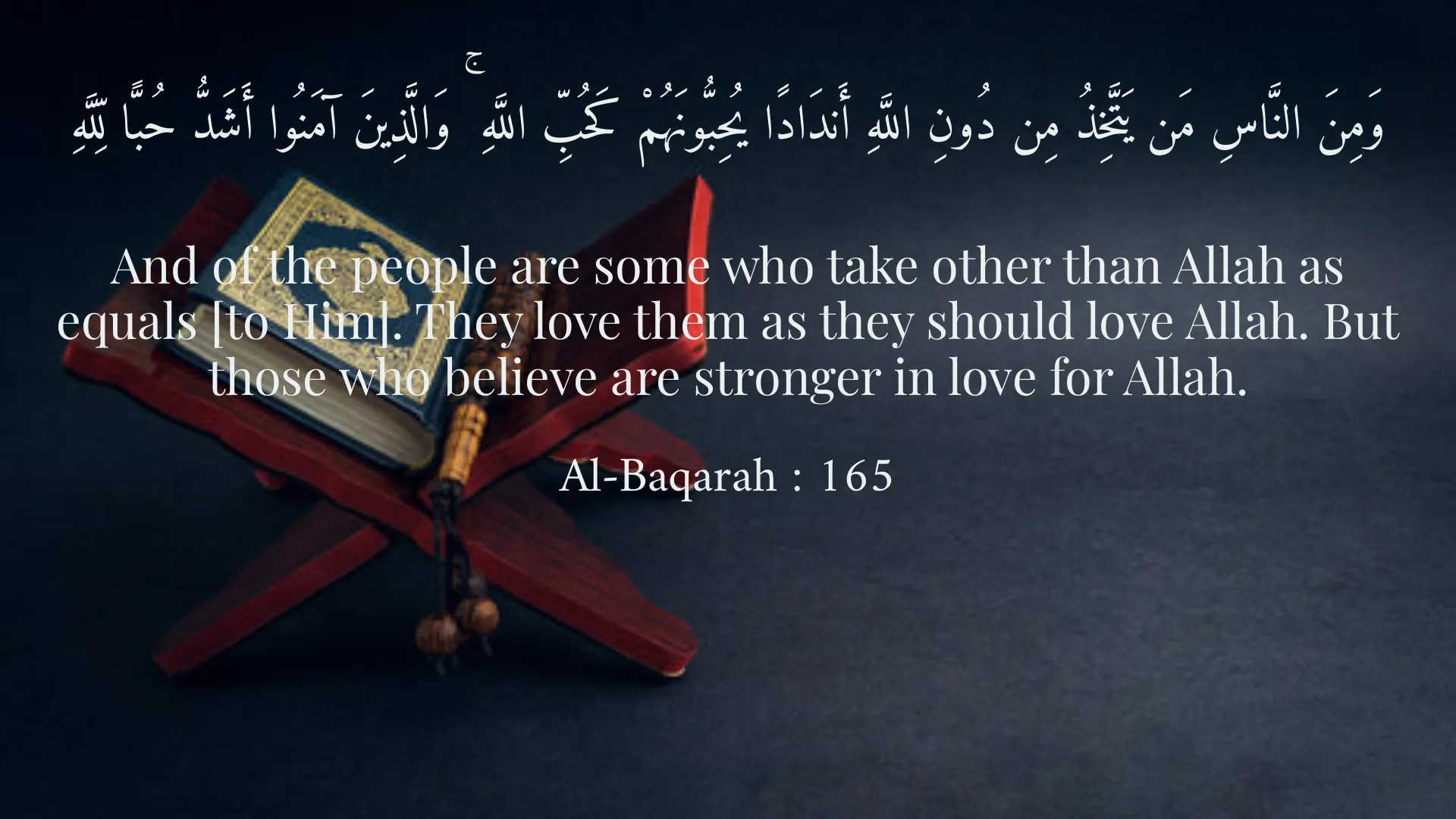
وَمِنَ النَّاسِ مَن يَتَّخِذُ مِن دُونِ اللَّهِ أَندَادًا يُحِبُّونَهُمْ كَحُبِّ اللَّهِ ۚ وَالَّذِينَ آمَنُوا أَشَدُّ حُبًّا لِّلَّهِ
And of the people are some who take other than Allah as equals [to Him]. They love them as they should love Allah. But those who believe are stronger in love for Allah.
Al-Baqarah : 165
قُلْ إِن كُنتُمْ تُحِبُّونَ اللَّهَ فَاتَّبِعُونِي يُحْبِبْكُمُ اللَّهُ
Say, if you love Allah, then follow me, so Allah will love you.
Al-Imran : 31
وَلِرَبِّكَ فَاصْبِرْ
And for your Lord, be patient.
Al-Muddathir : 7
Short Story
One day, Mahdi, a young man, asked God how he could find true love for Him. He decided to pay more attention to the Quran and reflect on its verses. Through studying and contemplating God's words, Mahdi concluded that love for God lies in obedience to His commands and kindness to His creatures. He tried to show love to others and follow divine orders in his life. One day, a friend told him that he had noticed positive changes in his behavior. With a smile, Mahdi said, 'It's just the result of my love for God.'