Quranic Answer
In the Holy Quran, several key points emphasize understanding one's responsibilities in ambiguous situations. These teachings provide guidance and insight into how to approach life's uncertainties, establishing a framework that encourages believers to navigate their challenges with wisdom and faith. This article elaborates on important Quranic verses that exemplify trust in Allah, the significance of justice, and the recognition of individual capacities which help individuals confront ambiguity in their lives. ### Trusting in Allah: The Foundation of Guidance One of the cornerstone principles presented in the Quran regarding ambiguity is the unwavering trust in Allah (SWT). Trusting Allah means accepting that He is aware of all matters and that His guidance is available to those who seek it, especially in confusing times. In Surah Al-Imran, verse 159, Allah states, 'So by mercy from Allah, [O Muhammad], you were lenient with them. And if you had been rude in speech or harsh in heart, they would have disbanded from about you.' This verse beautifully exemplifies that kindness and patience, guided by faith in Allah, can lead to positive relationships and outcomes. This verse illustrates the power of maintaining a connection with Allah while interacting with others. It reminds us that challenging situations often require us to be lenient and compassionate, even when emotions run high. Trust in Allah provides believers with the patience needed to create an environment where better outcomes can flourish. Thus, for Muslims facing the trials of life, seeking Allah's guidance and support becomes a remedy during uncertainty. ### The Assurance of Allah's Understanding of Our Capacities Another essential aspect of the Quran pertains to the acknowledgment that Allah does not impose duties beyond what a person can handle. Surah Al-Baqarah, verse 286 states, 'Allah does not burden a soul beyond that it can bear.' This verse serves as an essential reminder that while responsibilities are an intrinsic part of life, they are tailored to our strengths and capabilities. In the face of ambiguity, it can often feel overwhelming to navigate duties, but this verse assures believers that Allah's expectations align with one's ability. This assurance is immensely freeing because it alleviates any sense of disproportionate pressure that might arise in uncertain situations. Individuals struggling to cope with their responsibilities can take comfort in the belief that Allah has designed their challenges to be manageable. If you find yourself grappling with confusion or anxiety about your responsibilities, it is crucial to remind yourself that Allah's expectations are consistent with your capacity and inherent strengths. This understanding fosters a sense of confidence and perseverance, vital elements in confronting life’s ambiguities. ### Upholding Justice in Moments of Ambiguity Justice is a recurring theme in the Quran, and it takes a prominent position in managing ambiguity. In Surah Al-Maidah, verse 8, it states, 'O you who have believed, be persistently standing firm in justice, witnesses in justice for Allah.' Upholding justice is necessary not only in clear situations but also, and perhaps more importantly, in ambiguous circumstances where the road ahead is not clearly defined. The Quran urges believers to remain steadfast in their commitment to fairness and equity, even when emotions or biases cloud their vision. In difficult or unclear moments, the compass guiding one’s actions should be a sense of justice, ensuring that decisions remain consistent and reflective of one’s moral beliefs. This commitment to justice fosters trust between individuals and among communities, creating an atmosphere where clarity may emerge from confusion. When faced with ambiguity, focusing on justice can clarify one's duties. By differentiating between right and wrong and committing to principles of fairness, individuals are better positioned to navigate the uncertainties of life. Justice becomes a beacon of light, illuminating the path forward when circumstances feel unsure. ### Conclusion In conclusion, the Quran presents profound insights regarding how to approach responsibility in ambiguous situations. Trusting in Allah and seeking His guidance is central to managing life's uncertainties. The understanding that Allah does not burden a soul beyond what it can bear serves as a reminder of our capacity, providing comfort and confidence in challenging times. Finally, the Quran's call to uphold justice emphasizes that even in moments of confusion, a commitment to fairness can illuminate the way ahead. Embracing these guiding principles allows believers to navigate the complexities of life with courage, compassion, and conviction. By placing trust in Allah, recognizing their own capabilities, and committing to justice, individuals can find peace and clarity amidst ambiguity, ultimately leading to a more fulfilling and purposeful life.
Related Verses
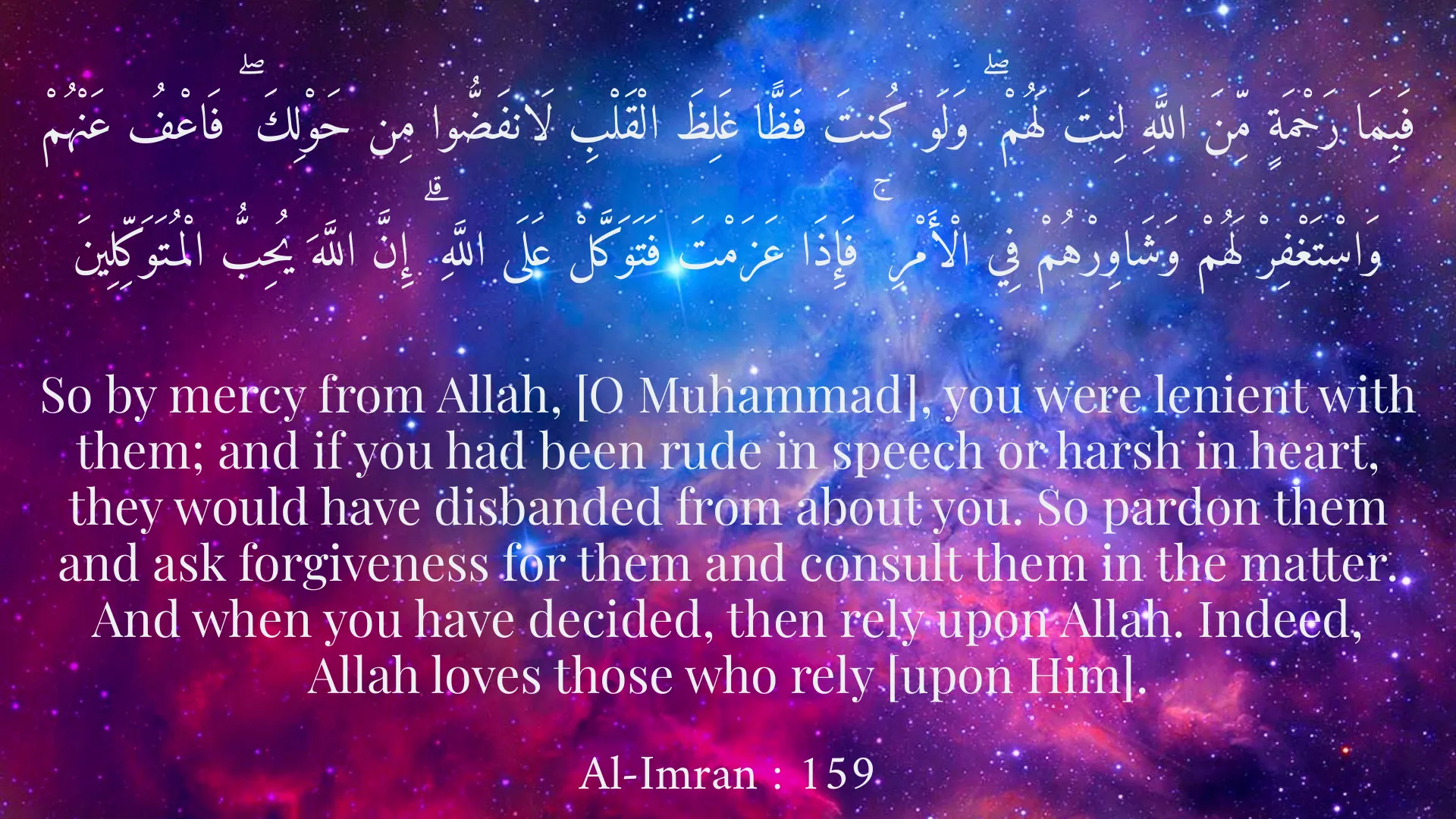
فَبِمَا رَحْمَةٍ مِّنَ اللَّهِ لِنتَ لَهُمْ ۖ وَلَو كُنتَ فَظًّا غَلِظَ الْقَلْبِ لَانفَضُّوا مِن حَوْلِكَ ۖ فَاعْفُ عَنْهُمْ وَاسْتَغْفِرْ لَهُمْ وَشَاوِرْهُمْ فِي الْأَمْرِ ۚ فَإِذَا عَزَمْتَ فَتَوَكَّلْ عَلَى اللَّهِ ۗ إِنَّ اللَّهَ يُحِبُّ الْمُتَوَكِّلِينَ
So by mercy from Allah, [O Muhammad], you were lenient with them; and if you had been rude in speech or harsh in heart, they would have disbanded from about you. So pardon them and ask forgiveness for them and consult them in the matter. And when you have decided, then rely upon Allah. Indeed, Allah loves those who rely [upon Him].
Al-Imran : 159
لَا يُكَلِّفُ اللَّهُ نَفْسًا إِلَّا وُسْعَهَا ۚ لَهَا مَا كَسَبَتْ وَعَلَيْهَا مَا اكْتَسَبَتْ ۗ رَبَّنَا لَا تُؤَاخِذْنَا إِن نَّسِينَا أَوْ أَخْطَأْنَا ۚ رَبَّنَا وَلَا تَحْمِلْ عَلَيْنَا إِصْرًا كَمَا حَمَلْتَهُ عَلَى الَّذِينَ مِن قَبْلِنَا ۚ رَبَّنَا وَلَا تُحَمِّلْنَا مَا لَا طَاقَةَ لَنَا بِهِ ۖ وَاعْفُ عَنَّا وَاغْفِرْ لَنَا وَارْحَمْنَا ۖ أَنتَ مَوْلَانَا فَانصُرْنَا عَلَى الْقَوْمِ الْكَافِرِينَ
Allah does not burden a soul beyond that it can bear. It will have [the consequence of] what [good] it has gained, and it will bear [the consequence of] what it has earned. Our Lord, do not impose blame upon us if we have forgotten or made a mistake. Our Lord, and lay not upon us a burden like that which You laid upon those before us. Our Lord, and burden us not with that which we have no ability to bear. And pardon us; and forgive us; and have mercy upon us. You are our protector, so give us victory over the disbelieving people.
Al-Baqarah : 286
يَـٰ أَيُّهَا الَّذِينَ آمَنُوا كُونُوا قَوَّامِينَ بِالْقِسْطِ شُهَدَاءَ لِلَّهِ ۚ وَلو عَلَى أَنفُسِكُمْ أَوِ الْوَالِدَيْنِ وَالْأَقْرَبِينَ ۚ إِن يَكُنْ غَنِيًّا أَوْ فَقِيرًا فَاللَّهُ أَوْلَىٰ بِهِمَا ۚ فَلَا تَتَّبِعُوا الْهَوَىٰ أَن تَعْدِلُوا ۚ وَإِن تَلْوُوا أَوْ تُعْرِضُوا فَإِنَّ اللَّهَ كَانَ بِمَا تَعْمَلُونَ خَبِيرًا
O you who have believed, be persistently standing firm in justice, witnesses for Allah, even if it be against yourselves or your parents and relatives. Whether one is rich or poor, Allah is more worthy of both. So follow not [personal] inclination, lest you not be just. And if you distort [your testimony] or refuse [to give it], then indeed Allah is Ever, with what you do, Acquainted.
Al-Maidah : 8
Short Story
One day, a young man named Hassan faced some challenges in his life and was unsure of what to do. He went to the mosque and recited a few verses from the Quran. After reading the verses, he felt a sense of calm and told himself, 'In difficult times, I should trust in God and seek His help.' After some contemplation, he decided to act fairly and consider others' opinions too. Hassan realized that by relying on God, he could make better decisions.