Quranic Answer
In the Holy Quran, piety, referred to as 'taqwa', is not merely a term but a comprehensive framework that underscores the fundamental pillars of success in human life. It encapsulates a profound essence that goes beyond mere rituals or outward expressions of faith. Instead, taqwa represents a heartfelt commitment to both belief and action, intertwining the spiritual with the tangible. This article seeks to explore the concept of piety as depicted in the Quran, specifically focusing on its role in personal success and fulfillment through the lens of selected Quranic verses. Allah's definition of righteousness in Surah Al-Baqarah, verse 177, serves as a cornerstone in understanding taqwa. The verse states: "It is not righteousness that you turn your faces toward the east or the west, but [true] righteousness is in one who believes in Allah, the Last Day, the Angels, the Scripture, and the Prophets, and gives his wealth, in spite of love for it, to relatives, orphans, the needy, the traveler, those who ask [for help], and for freeing slaves." This statement profoundly shifts the focus from mere external forms of worship to the essence of moral and ethical behavior. In other words, the true measure of piety lies in one’s faith and commitment to good deeds, especially in helping those in need. Piety, as indicated in this verse, entails a deep-rooted faith in Allah and all the tenets of the religion. This faith is characterized by belief in the Last Day, the accountability that ensues, and the necessity of supporting those who are vulnerable or marginalized within society. The Quran emphasizes that while rituals and prayers are significant, they must be accompanied by actions that illustrate compassion, generosity, and social responsibility. This holistic approach to piety instills a sense of purpose and direction, especially in times of uncertainty and adversity. In another pertinent verse, Surah Aal-E-Imran, verse 133 states: "And hasten to forgiveness from your Lord and a garden as wide as the heavens and the earth, prepared for the righteous." Here, the Quran emphasizes the importance of seeking forgiveness and striving for divine mercy. The imagery of a garden as vast as the heavens and the earth evokes a sense of hope and aspiration for eternal success in the Hereafter. It drives home the message that true piety not only secures worldly success but also paves the way for spiritual fulfillment. This notion signifies an eternal reward prepared for the righteous who maintain their piety despite life's challenges and temptations. It becomes evident that piety, or taqwa, forms an intrinsic part of an individual's identity and affects their interactions with others and their approach to personal trials. When one embodies taqwa, it fosters a sense of community and awareness regarding one’s responsibilities toward others. The promises of Allah highlight that those who place their trust in Him and uphold their piety are often granted support during hardships. This is encapsulated in Surah Al-Mu’minun, verse 61, which states: "And those who trust in the promises of Allah are always victorious." Trust in Allah, which is intertwined with piety, becomes a vital component of success. This success is not merely defined by material gains but includes spiritual victories, mental resilience, and emotional tranquility. Moreover, it is essential to recognize that piety influences not just the individual but extends its reach to society as a whole. A pious individual often acts as a beacon of light within their community, inspiring others to engage in acts of kindness and generosity. In times of disaster or socio-economic challenges, those who practice taqwa are motivated to step forward, offering assistance and support to alleviate suffering. The collective impact of such piety becomes a foundation for the development of a supportive and cohesive society. Divine guidance plays a critical role in nurturing piety. The Quran repeatedly emphasizes the significance of seeking Allah’s help and relying on Him for guidance. This reliance fosters a deep sense of inner peace and assurance that, regardless of life's trials, one is equipped with spiritual tools to navigate through these challenges. In essence, embracing taqwa creates a sense of empowerment that emboldens individuals to engage courageously with the fluctuations of life. Achieving piety is indeed a journey, requiring consistent effort and deep commitment. It calls for self-reflection and a genuine desire to align one’s actions with the divine principles outlined in the Quran. As individuals strive to cultivate piety within themselves, they are better positioned to overcome the obstacles they face and fulfill their aspirations. The journey is not devoid of challenges; however, the rewards of maintaining a pious heart are substantial, both in this life and the hereafter. To conclude, piety, or taqwa, is far more than a concept in Islam; it is a guiding principle that enhances every aspect of life. Through the acknowledgment of Allah’s oneness, the performance of good deeds, and a commitment to social justice, one can truly exemplify what it means to be righteous. Embracing this state of piety enables individuals to experience a transformative journey, marked by divine favor and fulfillment of life’s purposes. The Quran serves as a roadmap for achieving this ideal, providing clear guidelines to foster a life steeped in faith, action, and compassion. In adopting piety, believers not only secure their success in this world but also pave the way for eternal bliss in the hereafter.
Related Verses
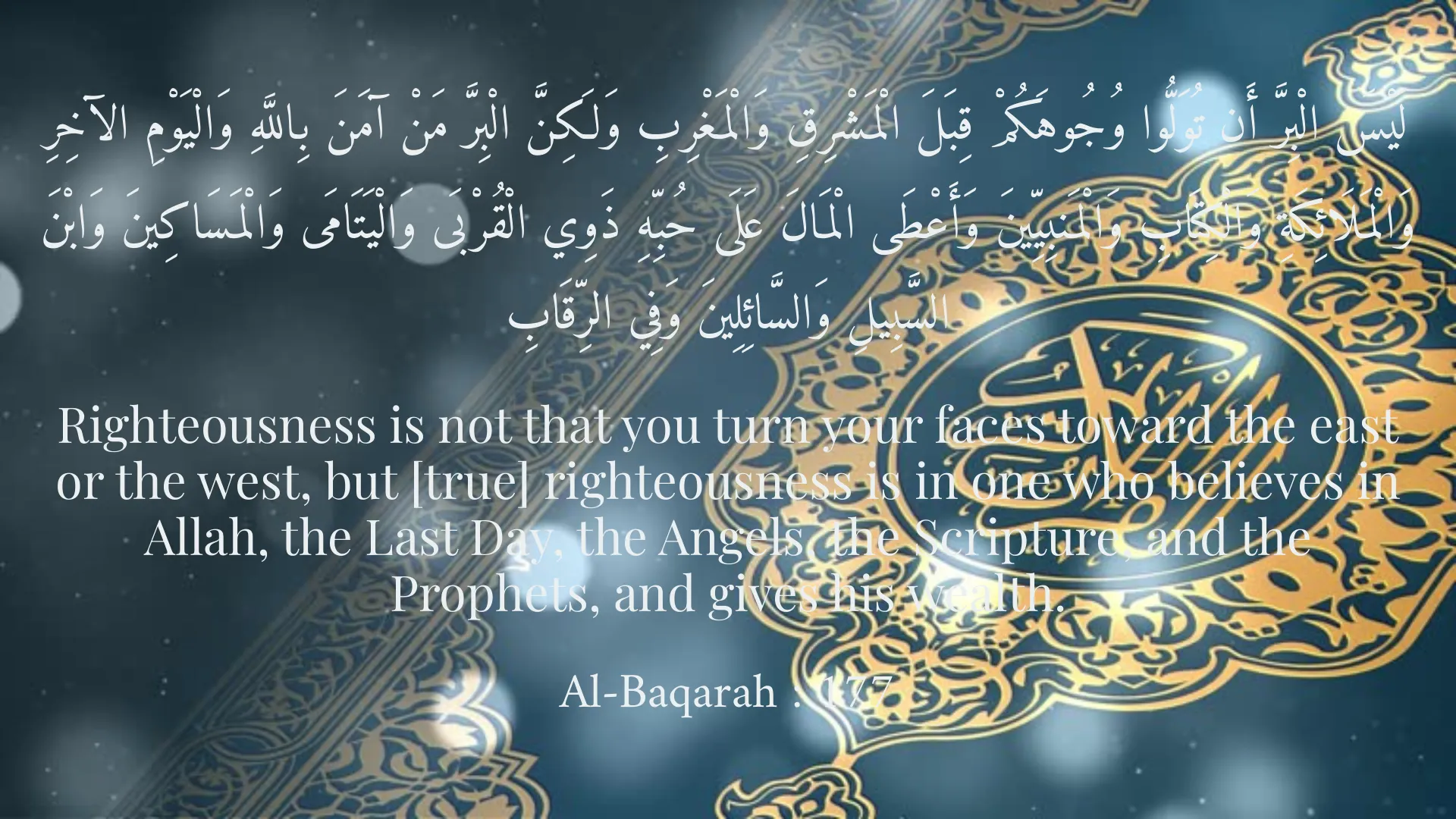
لَيْسَ الْبِرَّ أَن تُوَلُّوا وُجُوهَكُمْ قِبَلَ الْمَشْرِقِ وَالْمَغْرِبِ وَلَكِنَّ الْبِرَّ مَنْ آمَنَ بِاللَّهِ وَالْيَوْمِ الآخِرِ وَالْمَلَائِكَةِ وَالْكِتَابِ وَالْمَنبِيِّينَ وَأَعْطَى الْمَالَ عَلَى حُبِّهِ ذَوِي الْقُرْبَى وَالْيَتَامَى وَالْمَسَاكِينَ وَابْنَ السَّبِيلِ وَالسَّائِلِينَ وَفِي الرِّقَابِ
Righteousness is not that you turn your faces toward the east or the west, but [true] righteousness is in one who believes in Allah, the Last Day, the Angels, the Scripture, and the Prophets, and gives his wealth.
Al-Baqarah : 177
وَسَارِعُوا إِلَى مَغْفِرَةٍ مِّن رَّبِّكُمْ وَجَنَّةٍ عَرْضُهَا كَعَرْضِ السَّمَاءِ وَالْأَرْضِ أُعِدَّتْ لِلْمُتَّقِينَ
And hasten to forgiveness from your Lord and a garden as wide as the heavens and the earth, prepared for the righteous.
Al-Imran : 133
وَالَّذِينَ يَثِقُونَ بَوَعُودِ اللَّهِ هُمُ الْمُفْلِحُونَ
And those who trust in the promises of Allah are always victorious.
Al-Mu’minun : 61
Short Story
Once upon a time in a small village, there was a young man named Hamed who was searching for success in life. He always took advice from his parents, who taught him to maintain piety and fear of God in his life. Hamed decided to achieve his goals with piety and honesty. One day, in the middle of his job, he was asked to choose the most undesirable thing he could do, but he firmly rejected the proposal. In this context, his efforts and trust in God helped him reach the highest levels of success and gain respect in the hearts of people.