Quranic Answer
In the Holy Quran, the concept of placing trust in God, or Tawakkul, emerges as a fundamental precept woven throughout the fabric of Islamic teachings. This principle not only underscores one of the pillars of faith but also presents a profound pathway toward achieving one’s life aspirations. By understanding and applying the essence of trust in God, believers are given both reassurance and direction that can guide them through the complexities of life. The Quran elucidates this concept with clarity and depth. For instance, in Surah Al-Imran, verse 159, Allah States, 'Even though you don't know what Allah has in store, trust Him.' This verse serves as a poignant reminder that the future is often obscured from human sight, laden with uncertainties and unexpected turns. Yet, within this obscurity lies the call to place absolute trust in the Divine. Trusting God in this context is not a passive state; it is an active commitment to have faith in Him while engaging in the rigorous tasks required to reach one's goals. It is crucial to underscore that reliance on God does not imply inaction or the abdication of personal responsibility. Instead, true reliance on God necessitates that individuals diligently exert themselves in their pursuits while simultaneously placing their confidence in Him. This duality is beautifully reflected in another Quranic verse. In Surah Al-Mu'minun, verse 60, it is emphasized, 'Only rely on God, for He is the best supporter.' This verse reiterates that while believers engage in their efforts toward their goals, they must also recognize that ultimate support and sustenance come from God. To effectively achieve any goal, an individual must first articulate a clear vision of what that goal entails. This process of goal-setting is paramount; it lays the groundwork upon which actions must be taken. Following this, human actions become essential. The Quran encourages believers to take concrete steps towards their aspirations, fostering an environment of proactivity rather than passivity. Throughout the journey of attempting to fulfill one’s aspirations, challenges and obstacles are inevitable. During such trying times, the Quran advises a steadfast reliance on God, coupled with personal endeavors. The struggle may often lead to feelings of inadequacy and despair, yet it is within these moments that a believer's trust in God is tested and fortified. Recognizing, as stated in Surah At-Talaq, verse 3, 'And whoever relies upon Allah, He is sufficient for him,' can significantly alleviate the burdens that one may carry. This verse not only reinforces the necessity of reliance upon God but also underscores His sufficiency as a source of strength. Moreover, trust in God encompasses an innate belief in His continuous mercy and support. The journey toward any goal is rarely linear, and if one remains open to God's wisdom, the twists and turns can be navigated more gracefully. Accepting that challenges are part of the Divine plan can shift a believer's perspective from seeing a situation as an obstacle to viewing it as a valuable lesson or opportunity for growth. The relationship between human effort and divine assistance forms the crux of spiritual realization within Islamic thought. One must exert every effort to engage with life's pursuits while simultaneously trusting that the outcomes will unfold according to God's perfect wisdom. The Caliphs, Prophets, and significant figures in Islamic history exemplified this balance of effort and trust. They actively sought their goals, but they consistently placed their trust in God to guide their outcomes, serving as models for contemporary believers. In order to internalize the importance of trust in God, it is beneficial to reflect on personal experiences where reliance on God led to unexpected yet fortunate outcomes. Understanding that many successes stem from efforts accompanied by faith can enhance one's ability to trust in both the journey and the outcomes. Whether it involves academic pursuits, professional endeavors, or personal relationships, integrating this principle can inspire growth and resilience. Furthermore, fostering a robust relationship through prayer and supplication can help strengthen one’s trust in God. Engaging in daily prayers and asking for guidance creates a channel of communication between the believer and God, reinforcing the sentiment that one is never alone. As believers continuously engage with God through prayer, their ability to trust Him deepens, providing a spiritual cover that carries them through hardships. The act of worship itself acts as a reaffirmation of trust. When believers kneel in prayer, they acknowledge their limited human capacity while simultaneously expressing their reliance on God’s infinite strength. This acknowledgment is pivotal, as it humbles the individual and reinforces their faith in God's ultimate plan. In conclusion, trust in God is not merely a passive affirmation; it is an imperative that calls for active engagement and determination. The teachings of the Holy Quran invite believers to recognize that while they navigate their own paths, they are part of a much larger divine narrative. By setting clear goals, exerting effort, and maintaining unwavering faith in God's wisdom and mercy, individuals can achieve fulfillment in their lives. Ultimately, the journey of trust becomes a dual commitment—a promise to oneself to work diligently toward one’s aspirations, coupled with a heartfelt reliance on God to guide those efforts toward the best possible outcomes. Embracing this concept leads to a profound transformation, allowing believers to live with purpose, resilience, and peace. The Quran elegantly encapsulates this philosophy, inviting believers to experience the powerful synergy between effort and divine support.
Related Verses
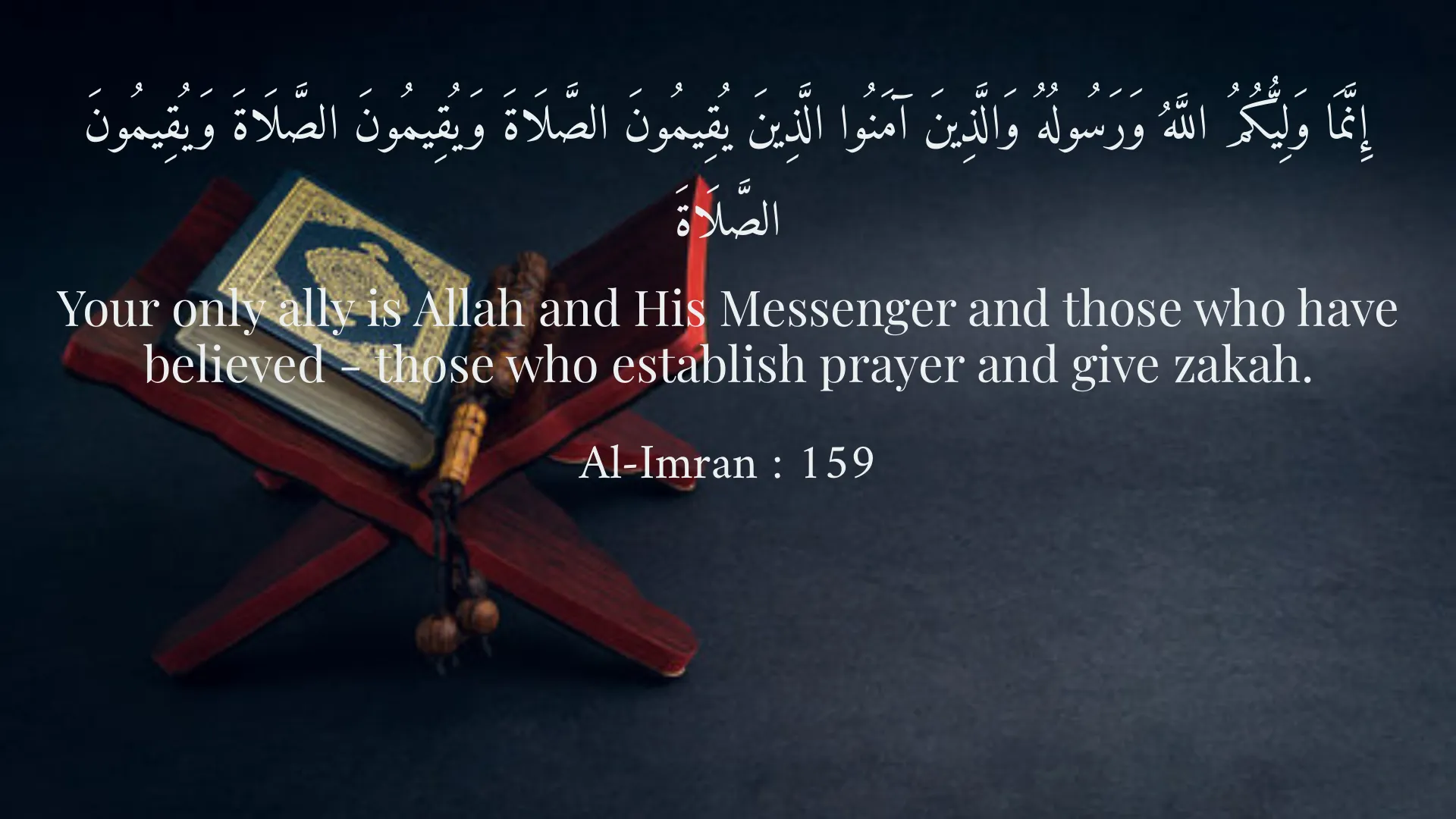
إِنَّمَا وَلِيُّكُمُ اللَّهُ وَرَسُولُهُ وَالَّذِينَ آمَنُوا الَّذِينَ يُقِيمُونَ الصَّلَاةَ وَيُقِيمُونَ الصَّلَاةَ وَيُقِيمُونَ الصَّلَاةَ
Your only ally is Allah and His Messenger and those who have believed - those who establish prayer and give zakah.
Al-Imran : 159
وَمَن يَتَوَكَّلْ عَلَى اللَّهِ فَهُوَ حَسْبُهُ
And whoever relies upon Allah - then He is sufficient for him.
Al-Mu'minun : 60
وَمَن يَتَوَكَّلْ عَلَى اللَّهِ فَهُوَ حَسْبُهُ
And whoever relies upon Allah - then He is sufficient for him.
At-Talaq : 3
Short Story
Once upon a time, a man named Hossein decided to get closer to his goals. He realized that mere effort wasn’t enough, and he needed to trust God as well. One day, while sitting under a tree, he prayed for guidance and assistance. Suddenly, it began to rain, and he saw the signs of God's blessings around him. After that, Hossein understood how much he had to trust God and succeeded in his life through that reliance.