Quranic Answer
### The Weight of Regret: Reflections from the Quran on the Day of Judgment The concept of regret and remorse is a recurrent theme in various aspects of human life, but nowhere is it more profoundly articulated than in the Islamic tradition. The Holy Quran, revered as the ultimate guide for Muslims, contains several poignant warnings about the potential for deep regret on the Day of Judgment. This topic is not just a theological caution; it serves as a moral compass urging believers to lead lives rich with virtue and righteousness. This article aims to delve into the various verses of the Quran that highlight this theme and explore the implications of these messages on our daily lives. #### Understanding Regret in the Context of the Afterlife In Surah Al-Mu'minun, verses 99 to 100, we find a vivid illustration of this regret faced on the Day of Judgment. The verses describe how individuals, upon confronting the truth, will lament the worldly life they lived, filled with missed opportunities for righteous deeds. The Quran notes: "Until, when death comes to one of them, he says, 'My Lord, send me back.' That I might do righteousness in that which I left behind.' No! It is only a word he is saying; and behind them is a barrier until the Day they are resurrected." This scene paints a tormenting picture of despair, where people wish for another chance to amend their past choices, ultimately realizing that time is a commodity that can never be reclaimed. The profound regret indicated in these verses serves to remind us that our actions in this world directly impact our existence in the hereafter. Every moment wasted in negligence inevitably becomes an anchor of sorrow when faced with eternal accountability. Thus, it becomes crucial to deal with this reality by adhering to the guidance provided in the Quran and by living with mindfulness of our ultimate return to God. #### The Reality of Death and the Temporary Nature of Life Surah Al-Imran, verse 185 states: "Every soul will taste death, and you will only be given your full compensation on the Day of Resurrection. So, he who is drawn away from the Fire and admitted to Paradise has indeed succeeded. And what is the life of this world except the enjoyment of delusion." This verse encapsulates the essence of existence in this worldly life. It highlights that regardless of our status, riches, or achievements, the one inevitable truth is death. The reminder of mortality humbles us and anchors us to the significance of seeking good deeds that please Allah. This life, though filled with distractions and temptations, is transient. The fleeting nature of worldly pleasures serves as a lens through which we must view our lives. Rather than being ensnared by temporary enjoyment, believers should focus on actions that yield eternal rewards. This perspective fosters a sense of urgency in performing righteous deeds while also nurturing a spiritual connection with God. #### Filling Our Lives with Worship and Righteousness The emphasis on avoiding regret ties closely to a proactive approach to life—actively engaging in good deeds, worship, and acts of charity. Surah Fatir, verse 37, reinforces the notion of people wishing they had been granted another chance: "And they will cry out to their Lord, 'Our Lord, bring us out; we will do righteousness — other than what we were doing.'" This highlights an essential aspect of human nature: the desire for redemption and self-improvement. To counter this potential for remorse, it is essential to fill our days with acts of goodness. This could include performing daily prayers, engaging in charitable work, seeking knowledge, and being kind and compassionate to others. The more we immerse ourselves in these activities, the less likelihood exists for regret when we ultimately confront eternity. #### The Importance of Continuous Remembrance of Allah Remembering God is a crucial element in navigating our lives toward righteousness. The Quran encourages believers to remain conscious of Allah, as this mindfulness shapes our actions. Regular prayers, recitation of the Quran, and remembrance (dhikr) serve as constant reminders of our purpose and duties in life. A heart connected to God remains steadfast in the face of life's trials and tribulations. By nurturing our spiritual connection through daily acts of worship, we insulate ourselves from the pitfalls of a life filled with regret. As we walk on the path of righteousness, we cultivate a sense of fulfillment and peace, knowing that we're preparing for an eternal abode. #### Conclusion: A Call to Action In summary, the messages conveyed through the Holy Quran concerning regret and remorse on the Day of Judgment are urgent reminders for every believer. The reflections drawn from specific verses emphasize the importance of living with purpose, making conscious decisions that align with divine guidance, and actively seeking the pleasure of Allah. The reality is that life is fleeting, and the consequences of our deeds are lasting. Thus, with every breath, we should strive to avoid the traps of negligence, remind ourselves of the transitory nature of this world, and take meaningful action toward righteousness today. By doing so, we can hope to bypass the bitterness of regret and embrace the joy of eternal companionship with our Creator in the hereafter.
Related Verses
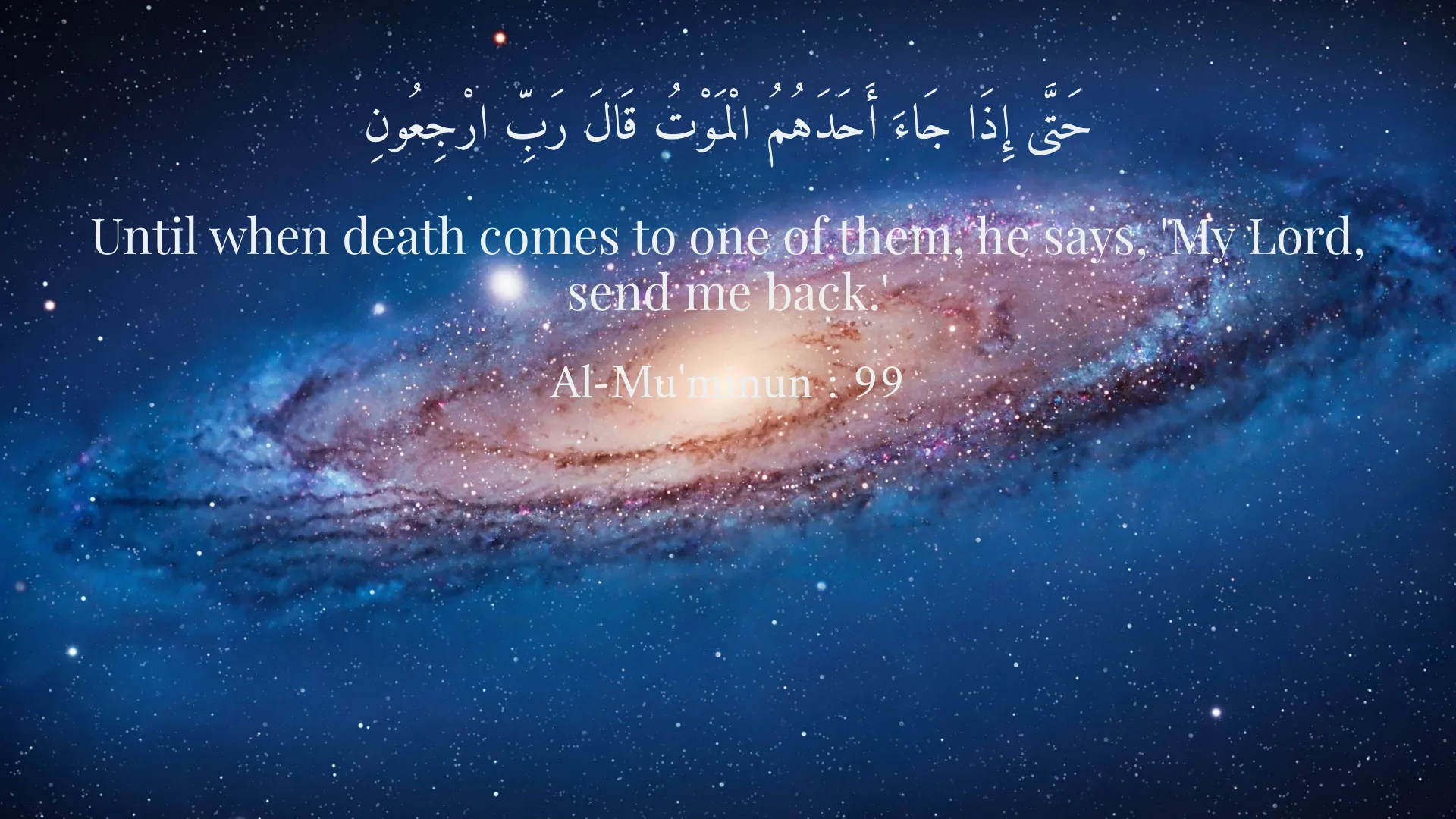
حَتَّى إِذَا جَاءَ أَحَدَهُمُ الْمَوْتُ قَالَ رَبِّ ارْجِعُونِ
Until when death comes to one of them, he says, 'My Lord, send me back.'
Al-Mu'minun : 99
كُلُّ نَفْسٍ ذَائِقَةُ الْمَوْتِ ۖ وَإِنَّمَا تُوَفَّوْنَ أُجُورَكُمْ يَوْمَ الْقِيَامَةِ ۚ فَمَن زُحْزِحَ عَنِ النَّارِ وَأُدْخِلَ الْجَنَّةَ فَقَدْ فَازَ ۚ وَمَا الْحَيَاةُ الدُّنْيَا إِلَّا مَتَاعُ الْغُرُورِ
Every soul will taste death. And you will only be given your full compensation on the Day of Resurrection. So he who is drawn away from the Fire and admitted to Paradise has certainly succeeded. And what is the worldly life except the enjoyment of delusion?
Al-Imran : 185
أَلَمْ يَأْنِ لِلَّذِينَ آمَنُوا أَن تَخْشَعَ قُلُوبُهُمْ لِذِكْرِ اللَّهِ وَمَا نَزَلَ مِنَ الْحَقِّ وَلَا يَكُونُوا كَالَّذِينَ أُوتُوا الْكِتَابَ مِن قَبْلُ فَطَالَ عَلَيْهِمُ الْأَمَدُ فَقَسَتْ قُلُوبُهُمْ ۖ وَكَثِيرٌ مِّنْهُمْ فَاسِقُونَ
Has the time not come for those who have believed that their hearts should become humbly submissive at the remembrance of Allah and what has come down of truth, and not be like those who were given the Scripture before, and a long period passed over them, so their hearts hardened? And many of them were defiantly disobedient.
Fatir : 37
Short Story
One day, a man named Ali was pondering about his life. He always mentioned that he wanted to avoid regret on the Day of Judgment. One day, he decided to fill his days with good deeds and worship. Therefore, he began helping others and stopped thinking only of himself. Days passed, and he felt a lot of happiness. After a while, he remembered that his choices had brought him peace and contentment, and he sincerely thanked God.