Quranic Answer
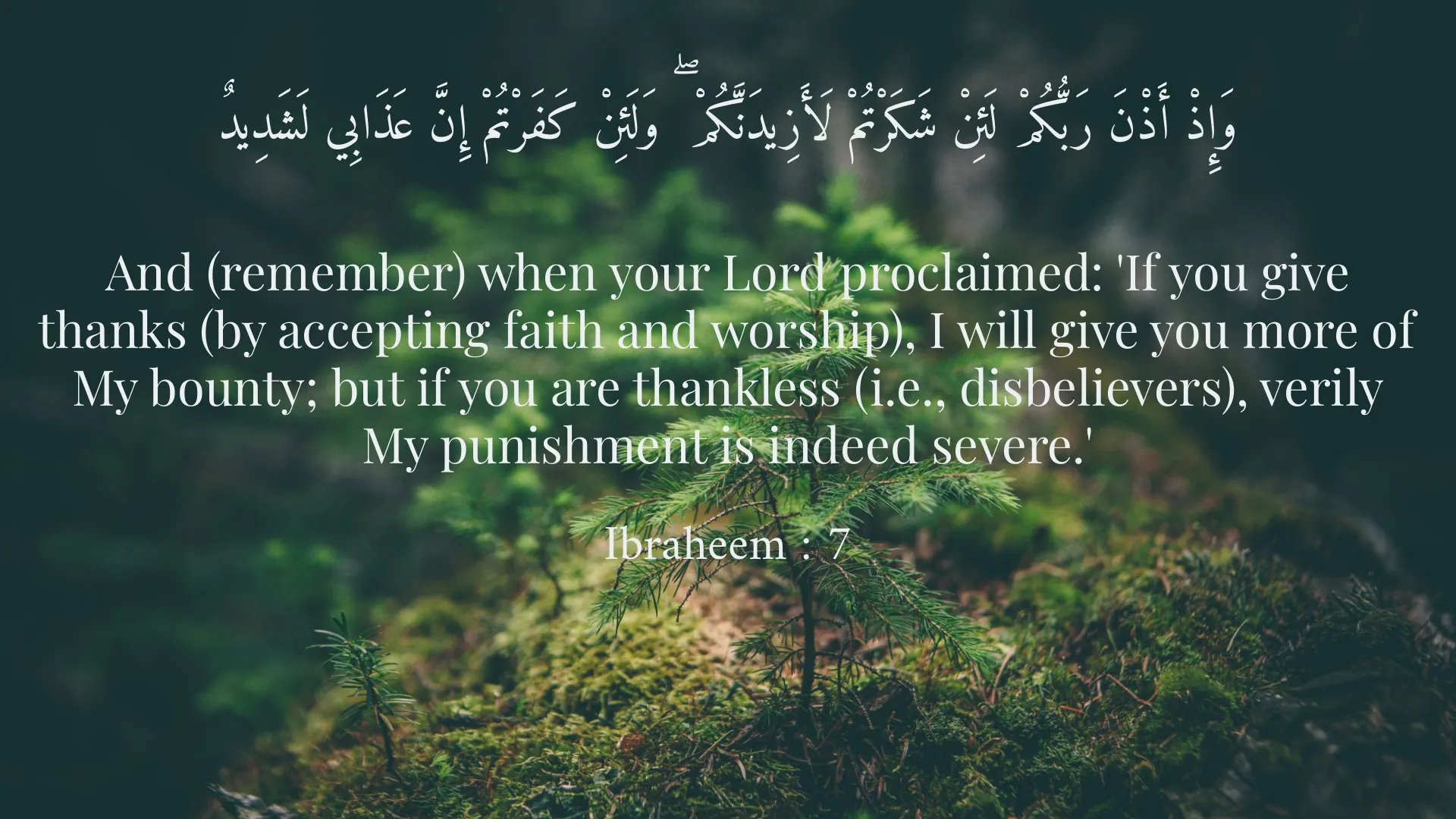
In the Holy Quran, gratitude is not merely a passive state of acknowledgment but is presented as one of the defining attributes of true believers. The concept of gratitude is so profoundly acknowledged, particularly in the verses of Surah Ibrahim, that it grants believers guidance on how to interact with the bounties they receive from God. The Quran touches on gratitude as something that is not only important for an individual’s spiritual development but also carries significant weight in the context of social responsibilities and communal well-being. This article delves deeper into the concept of gratitude as presented in the Holy Quran, examining its significance, implications, and the call for believers to act on their gratitude. The essence of gratitude is articulated in Surah Ibrahim, verse 7, where Allah proclaims: "And (remember) when your Lord proclaimed: 'If you give thanks (by accepting faith and worship), I will give you more of My bounty; but if you are thankless (i.e., disbelievers), verily My punishment is indeed severe.'" This verse serves as a powerful reminder that gratitude is intertwined with faith and worship. When believers express sincere gratitude towards God’s blessings, they open themselves up to receive even more of His bounty. This is a profound spiritual concept that suggests that gratitude can create a cycle of positivity and abundance. The message here tells us that recognizing and appreciating the blessings in our lives not only enhances our relationship with God but also invokes His mercy and further blessings. However, to be truly grateful, it is essential to recognize one’s blessings genuinely. The state of gratitude requires more than mere recognition; it demands an appreciation that resonates with the heart and is expressed through words and actions. Gratitude, according to the Quran, is an act of the heart that is vocalized. It encompasses recognizing the countless bounties bestowed upon us, whether they relate to health, family, sustenance, or the simple joys of life. In order to fully understand and appreciate these blessings, knowledge plays a crucial role. This is articulated in Surah An-Naml, verse 40: "He who had knowledge of the Scripture said, 'I can bring it to you before your rise from your place.'" Here, the emphasis on knowledge suggests that an informed heart is better equipped to express gratitude. Knowledge allows believers to understand the depth of blessings they enjoy and facilitates a more profound appreciation for them. It enables one to see beyond the surface of material possessions and recognize the underlying grace that each blessing signifies. A person who is knowledgeable about God's infinite mercy and the transient nature of worldly life is more likely to express gratitude consistently and genuinely. The act of expressing gratitude should not remain confined to mere words. In essence, true gratitude manifests through actions. The Quran encourages believers to share their blessings with others, creating a spirit of community in which gratitude transcends individual experiences and fosters a sense of collective responsibility. By using our blessings to serve humanity and improve the lives of those around us, we embody the principles laid out in the Quran. Gratitude, therefore, becomes an active pursuit, leading to a reciprocal relationship where our giving results in a greater understanding and appreciation of what we have received. Furthermore, the importance of this active expression of gratitude is highlighted in Surah Al-Imran, verse 83: "Do you not see those who exchange the favor of Allah for disbelief and cause their people to descend to the abode of destruction?" This verse is a stark warning about the consequences of ingratitude and disbelief. It underscores that those who fail to express gratitude for God's blessings may find themselves facing severe repercussions. The Quran serves as a reminder that the act of gratitude has both spiritual and moral implications. In conclusion, the Quranic perspective on gratitude weaves together faith, knowledge, social responsibility, and action. Gratitude is much more than an acknowledgment of God's blessings; it is an imperative that requires believers to actively recognize, appreciate, and share those blessings. It encompasses a holistic approach to living, where gratitude is deeply embedded in both personal and communal dimensions. Believers are encouraged not to take their blessings for granted but to cultivate a state of awareness and appreciation that is reflected in both their words and actions. By doing so, they not only foster a deeper relationship with God but also contribute to the betterment of society, embodying the spirit of gratitude that the Quran advocates. Ultimately, the message of gratitude in the Holy Quran challenges us to examine our hearts, embrace our blessings with sincerity, and act upon them, ensuring that we not only enrich our own lives but also the lives of those around us.
Related Verses
وَإِذْ أَذْنَ رَبُّكُمْ لَئِنْ شَكَرْتُمْ لَأَزِيدَنَّكُمْ ۖ وَلَئِنْ كَفَرْتُمْ إِنَّ عَذَابِي لَشَدِيدٌ
And (remember) when your Lord proclaimed: 'If you give thanks (by accepting faith and worship), I will give you more of My bounty; but if you are thankless (i.e., disbelievers), verily My punishment is indeed severe.'
Ibraheem : 7
قالَ الذي عِندَهُ عِلْمٌ مِّنَ الْكِتابِ أَنَا آتِيْكَ بِهِ قَبْلَ أَنْ يَرْتَدَّ إِلَيْكَ طَرْفُكَ
He who had knowledge of the Scripture said, 'I can bring it to you before your rise from your place.'
An-Naml : 40
أَلَمْ تَرَ إِلَى الَّذِينَ بَدَّلُوا نِعْمَتَ اللَّهِ كُفْرًا وَأَحَلُّوا قَوْمَهُمْ دَارَ الْبَوَارِ
Do you not see those who exchange the favor of Allah for disbelief and cause their people to descend to the abode of destruction?
Al-Imran : 83
Short Story
One day, Mahdi was sitting in a park, looking around. He recalled the blessings of God and decided to be more grateful. He started writing a gratitude journal, noting down the blessings he had every day. This helped him focus more on the positives in his life, and as a result, his sense of gratitude increased.