Quranic Answer
The love of God for His servants is a central theme in the Holy Quran, reflecting a profound and multifaceted relationship that is both personal and communal. This divine love is not merely an abstract concept but is vividly depicted through various verses that highlight God's mercy, guidance, and the expectations He has for His followers. Understanding this love and how it manifests in our lives can significantly impact our spiritual journey and moral conduct. One of the most compelling signs of God's love is His mercy towards His creatures. In Surah Az-Zumar, verse 53, Allah explicitly states: "O My servants who have believed, fear your Lord. For those who do good in this world is good, and the earth of Allah is spacious. Indeed, the patient will be given their reward without account." This verse offers a comforting reminder that God’s mercy is all-encompassing and is not reserved solely for the righteous. Rather, it is a beacon of hope for sinners, assuring them that despite their transgressions, His love remains steadfast, and He is ever ready to forgive. It emphasizes the notion that despairing of God’s mercy is contrary to the essence of faith. Mercy isn't just about forgiveness; it is also an invitation to return to Him, to seek repentance, and to nurture a relationship imbued with love and respect. This theme is particularly relevant in the modern world where many individuals may feel burdened by their sins or the pressures of life. The Quran encourages believers to embrace the idea that they are never alone in their struggles and that God's love is always extended, waiting for them to reflect and return to the righteous path. In addition to mercy, the Quran also emphasizes the importance of following the Prophet Muhammad (peace be upon him) as a testament to one's love for God. In Surah Al-Imran, verse 31, Allah commands: "Say, [O Muhammad], 'If you should love Allah, then follow me, so Allah will love you and forgive you your sins. And Allah is Forgiving and Merciful.'" This verse establishes a direct connection between love for the Messenger of Allah and love for God. Following the Prophet’s teachings is more than just an act of obedience; it symbolizes a commitment to embody the principles of faith, compassion, and patience that he exemplified. This call to follow the Prophet serves as both a guideline for behavior and a deeper understanding of the love that God holds for humanity. By striving to emulate the Prophet’s actions and fulfilling the divine commandments, believers align themselves with a path that brings them closer to God’s love. The essence of this passage lies in the recognition that true love for God cannot exist in isolation; it requires us to engage actively with His teachings and the community around us, fostering bonds of love and respect amongst each other. Furthermore, the Quran teaches us that true love is not something to be taken lightly or misplaced. In Surah Al-Baqarah, verse 165, God articulates the danger of misplaced love: "And among the people are some who take other than Allah as equals [to Him]..." This verse serves as a crucial reminder that while many may claim love for various entities or worldly comforts, the purest form of love belongs solely to God. This love must be reflected not only in our words but also in how we prioritize our lives—worshiping Him alone without associating partners with Him. This principle of monotheism underscores that true affection should be directed exclusively towards Allah. The love of God is encompassing, transcending cultural, geographical, and temporal boundaries, inviting all to submit to His will and experience the profound joy that comes from genuine worship. Recognizing God's supremacy and dedicating oneself exclusively to Him is foundational for building a love that is both authentic and reciprocated. The manifestation of God's love can also be found in the encouragement to engage in good deeds and to cultivate a sense of personal responsibility and spirituality. This is outlined in various verses urging believers to act justly, care for the needy, and contribute positively to their communities. The Quran does not simply view good deeds as acts of religious duty; instead, they are portrayed as essential expressions of love and gratitude towards God. Engaging in charity, helping those in need, and acting with integrity all reflect a heart that is aware of God’s love and responds in kind. Good deeds serve as tangible manifestations of our love for God and illustrate the impact of divine love on our actions. Through acts of kindness, we not only bring joy to others but also nurture our souls and cultivate a closer relationship with our Creator. This reciprocal connection—where God's love begets our actions and our actions reflect His love—is fundamental to understanding the spiritual dynamics at play in our lives. In conclusion, the love of God for His servants is a rich and profound narrative articulated throughout the Holy Quran. Through His mercy, the call to follow the Prophet, and the directives to perform good deeds, believers are invited to recognize and respond to God’s love in their lives. This relationship is not merely about obedience; it is about establishing a connection filled with respect, compassion, and nurturing mutual love. As we navigate through life, it becomes essential to reflect on how we can embody this divine love, transforming it into actions that uplift ourselves and those around us. Ultimately, the Quran provides not only a pathway to understand God's love but also an opportunity to cultivate and spread that love in a world that desperately needs it.
Related Verses
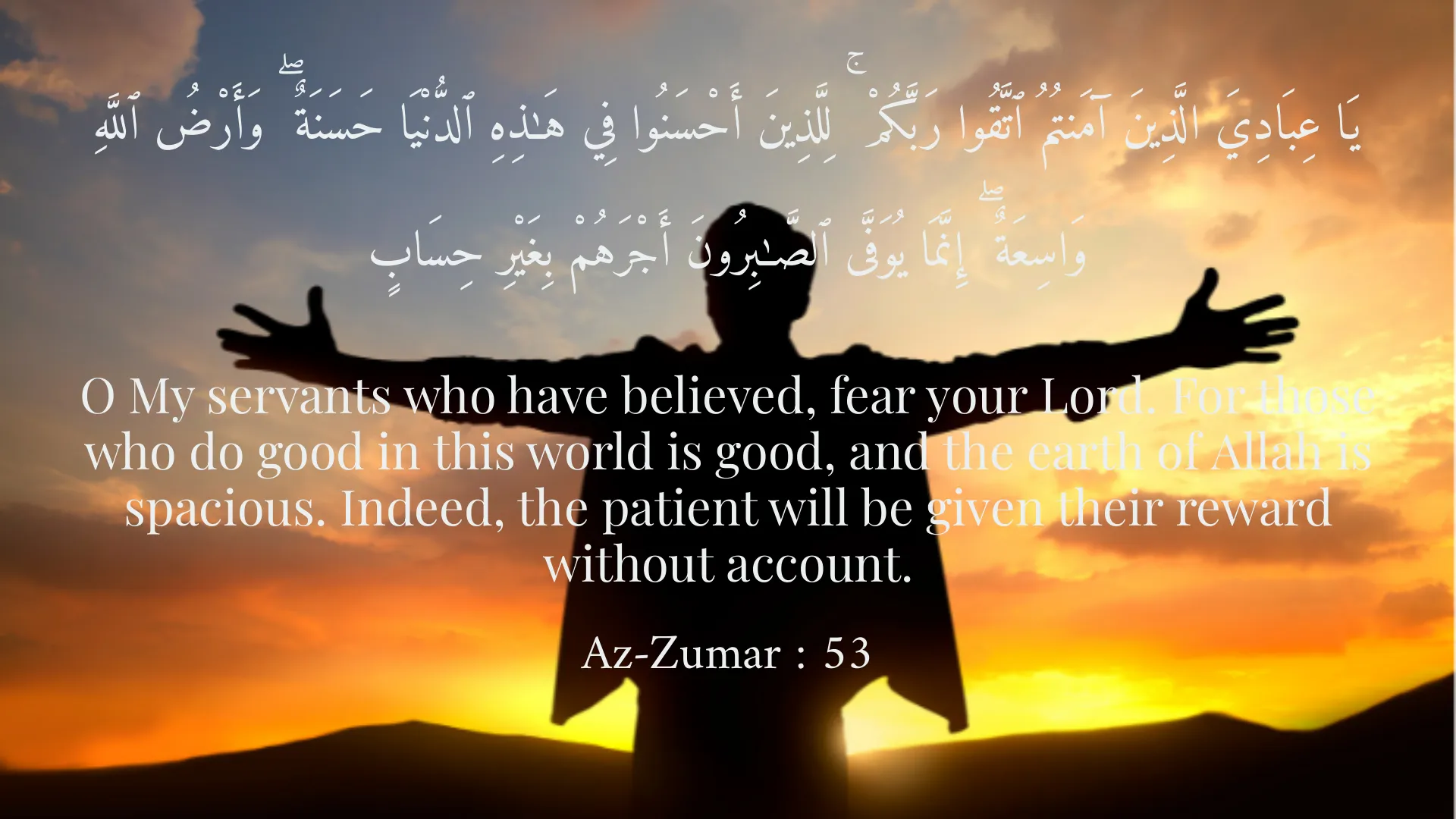
يَا عِبَادِيَ الَّذِينَ آمَنتُمُ ٱتَّقُوا رَبَّكُمْ ۚ لِلَّذِينَ أَحْسَنُوا فِي هَـٰذِهِ ٱلدُّنْيَا حَسَنَةٌ ۖ وَأَرْضُ ٱللَّهِ وَاسِعَةٌ ۖ إِنَّمَا يُوَفَّى ٱلصَّـٰبِرُونَ أَجْرَهُمْ بِغَيْرِ حِسَابٍ
O My servants who have believed, fear your Lord. For those who do good in this world is good, and the earth of Allah is spacious. Indeed, the patient will be given their reward without account.
Az-Zumar : 53
قُلْ إِن كُنتُمْ تُحِبُّونَ ٱللَّهَ فَٱتَّبِعُونِي يُحْبِبْكُمُ ٱللَّهُ وَيَغْفِرْ لَكُمْ ذُنُوبَكُمْ ۗ وَٱللَّهُ غَفُورٌ رَّحِيمٌ
Say, 'If you should love Allah, then follow me, so Allah will love you and forgive you your sins. And Allah is Forgiving and Merciful.'
Al-Imran : 31
وَمِنَ ٱلنَّاسِ مَن يَتَّخِذُ مِن دُونِ ٱللَّهِ أَندَادًۭا يُحِبُّونَهُمْ كَحُبِّ ٱللَّهِ ۗ وَٱلَّذِينَ آمَنُوا أَشَدُّ حُبًّۭا لِّلَّهِ ۗ وَلَوْ يَرَى ٱلَّذِينَ ظَلَمُوا۟ إِذْ يَرَوْنَ ٱلْعَذَابَ أَنَّ ٱلْقُوَّةَ لِلَّهِ جَمِيعًۭا وَأَنَّ ٱللَّهَ شَدِيدُ ٱلْعَذَابِ
And of the people are some who take other than Allah as equals [to Him], loving them as they should love Allah. But those who believe are stronger in love for Allah. And if only they who have wronged would consider, when they see the punishment, that all power belongs to Allah and that Allah is severe in punishment.
Al-Baqarah : 165
Short Story
One day, a man lived in a small town where he spoke to God every day. He always felt deep in his heart that God loved him. He did good to his neighbors and always sought to engage in good deeds. One day, a friend asked him, "How are you so sure that God loves you?" The man referred to the Quran and recited the verses about God's love to his friend, saying, "How can we not speak of love when His mercy brightens my life every day?" As a result, he found himself believing more and more in God's love, and his life was filled with light and peace.