Quranic Answer
Religious disillusionment is a complex phenomenon that many individuals, particularly the youth, may encounter at various stages of their lives. This experience can stem from personal struggles, societal pressures, or a crisis of faith. The journey of grappling with one’s beliefs can often be challenging, leading to a sense of confusion and uncertainty regarding spiritual matters. However, it is essential to recognize that the Holy Quran provides profound guidance and recommendations that can be instrumental in navigating through feelings of disillusionment in faith. By examining key verses from the Quran and their implications, one can find solace and reaffirm their relationship with God. Strengthening one’s bond with the divine is paramount to overcoming feelings of disillusionment. A fundamental teaching found in Surah At-Tawbah, verse 51, states: 'Say, 'Never will we be struck except by what Allah has decreed for us.' This phrase serves as a powerful reminder that all occurrences in life, whether joyous or painful, are within the realm of God’s wisdom and control. By cultivating a deeper understanding of this principle, individuals can find peace amidst confusion, knowing that everything that happens serves a purpose within the grand design of life. This perspective can significantly alleviate feelings of disillusionment, as it constructs a framework through which one can interpret life’s trials not as punitive actions from a wrathful deity but as challenges to strengthen faith and character. Moreover, Surah Al-Baqarah, verse 286 offers further reassurance: 'Allah does not burden a soul beyond that it can bear.' This powerful assertion reinforces the belief that God is just and conscious of one’s capabilities and limitations. It reminds us that we are equipped with the resilience to withstand the trials we face. Internalizing this message fosters a sense of empowerment and hope, which can be crucial for individuals wrestling with disillusionment. Instead of feeling overwhelmed and abandoned, individuals can remind themselves that they are not subjected to more than they can bear — a comforting thought that encourages the preservation of faith and hope. In addition to understanding these verses, the practice of regular prayer and supplication is an effective means of fortifying one's relationship with God. In Surah Al-Fatihah, a fundamental chapter recited in daily prayers, believers repeatedly affirm, 'You alone we worship, and You alone we ask for help.' This verse highlights the essence of worship as an intimate dialogue between the believer and the Creator. When engaging in prayer, individuals have the opportunity to express their innermost thoughts and concerns, seeking divine assistance and guidance. Establishing a comforting routine of prayer can provide a necessary respite from life's chaos and help ground individuals in their faith as they confront feelings of disillusionment. Moreover, community plays a crucial role in mitigating feelings of disillusionment. Participating in religious gatherings and associating with individuals who share similar beliefs can foster a sense of belonging and affirmation. Within these communal spaces, individuals can share their experiences, struggles, and insights while also drawing from the wisdom of others who have navigated similar pathways of faith. The support found in religious circles acts as a buffer against doubt and alienation, reinforcing the idea that one is not alone in their journey. It is through dialogue and solidarity among believers that individuals can find inspiration and encouragement to persevere in their faith. Furthermore, the quest for knowledge is an indispensable tool in the fight against religious disillusionment. Engaging with religious texts, attending lectures, and seeking guidance can deepen one's understanding and appreciation of faith. The more one learns about the teachings, history, and practices of their religion, the better equipped they become to address difficult questions and counteract feelings of doubt. This intellectual pursuit not only enhances one’s spiritual awareness but also strengthens one's ability to articulate their beliefs and navigate times of crisis. By acquiring knowledge, believers can transform uncertainty into conviction, mitigating feelings of disillusionment. It is noteworthy to mention that disillusionment often arises from unrealistic expectations about life and spirituality. The world is inherently fraught with unpredictability, and those embracing faith must understand that experiencing doubts or hardships does not equate to a lack of piety or faith. Rather, struggles can serve as catalysts for growth, prompting individuals to reassess their beliefs and deepen their understanding of God’s nature. In conclusion, religious disillusionment is a formidable challenge encountered by many in their spiritual journey. However, drawing on the wisdom of the Holy Quran offers a pathway through this challenging terrain. By strengthening one’s relationship with God through prayer, community engagement, and a commitment to lifelong learning, individuals can reclaim their faith and mitigate feelings of doubt. The important verses in the Quran serve as guiding lights that remind believers of God's omnipotence and mercy. Thus, by adhering to these approaches, we can effectively shield ourselves from the shadows of disillusionment and reaffirm our faith in both ourselves and our Creator.
Related Verses
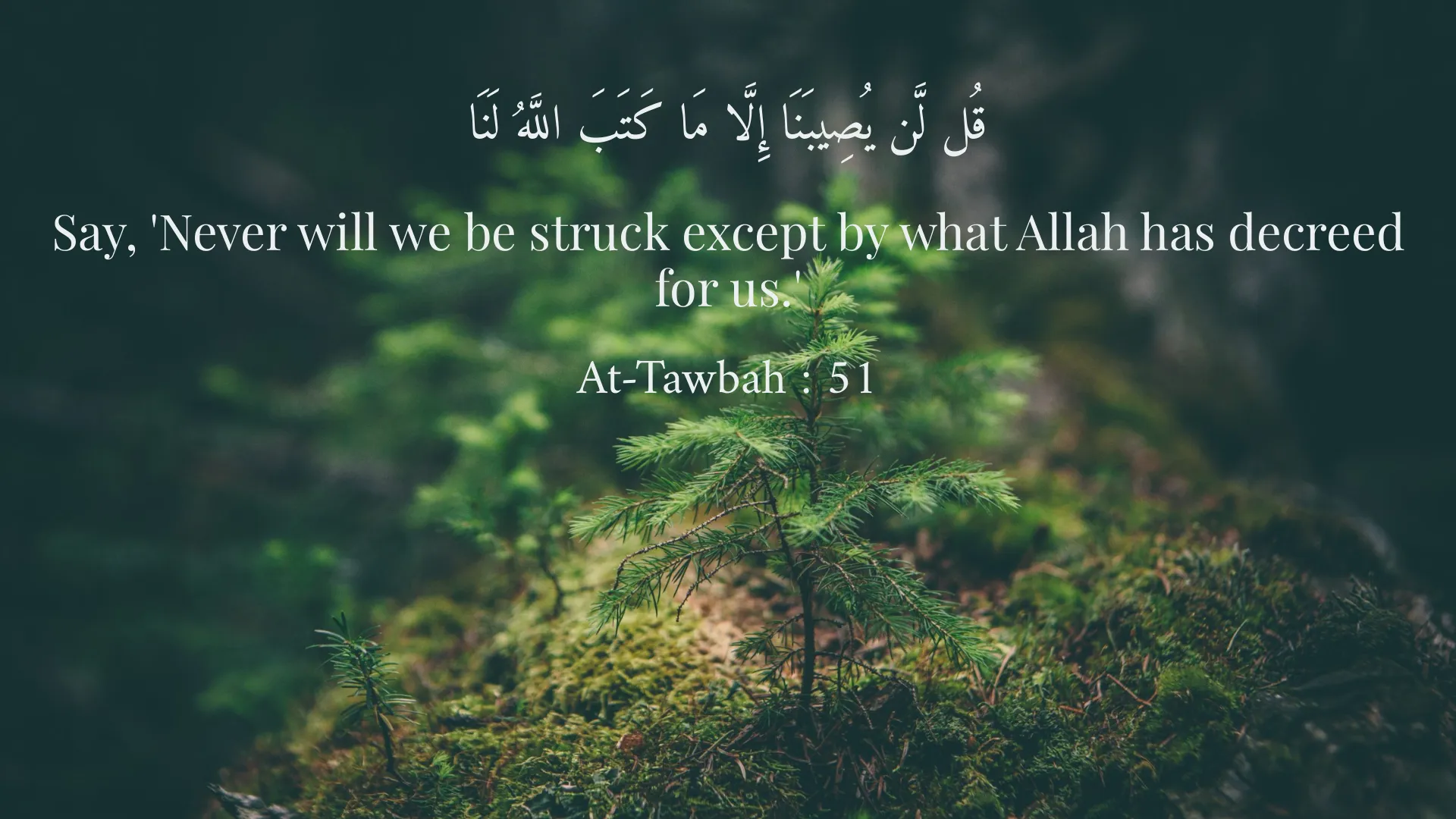
قُل لَّن يُصِيبَنَا إِلَّا مَا كَتَبَ اللَّهُ لَنَا
Say, 'Never will we be struck except by what Allah has decreed for us.'
At-Tawbah : 51
اللَّهُ لَا يُكَلِّفُ نَفْسًا إِلَّا وُسْعَهَا
Allah does not burden a soul beyond that it can bear.
Al-Baqarah : 286
إِيَّاكَ نَعْبُدُ وَإِيَّاكَ نَسْتَعِينُ
You alone we worship, and You alone we ask for help.
Al-Fatihah : 5
Short Story
One day, Adel remembered the verses of the Quran and felt the need to strengthen his connection with God. He decided to dedicate more time to prayer and supplication. He also started attending religious gatherings and learning from others’ experiences. These actions helped him feel more at peace and reduced his religious disillusionment.