Quranic Answer
True faith is a profound and multi-faceted concept that extends beyond mere verbal proclamations; it embodies a holistic approach to life, characterized by a combination of belief, action, and moral integrity as outlined in the Holy Quran. In recognizing the essence of true faith, it is imperative to examine several key points elucidated in the Quran. One of the most illuminating verses that encapsulate this understanding is found in Surah Al-Baqarah, verse 177, which states: "Righteousness is not that you turn your faces toward the east or the west, but (true) righteousness is in one who believes in Allah, the Last Day, the Angels, the Book, and the Prophets, and gives his wealth, in spite of love for it, to relatives, orphans, the needy, the traveler, those who ask (for help), and for freeing slaves; (and who) establishes prayer and gives zakah; those who fulfill their promise when they promise; and (those who are) patient in poverty and hardship and during battle. Those are the ones who have truly believed and they are the righteous." This verse emphatically communicates that true faith consists not only of the belief in the oneness of God and the Day of Judgment but is also deeply interwoven with the performance of righteous deeds, particularly those that demonstrate compassion and generosity towards others. The Quran places a significant emphasis on the necessity of action in conjunction with belief. Here, we come to understand that faith is not merely an internal state but must translate into tangible acts of goodness. This is reinforced in Surah Al-Imran, verse 139, where Allah commands believers to be patient in times of hardship and to trust in Him. "Do not lose hope, nor be sad; you will surely be superior if you are true believers." The relationship between faith and patience reflects an understanding that trials and tribulations are an integral part of life. A genuine believer embodies trust in divine wisdom, believing that every event has a purpose and that God's plan is always for the best. This patience—referred to as Sabr—is not merely passive endurance; it is an active response of faith that reaffirms one's relationship with God. Moreover, in evaluating what constitutes true belief, Surah Al-Mu'minun offers further clarity. Verses 1-11 comprehensively describe the characteristics of the believers: "Certainly will the believers have succeeded: They who are during their prayer humbly submissive and they who turn away from ill speech and they who are observant of zakah and they whoGuard their private parts..." This passage paints a vivid picture of the attributes of true believers. Among these, humility in prayer is emphasized as a critical measure of one's faith. It is a recognition of the greatness and majesty of God, allowing believers to connect deeply with their Creator. Furthermore, avoidance of vain talk signifies an understanding that faith shapes one’s speech and interactions with others, ultimately guiding individuals to uphold the respect and rights of those around them. Indeed, true faith is a guiding light that shapes both personal character and social conduct. It nurtures a firm belief in divine decree—the concept that everything that happens is predestined and serves a purpose in God's greater plan. Such faith fosters resilience in the face of adversity, motivating believers to cultivate attributes such as love, honesty, and integrity. Love for others, in particular, emerges as a hallmark of genuine faith. It invites believers to engage positively with their communities and extends beyond mere familial ties, emphasizing empathy and compassion towards all of humanity. Social impact is another significant dimension of true faith. The teachings in the Quran advocate for justice, equity, and charity, urging believers not merely to seek personal salvation but also to contribute actively to the welfare of society. This social responsibility is underscored in the aforementioned verse from Surah Al-Baqarah, emphasizing charity and aiding those in need. The societal manifestations of faith become increasingly evident when individuals embody the principles of altruism, leading to united communities governed by mutual respect and cooperation. Furthermore, genuine faith cultivates a responsible worldview wherein believers become aware of their actions' effects on both spiritual and societal levels. Responsibilities towards family, friends, and even strangers are dictated by faith-inspired principles, leading believers to act in ways that promote harmony and well-being. Faith ought to inspire individuals to stand against injustice and oppression, embodying the example set by the Prophets who advocated for righteousness and truth, sacrificing themselves for the greater good. In conclusion, the Quran provides rich insights into understanding the concept of true faith. The interplay of belief and action is a recurring theme that defines the essence of being a believer. True faith requires conviction coupled with righteous deeds—actions that reflect one's inner beliefs. It extols patience during trials, encourages involvement in the community, and promotes love and compassion for others. As believers navigate their lives, the principles gleaned from these Quranic teachings guide them to become not only faithful servants of God but also active contributors to a just and equitable society. Ultimately, the journey of true faith is a continuous process of self-improvement that influences both personal and collective upliftment, aligning individuals with the divine will and promoting peace, love, and understanding among all of humanity.
Related Verses
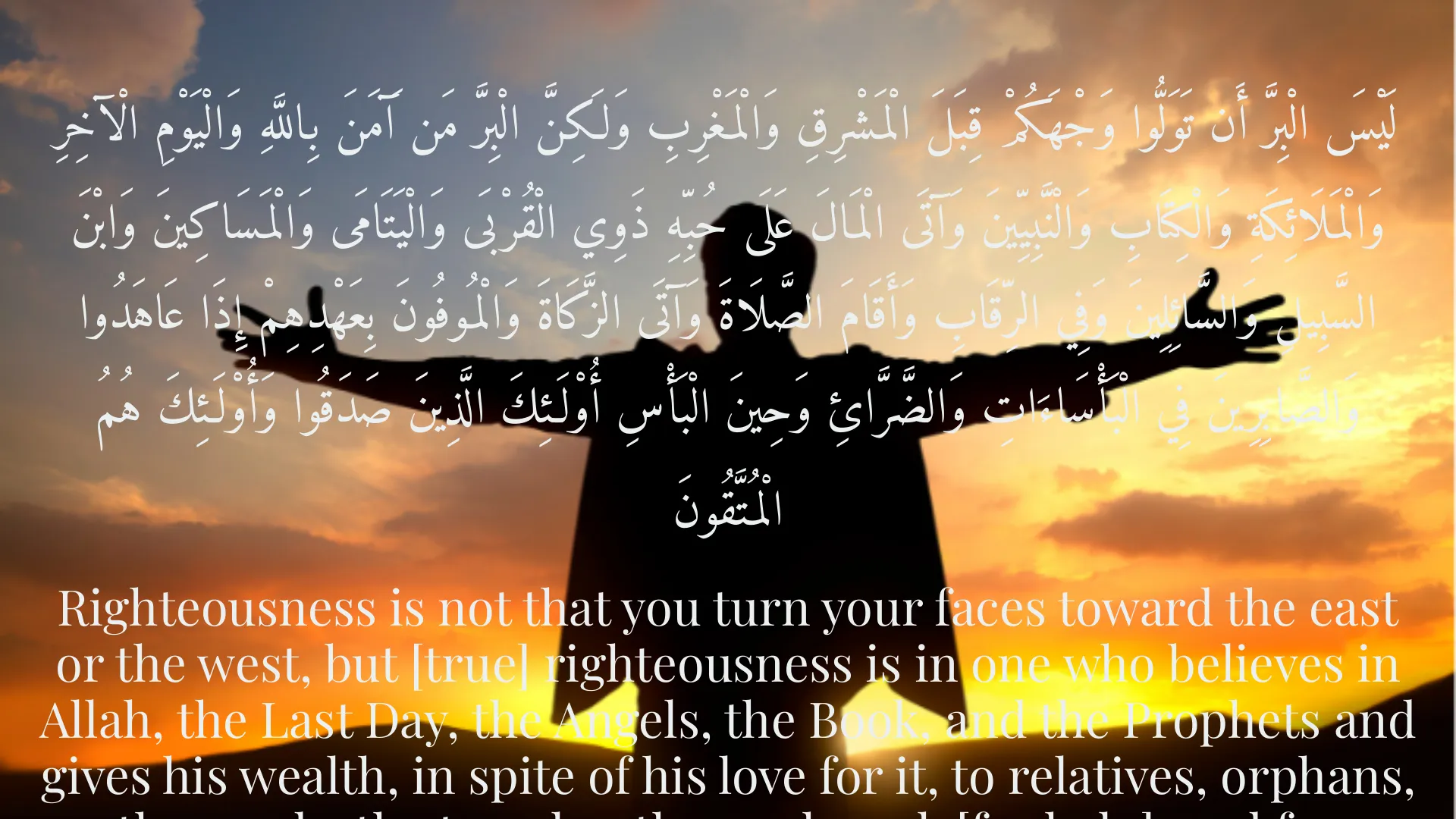
لَيْسَ الْبِرَّ أَن تَوَلُّوا وَجْهَكُمْ قِبَلَ الْمَشْرِقِ وَالْمَغْرِبِ وَلَكِنَّ الْبِرَّ مَن آَمَنَ بِاللَّهِ وَالْيَوْمِ الْآخِرِ وَالْمَلَائِكَةِ وَالْكِتَابِ وَالْنَّبِيِّينَ وَآتَى الْمَالَ عَلَى حُبِّهِ ذَوِي الْقُرْبَى وَالْيَتَامَى وَالْمَسَاكِينَ وَابْنَ السَّبِيلِ وَالسَّائِلِينَ وَفِي الرِّقَابِ وَأَقَامَ الصَّلَاةَ وَآتَى الزَّكَاةَ وَالْمُوفُونَ بِعَهْدِهِمْ إِذَا عَاهَدُوا وَالصَّابِرِينَ فِي الْبَأْسَاءَاتِ وَالضَّرَّائِ وَحِينَ الْبَأْسِ أُوْلَـئِكَ الَّذِينَ صَدَقُوا وَأُوْلَـئِكَ هُمُ الْمُتَّقُونَ
Righteousness is not that you turn your faces toward the east or the west, but [true] righteousness is in one who believes in Allah, the Last Day, the Angels, the Book, and the Prophets and gives his wealth, in spite of his love for it, to relatives, orphans, the needy, the traveler, those who ask [for help], and for freeing slaves; [and who establishes prayer and gives zakah; those who fulfill their promise when they promise; and [those who are patient in poverty and hardship and during battle. Those are the ones who have been true, and it is those who are the righteous.
Al-Baqarah : 177
وَلَا تَحْزَنْ عَلَى مَا فَاتَكُمْ وَلَا تَحْزَنْ عَلَى مَا فَاتَكُمْ إِنَّ اللَّهَ مَعَ الْمُتَّقِينَ
And do not grieve over what has escaped you, and do not be in distress because of what you have missed. Indeed, Allah is with the righteous.
Al-Imran : 139
قَدْ أَفْلَحَ الْمُؤْمِنُونَ (1) الَّذِينَ هُمْ فِي صَلَاتِهِمْ خَاشِعُونَ (2) وَالَّذِينَ هُمْ عَنِ اللَّغْوِ مُعْرِضُونَ (3) وَالَّذِينَ هُمْ لِلزَّكَاةِ فَاعِلُونَ (4) وَالَّذِينَ هُمْ لِفُرُوجِهِمْ حَافِظُونَ (5) إِلَّا عَلَى أَزْوَاجِهِمْ أَوْ مَا مَلَكَتْ أَيْمَانُهُمْ فَإِنَّهُمْ غَيْرُ مَلُومِينَ (6) فَمَنِ ابْتَغَى وَرَاءَ ذَٰلِكَ أُوْلَـئِكَ هُمُ الْعَادُونَ (7) وَالَّذِينَ هُمْ لِأَمَانَاتِهِمْ وَعَهْدِهِمْ رَاعُونَ (8) وَالَّذِينَ هُمْ بِشَهَادَاتِهِمْ قَائِمُونَ (9) وَالَّذِينَ هُمْ عَلَى صَلَاتِهِمْ يُحَافِظُونَ (10) أُوْلَـئِكَ هُمُ الْوَارِثُونَ (11)
Successful indeed are the believers (1) who are humble in their prayer (2) and who turn away from ill speech (3) and who are observant of zakah (4) and who guard their private parts (5) except from their wives or those their right hands possess, for indeed, they are not to be blamed (6) but whoever seeks beyond that, those are the transgressors (7) and they who are to their trusts and their promise, and they who carefully maintain their prayer (8) Those are the inheritors (9) and who will inherit Paradise; they will abide therein eternally.
Al-Mu'minun : 1-11
Short Story
Once there was a young man named Hasan who lived in a city. He was always in search of truth and questioned what true faith was. One day he approached a mystic and asked him about it. The mystic replied, 'Oh Hasan, true faith manifests in your heart and actions. When you hold the love of God in your heart and express that love through your deeds and behavior, then you are a true believer.' Hasan pondered this wisdom and decided to showcase the love he had for God in his life. He rushed to help the needy and performed his prayers with humility. From that day on, he found himself embraced by true faith.