Quranic Answer
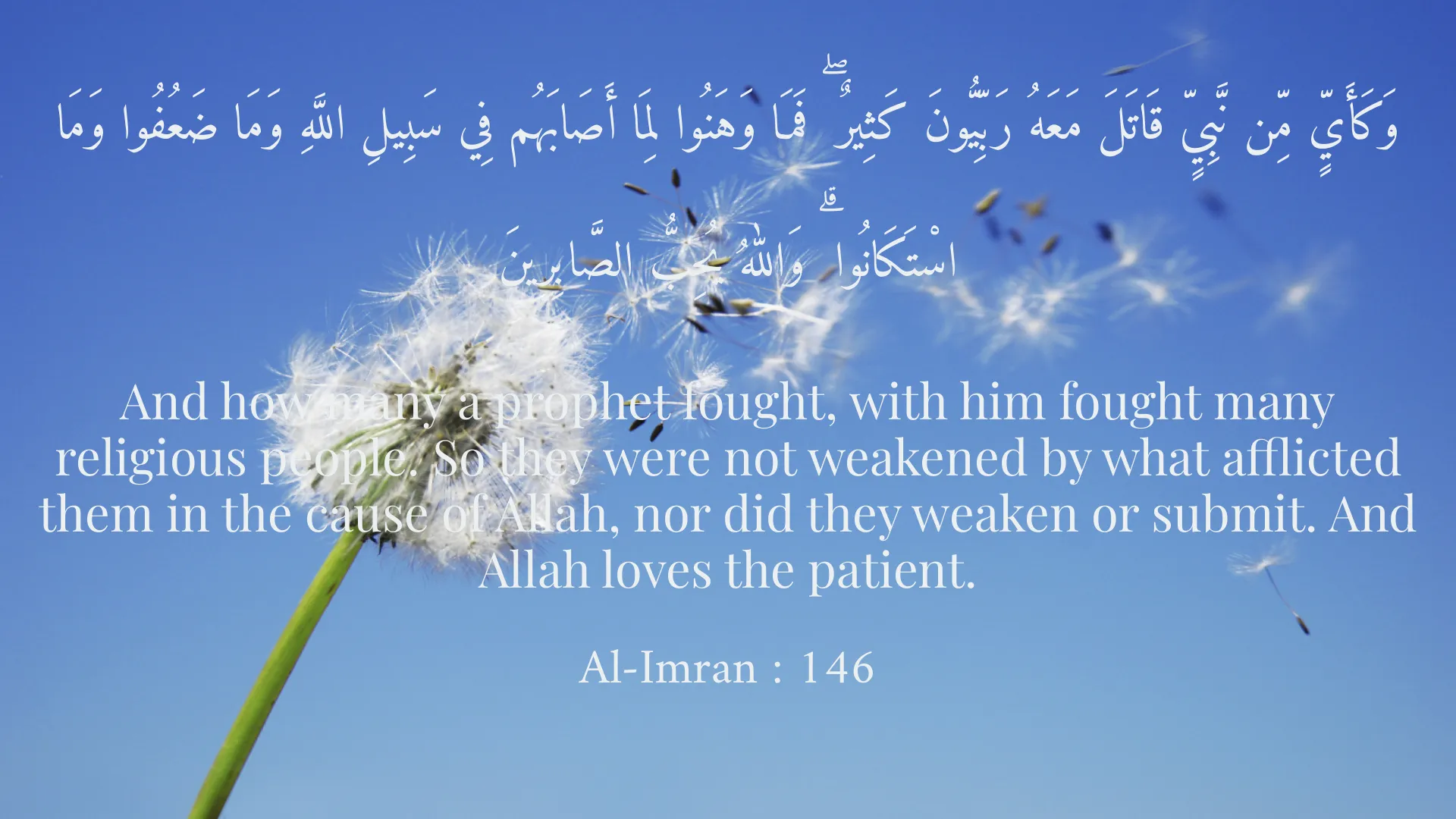
To seek God's satisfaction is a journey filled with profound teachings and principles that guide spiritually inclined individuals towards living a life of righteousness and faith. The Quran, which serves as the holy book of Islam, presents insights that not only aim to deepen our understanding of divine expectations but also encourage us to foster a strong relationship with our Creator. One of the cornerstones of this spiritual endeavor is outlined in the interaction between faith and righteous deeds. In Surah Al-Imran, verse 146, Allah illustrates the essence of perseverance and determination in the pursuit of His satisfaction. The verse states, 'And how many a prophet fought, with him fought many religious people. So they were not weakened by what afflicted them in the cause of Allah, nor did they weaken or submit. And Allah loves the patient.' This powerful statement exemplifies how patience and resilience form the bedrock of a faithful servant's characteristics, especially when subjected to trials and challenges. It indicates that divine love is bestowed upon those who persist steadfastly in their faith, reinforcing the belief that the struggle for righteousness is its own form of worship. Additionally, the practice of remembering and acknowledging Allah serves as another vital aspect of attracting His pleasure. In Surah Taha, verse 14, Allah commands us: 'Indeed, I am Allah; there is no deity except Me, so worship Me and establish prayer for My remembrance.' Here, the act of worship and prayer is not merely a ritualistic obligation but a deeply meaningful connection between the believer and Allah. Such remembrance infuses daily life with purpose and direction, steering individuals towards paths that align with divine will. Furthermore, supplication, which involves turning to Allah in requests for guidance and forgiveness, enhances this relationship. It fosters a posture of humility and acknowledgement of our own limitations, which is comforting in times of adversity. Moreover, performing obligatory acts of worship while avoiding prohibitions embodies essential Islamic principles that further pave the way to divine satisfaction. Engaging in good deeds—be it through charity, honesty, or simply helping those in need—has a profound ripple effect that cultivates a positive environment benefiting both the individual and community at large. Conversely, consciously refraining from sinful activity reinforces one's commitment to a life led by divine commandments. This dual approach culminates in a holistic practice of faith that both fulfills one's obligations to Allah while fostering a sense of moral integrity. In Surah An-Nisa, verse 69, Allah elucidates the communal aspect of obedience and its implications for the believer's spiritual journey: 'And whoever obeys Allah and the Messenger - those will be with the ones upon whom Allah has bestowed favor, among the prophets, the steadfast, the martyrs, and the righteous. And excellent are those as companions.' This verse underlines the significance of comunidad and the companions one chooses in life's journey. By aligning oneself with the teachings of Allah and His Messenger, a believer earns the privilege of companionship with exemplary figures from history, including the prophets and martyrs who epitomized resilience in faith. These relationships foster a sense of community, encouragement, and shared purpose that are integral to spiritual growth and fulfillment. Additionally, love and kindness towards others embody principles that irresistibly attract divine satisfaction. An oft-quoted verse in Surah Al-Maida, verse 32, highlights the sanctity of life: 'If someone saves a life, it is as if he has saved all mankind.' This profound statement speaks to the interconnectedness of humanity and our collective responsibility towards fostering kindness and support among one another. The ethical and humane framework prescribed by Islam not only enhances community spirit but also lays a foundation for a peaceful coexistence that resonates with divine love. As we endeavor to lead lives enriched with compassion, we find ourselves reflecting God’s attributes in our daily interactions, ultimately drawing closer to divine satisfaction. In conclusion, seeking God's satisfaction is a multifaceted pursuit that encompasses faith, patience, worship, good deeds, and compassion towards others. The Quran serves as a guiding light, directing us towards the paths of righteousness and moral integrity. By practicing faith and embodying these principles, individuals can nurture their spiritual growth, build meaningful connections with others, and cultivate a sense of purpose that aligns with divine expectations. The journey is not merely about fulfilling religious obligations; it is about embracing an entire way of life that brings us closer to Allah's love and mercy. Through perseverance, remembrance, obedience, and kindness, we not only achieve personal satisfaction and fulfillment but also contribute positively to the larger tapestry of humanity.
Related Verses
وَكَأَيٍّ مِّن نَّبِيٍّ قَاتَلَ مَعَهُ رَبِّيُّونَ كَثِيرٌ ۖ فَمَا وَهَنُوا لِمَا أَصَابَهُم فِي سَبِيلِ اللَّهِ وَمَا ضَعُفُوا وَمَا اسْتَكَانُوا ۗ وَاللہُ يُحِبُّ الصَّابِرِينَ
And how many a prophet fought, with him fought many religious people. So they were not weakened by what afflicted them in the cause of Allah, nor did they weaken or submit. And Allah loves the patient.
Al-Imran : 146
إنَّني أَنَا اللَّهُ ۖ لَا إِلَٰهَ إِلَّا أَنَا فَاعْبُدْنِي وَأَقِمِ الصَّلَاةَ لِذِكْرِي
Indeed, I am Allah; there is no deity except Me, so worship Me and establish prayer for My remembrance.
Taha : 14
وَمَن يُطِعِ اللَّهَ وَالرَّسُولَ فَأُوْلَـٰئِكَ مَعَ الَّذِينَ أَنعَمَ اللَّهُ عَلَيْهِم مِّنَ النَّبِيِّينَ وَالصِّدِّيقِينَ وَالشُّهَدَاءِ وَالصَّالِحِينَ ۚ وَحَسُنَ أُولَـئِكَ رَفِيقًا
And whoever obeys Allah and the Messenger - those will be with the ones upon whom Allah has bestowed favor, among the prophets, the steadfast, the martyrs, and the righteous. And excellent are those as companions.
An-Nisa : 69
مَن قَتَلَ نَفْسًۭا بِغَيْرِ نَفْسٍۢ أَوْ فَسَادٍۢ فِي الْأَرْضِ فَكَأَنَّمَا قَتَلَ النَّاسَ جَمِيعًۭا ۚ وَمَن أَحْيَاهَا فَكَأَنَّمَا أَحْيَا النَّاسَ جَمِيعًا.
Whoever kills a soul unless for a soul or for corruption [done] in the land - it is as if he had slain mankind entirely. And whoever saves one - it is as if he had saved mankind entirely.
Al-Maida : 32
Short Story
Once in a town, there was a man named Sohrab who was in search of God's satisfaction. Every day after prayer, he would rush to help the poor and was a pioneer in assisting people. One day, he remembered a verse from the Quran that said: 'And remind them of the days of Allah,' and he decided to spend all his good days in remembrance of God. Through his kindness and good deeds, Sohrab not only gained God's pleasure but also earned lasting affection in the hearts of the people.