Quranic Answer
To strengthen our faith, it is paramount to integrate various religious activities into our daily lives. These practices, which include the remembrance of God, prayer, reading the Quran, and acting upon its verses, form the cornerstone of a devout life. The importance of nurturing our faith is underscored in multiple Quranic verses that highlight the necessity of maintaining a close and personal connection with Allah. This article explores the aforementioned activities and elucidates how they contribute to the enhancement of our faith. The first step in strengthening our faith is the remembrance of God, or Dhikr. This spiritual practice is encouraged in Islam and serves as a daily reminder of Allah’s omnipresence and mercy. Engaging in Dhikr fosters a sense of peace, tranquility, and closeness to God, which is vital in a fast-paced world filled with distractions. Regular remembrance through recitation of God's names and attributes helps believers direct their thoughts towards spiritual matters, allowing them to navigate life's challenges with a sense of purpose and focus. Additionally, prayer (Salah) is another critical component for spiritual elevation. It is a direct line of communication with God and is obligatory for every Muslim. The five daily prayers provide structured moments throughout the day where individuals pause their activities to connect with their Creator. In Surah Al-Baqarah, verse 45, Allah advises believers to seek help through patience and prayer. This connection not only reinforces faith but also promotes discipline and mindfulness. As individuals engage in Salah, they are given the opportunity to express their gratitude, seek forgiveness, and request guidance, all of which eventually fortify their belief and reliance on God. Reading the Quran is yet another vital practice that plays an instrumental role in strengthening faith. The Quran is referred to as a guidance for those who are conscious of God (Surah Al-Baqarah, 2:2). By immersing ourselves in its verses, we gain insights into the foundations of our faith, the essence of our beliefs, and the moral compass by which we should conduct our lives. It is not merely about recitation; acting upon the teachings of the Quran is fundamental. Each verse offers lessons and principles which, when implemented in our lives, deepen our conviction and adherence to Islam. Surah Al-Baqarah, verse 165 states, "And among the people are those who take other than Allah as equals [to Him]. They love them as they should love Allah." This verse reinforces the idea that a believer’s true love must be directed solely towards Allah. Therefore, expressing this love through worship and good deeds becomes crucial. It further emphasizes that our devotion should be evident in our daily actions and choices, reaffirming our commitment to our Creator. Moreover, fostering relationships with fellow believers is essential in this journey of faith. In Surah Al-Ma'idah, verse 54, Allah mentions that those who possess true faith will always support their religion and unite with fellow believers. This highlights the community aspect of Islam. Engaging in communal prayers, attending religious gatherings, and participating in discussions about faith with other believers reinforces one's own beliefs. Sharing experiences with fellow Muslims can serve as a reminder of one’s purpose and the support system in faith. Fasting during the holy month of Ramadan is another method to bolster one’s faith. The act of fasting is not merely abstaining from food and drink; it is a means to develop self-discipline, empathy for the less fortunate, and a deeper connection with Allah. As the Quran states in Surah Al-Baqarah, verse 183, "O you who have believed, decreed upon you is fasting as it was decreed upon those before you that you may become righteous." Fasting encourages believers to reflect, repent, and redirect their hearts towards spirituality, thus enhancing their faith. Giving zakat, or almsgiving, is an obligation in Islam that serves to purify wealth and provide for those in need. In acting charitably, believers are reminded of the blessings they possess and the importance of sharing those blessings with less fortunate individuals. This practice not only fosters a sense of community but also reinforces our connection with God by fulfilling a fundamental principle of Islam. Engaging in social and charitable activities enhances spiritual faith by embodying the teachings of compassion and altruism. In difficult times, the challenges of life can test faith. It is during these moments that true believers must exercise patience and resilience. The importance of remaining steadfast in prayer during crises cannot be overstated. Surah Al-Baqarah, verse 153 encourages believers to seek help through patience and prayer, reminding us that reliance on God during hardship is essential in maintaining our faith. Embracing challenges as opportunities for growth can transform the way we perceive trials, ultimately drawing us closer to God. In conclusion, the integration of activities such as the remembrance of God, prayer, reading and acting upon the Quran, fasting, giving zakat, and engaging in communal support forms a holistic approach to strengthening our faith. Each of these practices provides a unique avenue for spiritual enhancement, encouraging believers to develop a deeper understanding of their religion while fostering a robust connection with Allah. As we navigate our daily lives, consistently reminding ourselves of these practices and striving to perform them can bolster our faith, ultimately leading to a more fulfilling and spiritually rooted existence.
Related Verses
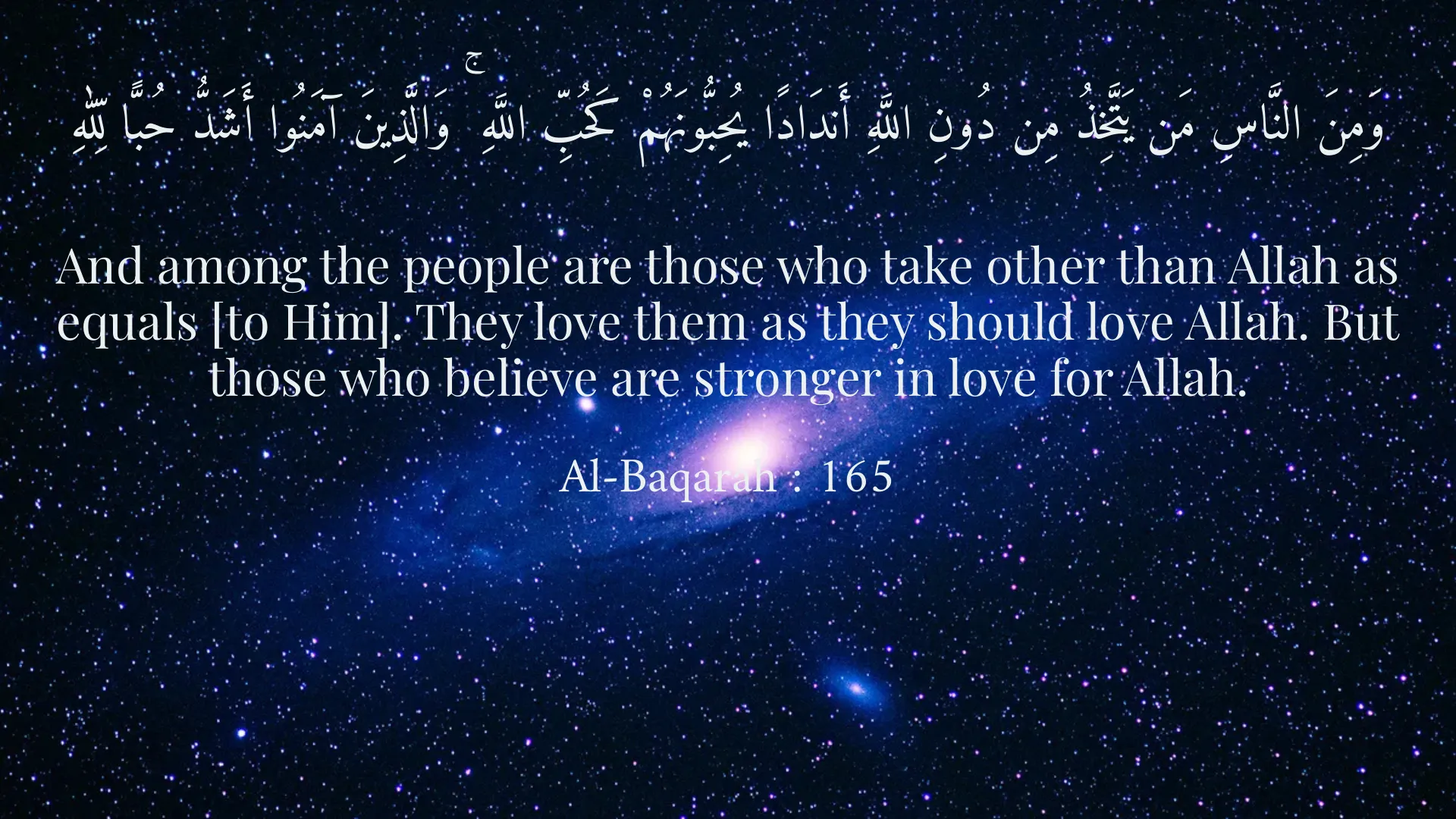
وَمِنَ النَّاسِ مَن يَتَّخِذُ مِن دُونِ اللَّهِ أَندَادًا يُحِبُّونَهُمْ كَحُبِّ اللَّهِ ۚ وَالَّذِينَ آمَنُوا أَشَدُّ حُبًّا لِّلهِ
And among the people are those who take other than Allah as equals [to Him]. They love them as they should love Allah. But those who believe are stronger in love for Allah.
Al-Baqarah : 165
يَا أَيُّهَا الَّذِينَ آمَنُوا مَن يَرْتَدَّ مِنكُمْ عَنْ دِينِهِۦ فَسَوْفَ يَأْتِيَ اللَّـهُ بِقَوْمٍ يُحِبُّهُمْ وَيُحِبُّونَهُ ۖ أَذِلَّةً عَلَى الْمُؤْمِنِينَ أَعِزَّةً عَلَى الْكَافِرِينَ يُجَاهِدُونَ فِي سَبِيلِ اللَّـهِ وَلَا يَخَافُونَ لَوْمَةَ لَائِمٍ ۚ ذَٰلِكَ فَضْلُ اللَّـهِ يُؤْتِيهِ مَن يَشَاءُ ۗ وَاللَّـهُ وَاسِعٌ عَلِيمٌ
O you who have believed, whoever of you should revert from his religion – Allah will bring forth [for] a people He will love and who will love Him, [who are] humble toward the believers, powerful against the disbelievers. They strive in the cause of Allah and do not fear the blame of a critic. That is the favor of Allah; He bestows it upon whom He wills. And Allah is All-Encompassing and Knowing.
Al-Ma'idah : 54
Short Story
One day, a man named Mahdi decided to strengthen his faith. He started reading the Quran daily and tried to apply its verses in his life. One day while sitting in the park and contemplating God's presence, he helped a child and felt a profound sense of peace and love in his heart. This experience reminded him that acting upon the Quranic verses truly leads to a fulfilled life.