Quranic Answer
The love for God is arguably the most profound and encompassing emotion a human being can experience. It's not merely a verbal assertion but a profound truth that takes root deep within one's being and manifests in every facet of life. The Holy Quran serves as our guiding light and provides numerous indicators to help us discern the authenticity of this divine love. To truly understand if we love God, we must meticulously examine our actions, intentions, and reactions to divine commands. This is an inward journey that begins with self-awareness and contemplation on our relationship with the Creator of the universe. One of the most fundamental and explicit signs of genuine love for God is obedience to His commands and adherence to the Sunnah (practice and teachings) of Prophet Muhammad (PBUH). The Quran in Surah Al-Imran, verse 31, unequivocally states: "Say, [O Muhammad], 'If you should love Allah, then follow me, [so] Allah will love you and forgive you your sins. And Allah is Forgiving and Merciful.'" This sacred verse provides a clear criterion for evaluating claims of love for God. True love inherently brings forth obedience. A person who genuinely loves God strives to fulfill all His commands and abstain from all that He has forbidden. This obedience does not stem from coercion but rather from a profound yearning and affection. Following the Prophet (PBUH) is paramount because he was the living embodiment of the Quran and the practical manifestation of divine commands in human life. Every step we take in accordance with his tradition and character is a step towards drawing closer to God and expressing our true love for Him. This obedience encompasses fulfilling obligatory acts like prayer (Salat), fasting (Sawm), charity (Zakat), and pilgrimage (Hajj), as well as abstaining from prohibited actions. Furthermore, it includes observing ethics and good conduct that are approved by God, demonstrating our commitment beyond mere ritualism. Another significant indicator is prioritizing God and His pleasure above all else in this world. In life, humans are constantly faced with various attachments and desires: family, wealth, career, status, and comfort. However, if love for God is sincere, none of these attachments should ever overshadow divine love. Surah At-Tawbah, verse 24, clearly highlights this point: "Say, 'If your fathers, your sons, your brothers, your wives, your relatives, the wealth which you have obtained, and the commerce in which you fear decline, and the dwellings in which you delight are more beloved to you than Allah and His Messenger and jihad in His cause, then wait until Allah executes His command. And Allah does not guide the defiantly disobedient people.'" This verse serves as a golden standard. If, at moments of decision, we prioritize God's pleasure over our own desires or the desires of others, it is a clear sign of genuine love. This does not imply neglecting the world; rather, it means placing it in its proper perspective as a means to achieve divine pleasure. It means that when there is a conflict between worldly gain and divine command, the latter takes precedence, demonstrating where true allegiance lies. A third sign is striving and exerting effort in the way of God (Jihad), with one's self and wealth. Jihad, in its broader sense, refers not just to armed struggle but to any form of striving and sacrifice for the elevation of God's religion and service to humanity. This can include dedicating time, energy, and resources to promoting justice, assisting the needy, enjoining good and forbidding evil, and seeking knowledge for God's sake. Surah Al-Ma'idah, verse 54, states: "O you who have believed, whoever of you reverts from his religion – Allah will bring forth [in place of them] a people He will love and who will love Him [who are] humble toward the believers, powerful against the disbelievers; they strive in the way of Allah and do not fear the blame of a blamer. That is the favor of Allah; He bestows it upon whom He wills. And Allah is all-Encompassing and Knowing." This verse paints a picture of a people beloved by God and who love Him, whose distinguishing characteristic is their striving in His way, demonstrating an active and selfless commitment to His cause. Complete trust and reliance on God (Tawakkul) is also a prominent sign of true love. A person who loves God trusts Him in all aspects of their life, knowing that all good and benefit are solely in His hands. In times of difficulty, instead of despair, they seek refuge in God and seek His help in resolving their issues. This trust instills deep tranquility in the heart, freeing one from worldly anxieties. Indeed, love makes a person recognize the Beloved as the absolute power and benevolent provider, and thus, they surrender themselves to Him, finding peace in His decree and provision. This is evident when faced with uncertainty or challenges; rather than panic, the true lover finds solace in God's plan. Constant gratitude for divine blessings (Shukr) is another manifestation of this love. One who loves God constantly remembers His countless blessings, both small and large, and is profoundly grateful for them. This gratitude is expressed not only verbally but also through actions; it means utilizing blessings in ways that are pleasing to God. This grateful perspective enables one to perpetually feel the presence of the Lord in their life and view every event as an opportunity to draw closer to Him. It cultivates a positive outlook and prevents complacency, pushing the individual to use God-given gifts for good. Patience and steadfastness in the face of trials and tribulations are also expressions of love for God. Life is full of ups and downs, and God tests His servants with various trials. One who truly loves God is patient in the face of these trials, understanding that difficulties are opportunities for growth and closer proximity to God. They not only refrain from complaining but view these hardships as a bridge to higher spiritual stations, submitting to His will with full confidence in His divine wisdom. This resilience in adversity is a powerful testament to their unwavering trust and love for the Almighty. Constant remembrance of God (Dhikr) is a sign of the Beloved's presence in the lover's heart. One who loves God is always mindful of Him, whether verbally (through reciting the Quran, supplication, glorification) or inwardly (through contemplating divine verses, meditation). This remembrance brings peace to hearts: "Unquestionably, by the remembrance of Allah hearts are assured." (Surah Ar-Ra'd, verse 28). This constant remembrance protects them from heedlessness and worldly attachments, always keeping their life's direction towards God. It acts as an anchor, grounding them in spiritual awareness amidst the clamor of daily life. Balancing fear and hope (Khawf and Raja) is also a crucial characteristic. One who loves God is both awestruck by His majesty and power, and fearful of His punishment, yet simultaneously hopeful of His boundless mercy and forgiveness. This fear deters them from sin, while this hope motivates them towards repentance and righteous deeds. This balance prevents extremism in either state, fostering a moderate and balanced approach to serving God, encouraging humility while inspiring effort. Finally, love for God's creation and service to them is a manifestation of love for the Creator. One who loves God also loves His creation and treats them with kindness, justice, and fairness. Helping the needy, visiting the sick, respecting elders, showing compassion to children, and even caring for the environment, are all expressions of love for God, because everything in the universe is a sign and manifestation of Him. This outward compassion reflects an inward transformation driven by divine love, extending benevolence to all beings. In conclusion, love for God is not a mere slogan but a way of life. To truly ascertain if we love God, we must look at our actions, ethics, choices, and life priorities. Do we prioritize His pleasure above all else? Do we strive in His way? Do we trust Him in difficulties? Are we grateful amidst abundance? Do we follow His Prophet? And do we love His creation? All these are indicators that help us gauge the depth and sincerity of our love for God and grow closer to the True Beloved every day. This path is a continuous process that requires self-assessment, repentance, and persistent effort to improve and strengthen that sacred bond.
Related Verses
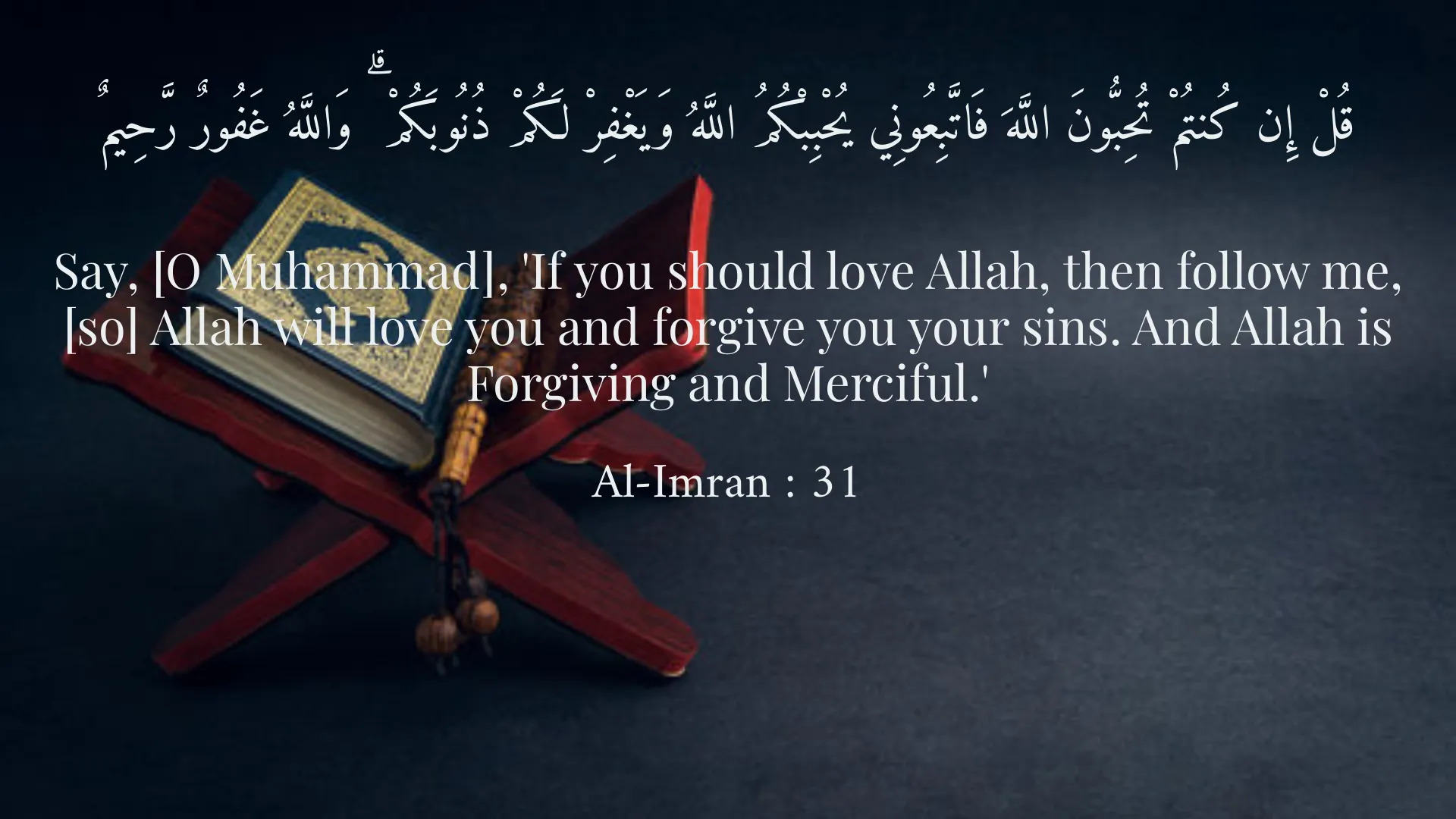
قُلْ إِن كُنتُمْ تُحِبُّونَ اللَّهَ فَاتَّبِعُونِي يُحْبِبْكُمُ اللَّهُ وَيَغْفِرْ لَكُمْ ذُنُوبَكُمْ ۗ وَاللَّهُ غَفُورٌ رَّحِيمٌ
Say, [O Muhammad], 'If you should love Allah, then follow me, [so] Allah will love you and forgive you your sins. And Allah is Forgiving and Merciful.'
Al-Imran : 31
قُلْ إِن كَانَ آبَاؤُكُمْ وَأَبْنَاؤُكُمْ وَإِخْوَانُكُمْ وَأَزْوَاجُكُمْ وَعَشِيرَتُكُمْ وَأَمْوَالٌ اقْتَرَفْتُمُوهَا وَتِجَارَةٌ تَخْشَوْنَ كَسَادَهَا وَمَسَاكِنُ تَرْضَوْنَهَا أَحَبَّ إِلَيْكُم مِّنَ اللَّهِ وَرَسُولِهِ وَجِهَادٍ فِي سَبِيلِهِ فَتَرَبَّصُوا حَتَّى يَأْتِيَ اللَّهُ بِأَمْرِهِ ۗ وَاللَّهُ لَا يَهْدِي الْقَوْمَ الْفَاسِقِينَ
Say, 'If your fathers, your sons, your brothers, your wives, your relatives, the wealth which you have obtained, and the commerce in which you fear decline, and the dwellings in which you delight are more beloved to you than Allah and His Messenger and jihad in His cause, then wait until Allah executes His command. And Allah does not guide the defiantly disobedient people.'
At-Tawbah : 24
يَا أَيُّهَا الَّذِينَ آمَنُوا مَن يَرْتَدَّ مِنكُمْ عَن دِينِهِ فَسَوْفَ يَأْتِي اللَّهُ بِقَوْمٍ يُحِبُّهُمْ وَيُحِبُّونَهُ أَذِلَّةٍ عَلَى الْمُؤْمِنِينَ أَعِزَّةٍ عَلَى الْكَافِرِينَ يُجَاهِدُونَ فِي سَبِيلِ اللَّهِ وَلَا يَخَافُونَ لَوْمَةَ لَائِمٍ ۚ ذَٰلِكَ فَضْلُ اللَّهِ يُؤْتِيهِ مَن يَشَاءُ ۚ وَاللَّهُ وَاسِعٌ عَلِيمٌ
O you who have believed, whoever of you reverts from his religion – Allah will bring forth [in place of them] a people He will love and who will love Him [who are] humble toward the believers, powerful against the disbelievers; they strive in the way of Allah and do not fear the blame of a blamer. That is the favor of Allah; He bestows it upon whom He wills. And Allah is all-Encompassing and Knowing.
Al-Ma'idah : 54
Short Story
A disciple once asked a master, "How can I know if my heart is truly with God, and if all these acts of worship are sincere?" The master smiled and replied, "One day, I saw a dervish sitting on the ground in an alley, seemingly engrossed in remembrance and prayer with his whole being. A wealthy man passed by him and said with a contemptuous glance, 'What does this poor wretch have besides this dirt and poverty?' The dervish calmly raised his head and said, 'I have such a connection with my God that I am never ashamed of my poverty. But you, who are bound by wealth and status, can you claim that your heart is free and with God?'" The master continued, "True love for God is when nothing in this world can deter you from His remembrance and obedience. If, in joy and sorrow, in poverty and wealth, your heart inclines towards Him and you prefer His pleasure above all else, then know that you truly love Him."