Quranic Answer
Understanding Divine Love in the Quran: A Deeper Look into God’s Affection for Humanity The Holy Quran serves not only as a book of guidance but also as a source of profound insights into the nature of God's love for humanity. This divine love manifests in various forms and through numerous signs across the verses of the Quran. Amongst the several verses that touch upon this theme, specific ones stand out, offering a compelling view of how believers can comprehend this love, the conditions surrounding it, and the manifestations it presents in day-to-day life. ### Priority in Love: Surah Al-Imran, Verse 31 The verse from Surah Al-Imran (3:31) is a striking declaration of the need for proper prioritization in our lives. It states: "Say, If your fathers, your sons, your brothers, your wives, your relatives, the wealth which you have obtained, and the commerce in which you fear decline, and the dwellings in which you delight are more beloved to you than Allah and His Messenger and jihad in His cause, then wait until Allah executes His command. And Allah does not guide the defiantly disobedient people." This verse unmistakably calls for self-reflection regarding our attachments and priorities. In our materialistic society, it is easy to place love for family, wealth, and personal comforts above our love and devotion to God and His Messenger. The verse serves as a reminder that true love for God must supersede all earthly attachments. By prioritizing our connection with Allah and His Messenger, we establish a foundation from which divine love flows into our hearts. Moreover, this prioritization opens a pathway for God’s mercy and guidance. If one's love for material entities eclipses their love for God, the verse cautions that such individuals may face dire consequences. This reminder reinforces the significance of cultivating our relationship with God as a priority, thereby opening ourselves to experience His love in profound ways. ### True Love: Surah Al-Baqarah, Verse 165 Further elucidating the concept of divine love is Surah Al-Baqarah (2:165), which emphasizes the contrasting loves people harbor. The verse reads: "And among the people are those who take other than Allah as equals [to Him]. They love them as they should love Allah. But those who believe are stronger in love for Allah." In this verse, the Quran presents a compelling dichotomy between true believers and those who misplace their affections. Believers are encouraged to foster a love for Allah that transcends all other attachments. This strength of love for God is not merely a result of faith but should also inform their actions and decisions. The Quran clearly recognizes the tendency of humans to establish attachments to created things as alternatives to God. Yet, it beckons believers to cultivate and nurture an unwavering love for the Creator. This love reflects back the divine affection that God has for His servants, teaching us that the more we invest in our divine relationship, the more substantial and fulfilling our sense of belonging and love will become. ### The Cycle of Divine Affection: Surah Al-Ma'idah, Verse 54 In Surah Al-Ma'idah (5:54), Allah affirms: "O you who have believed, whoever of you should revert from his religion - Allah will bring forth [for] a people He will love and who will love Him." This verse imparts a powerful message about the relationship between God and humanity. It presents God's readiness to bestow His love upon those who are devoted and steadfast in their faith. The emphasis on God's willingness to replace those who stray with new believers underscores the fluidity and pervasiveness of divine love. This verse also reflects God's nurturing nature—those who are genuinely committed to Him will find that His love comes to them in abundance. This is a reminder that divine love is not linear; it thrives in the environment of mutual devotion. When believers revert to righteousness, they invite God's love and favor into their lives, thus participating in the divine cycle of affection and mercy. ### The Manifestation of Divine Love in Sacrifice and Mercy Ultimately, our ability to recognize God's love for us through our sacrifices, adherence to His commands, and the mercy He bestows upon us is crucial in our spiritual journey. Understanding that love is not merely an emotional state, but can be evidenced through action, can profoundly enhance our relationship with the divine. When we engage in acts of sacrifice—be it through prayer, charity, or supporting those in need—we replicate the divine love we have received and demonstrate it within our communities. Furthermore, adhering to God's commands not only brings us closer to Him but also positions us to receive His mercy, which manifests in times of trial and hardship. The Quran emphasizes that divine love encourages resilience. The peace that believers experience during challenging times often comes from their awareness of God's mercy. Understanding that we are enveloped in divine love fosters hope and fortitude, allowing us to face life's adversities with confidence and tranquility. ### Conclusion In conclusion, the Holy Quran underscores the importance of cultivating a deep, abiding love for God above all else. Through verses like those in Surah Al-Imran, Surah Al-Baqarah, and Surah Al-Ma'idah, believers are taught to reflect on their priorities and relationships, ensuring that they align with the love that God has for them. Recognizing that God's love is lavished upon those who are devoted to Him encourages believers to embody that affection in their actions, fostering a strong community built on faith, sacrifice, and mercy. Ultimately, it is through these realizations and practices that one may live a life enriched by divine love, promoting an inner peace and hope that transcends the challenges of this world.
Related Verses
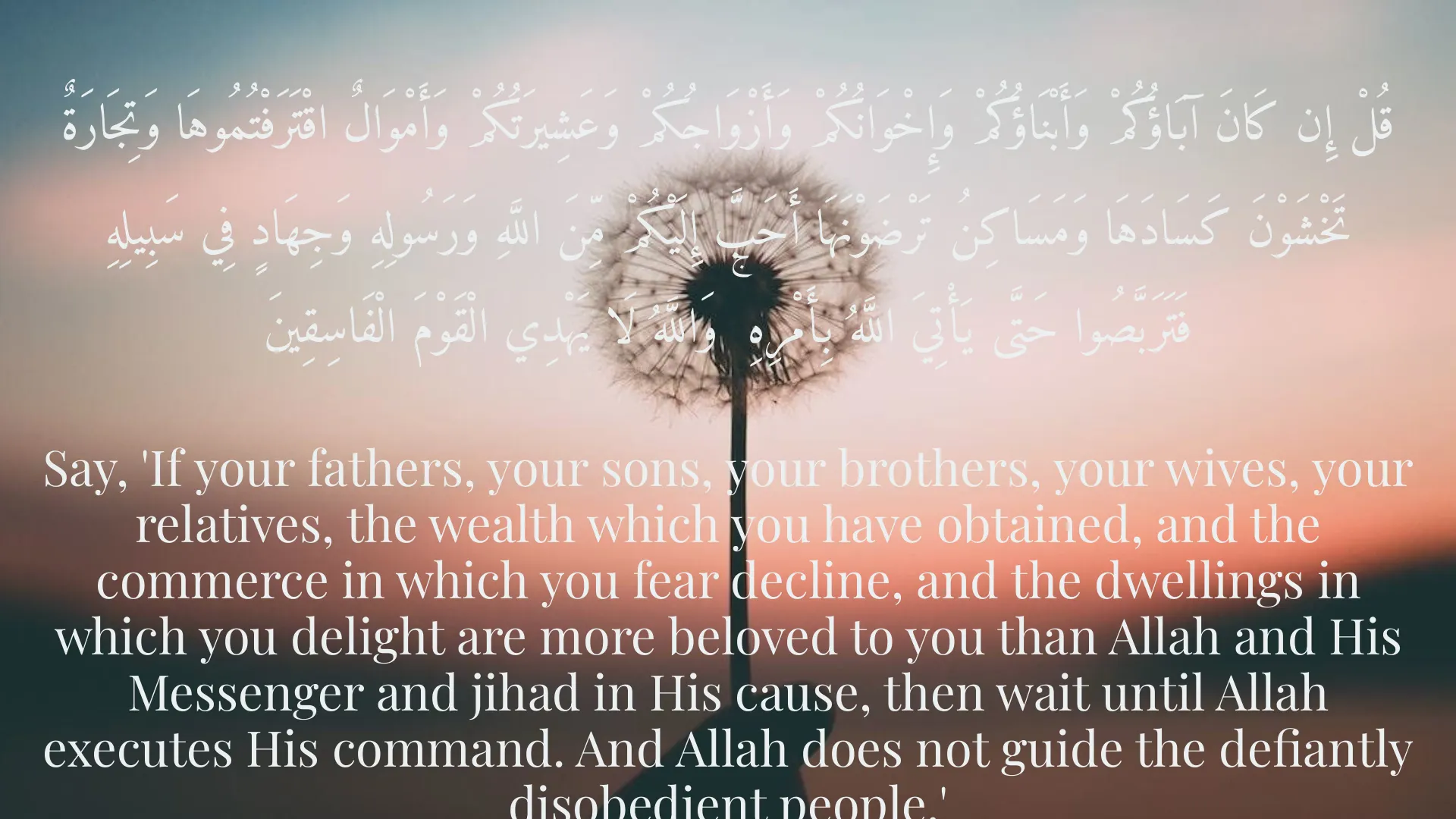
قُلْ إِن كَانَ آبَاؤُكُمْ وَأَبْنَاؤُكُمْ وَإِخْوَانُكُمْ وَأَزْوَاجُكُمْ وَعَشِيرَتُكُمْ وَأَمْوَالٌ اقْتَرَفْتُمُوهَا وَتِجَارَةٌ تَخْشَوْنَ كَسَادَهَا وَمَسَاكِنُ تَرْضَوْنَهَا أَحَبَّ إِلَيْكُمْ مِّنَ اللَّهِ وَرَسُولِهِ وَجِهَادٍ فِي سَبِيلِهِ فَتَرَبَّصُوا حَتَّى يَأْتِيَ اللَّهُ بِأَمْرِهِ ۚ وَاللَّهُ لَا يَهْدِي الْقَوْمَ الْفَاسِقِينَ
Say, 'If your fathers, your sons, your brothers, your wives, your relatives, the wealth which you have obtained, and the commerce in which you fear decline, and the dwellings in which you delight are more beloved to you than Allah and His Messenger and jihad in His cause, then wait until Allah executes His command. And Allah does not guide the defiantly disobedient people.'
Al-Imran : 31
وَمِنَ النَّاسِ مَنْ يَتَّخِذُ مِنْ دُونِ اللَّهِ أَندَاداً يُحِبُّونَهُمْ كَحُبِّ اللَّهِ ۗ وَالَّذِينَ آمَنُوا أَشَدُّ حُبًّا لِّلَّهِ
And among the people are those who take other than Allah as equals [to Him]. They love them as they should love Allah. But those who believe are stronger in love for Allah.
Al-Baqarah : 165
يَا أَيُّهَا الَّذِينَ آمَنُوا مَن يَتَرَدَّى مِنكُمْ عَن دِينِهِۦ فَسَوْفَ يَأْتِيَ اللَّهُ بِقَوْمٍ يُحِبُّهُمْ وَيُحِبُّونَهُ
O you who have believed, whoever of you should revert from his religion - Allah will bring forth [for] a people He will love and who will love Him.
Al-Ma'idah : 54
Short Story
Once upon a time, a young man named Ali was pondering about God's friendship and love. He thought to himself, 'If I show my love and servitude to God in my life, then I can surely feel His love too.' As days went by, Ali devoted himself to worship and serving others with a pure intention. Soon, he felt an abundance of peace and God's love in his heart, which gave him new motivation and hope.