Quranic Answer
Praying for the deceased is one of the most significant ways to show respect and affection towards those who have passed away. In many cultures and religions, remembering the dead through prayer serves as a powerful acknowledgment of their existence and the impact they had on our lives. This act not only helps keep their memory alive but also reflects our connection to them. In Islamic teachings, prayer and supplication (dua) hold paramount importance, as emphasized in the Holy Quran. Allah's guidance highlights the significance of praying for the deceased, revealing an intricate relationship between the living and those who have transitioned to the hereafter. The Quran contains numerous verses that illustrate the profound connection between prayer and divine mercy. For instance, in Surah Ibrahim (14:41), Prophet Ibrahim (peace be upon him) beseeches Allah for the forgiveness of the believers, saying, "O my Lord, make me an establisher of prayer, and [many] from my descendants. Our Lord, and accept my supplication." This profound supplication underscores that praying for others, especially for those who have passed away, is an honorable and virtuous act. In this context, the prayer is not merely a routine obligation but a heartfelt request for mercy and forgiveness for the souls of loved ones. Another relevant verse about praying for the dead is found in Surah Al-Fatiha, which is often recited in prayers by Muslims. In this chapter, believers ask, "The path of those upon whom You have bestowed favor," which symbolizes a plea for guidance, mercy, and forgiveness. This recognizes the importance of seeking Allah's favor not only for ourselves but also for our deceased family members, friends, and community. By invoking Allah's mercy upon the departed souls, we reveal our deep respect and affection for them, reinforcing the ties that bind us, even beyond death. Furthermore, the act of praying for the departed extends beyond just words. In Islam, it is also recommended to perform good deeds on behalf of the deceased, primarily through acts of charity (sadaqah). Narrations from Prophet Muhammad (peace be upon him) emphasize that performing charitable acts and good deeds for the sake of the deceased can bring them peace in their eternal resting place and alleviate any suffering they may experience. This concept is beautifully illustrated in various hadith, where it is conveyed that charity continues to benefit the deceased souls, enhancing their stages in the afterlife. Such practices highlight the importance of maintaining a bond with those who have passed, signifying that our responsibilities towards them do not end with their death. In addition to prayers and charity, reciting the Quran is another method of praying for the deceased. The Quran is viewed as a healing and guiding text for individuals in both life and death. Engaging in its recitation not only benefits the believer reciting it but also serves as a source of blessings for the souls of the departed. Many Muslims believe that the reward of reciting the Quran can be granted to the deceased, allowing them to benefit from our efforts and promoting their elevation in the hereafter. This practice reinforces the unwavering bond between the living and the deceased, ensuring that the remembrance of those who have left us remains an integral part of our spiritual practices. Collectively, these actions converge to create a holistic approach to honoring the deceased. Combining prayers, charitable deeds, and the recitation of the Quran amplifies our intentions, showcasing our desire to seek forgiveness and mercy for the departed. It turns the memories of our loved ones into a path of positive actions and intentions, motivating us to live our lives with more compassion and understanding. Such acts reinforce the understanding that death is not a termination of our relationships but a transformation. Our prayers serve as spiritual connections that enable us to continue fostering love and respect for those who are no longer physically present among us. In conclusion, praying for the deceased enriches our lives and the lives of those we remember. It showcases that love and remembrance transcend death and that our responsibilities towards our loved ones continue even after they have left this world. By integrating prayers, charitable acts, and recitations of the Quran, we actively contribute to seeking mercy and forgiveness for the departed souls. Such acts not only bring comfort to the deceased but also offer solace to the living, reminding us of the impact of compassion and the bonds of love that endure beyond mortality. Ultimately, the practice of praying for the deceased encourages a culture of remembrance, compassion, and kindness, reinforcing the values that unite us all in this journey of life. It serves as a poignant reminder that while those we love may have departed from our worldly existence, they remain an integral part of our hearts and prayers, guiding us through the intricate tapestry of life and death.
Related Verses
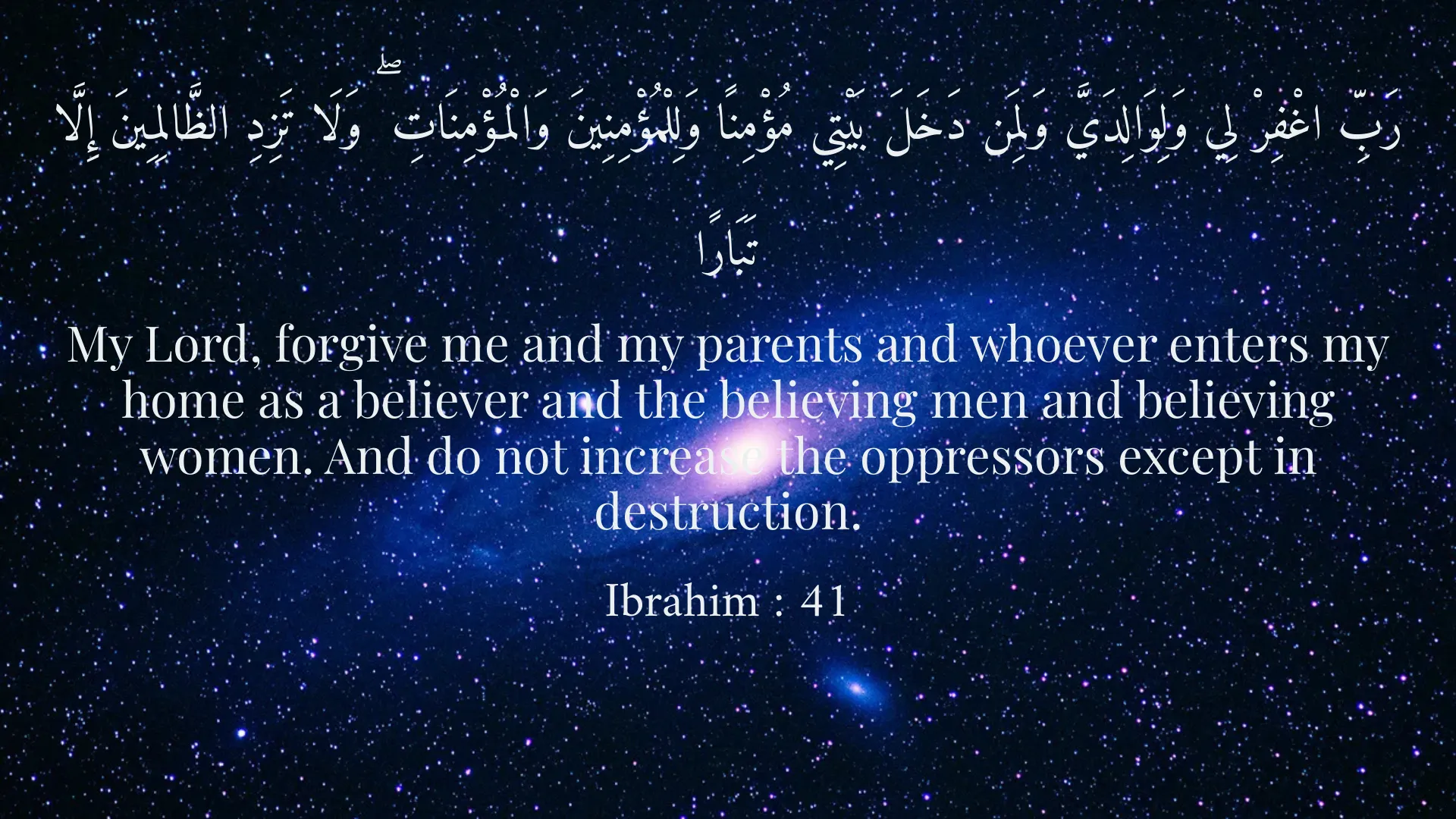
رَبِّ اغْفِرْ لِي وَلِوَالِدَيَّ وَلِمَن دَخَلَ بَيْتِي مُؤْمِنًا وَلِلْمُؤْمِنِينَ وَالْمُؤْمِنَاتِ ۖ وَلَا تَزِدِ الظَّالِمِينَ إِلَّا تَبَارًا
My Lord, forgive me and my parents and whoever enters my home as a believer and the believing men and believing women. And do not increase the oppressors except in destruction.
Ibrahim : 41
اهْدِنَا الصِّرَاطَ الْمُسْتَقِيمَ
Guide us to the straight path.
Al-Fatiha : 6
Short Story
One day, Maryam went to the gravesite of her grandmother who had passed away. There, she remembered her and prayed for her with a heart full of love. Maryam realized that these prayers not only brought peace to her grandmother but also comforted her own heart. She decided to make this a weekly routine and keep her grandmother's name alive in her memory.