Quranic Answer
Believing in God's wisdom in the face of afflictions is a profound aspect of faith that calls for a deep understanding of the Quranic teachings as well as an introspective examination of our personal life experiences. It is a testament to our relationship with Allah and the strength of our belief in His divine wisdom. The Holy Quran, as the ultimate guide for Muslims, repeatedly emphasizes that the calamities and hardships faced by His servants are not mere coincidences or punishments, but rather signs of divine testing and trials that are meant to shape our character and deepen our faith. One of the most poignant reminders of this concept appears in Surah Al-Baqarah, specifically in verses 155-156. In these passages, Allah states, 'And We will surely test you with something of fear and hunger and a loss of wealth and lives and fruits, but give good tidings to the patient' (155). This verse sets the stage for understanding that trials are an inherent part of the human experience, not a deviation from it. It further goes on to affirm the mindset that true believers adopt when facing adversity, as expressed in the subsequent verse, 'Who, when disaster strikes them, say, “Indeed we belong to Allah, and indeed to Him we will return”' (156). This acknowledgment of transcendence is an essential characteristic of believers who recognize that life is transient, and their ultimate return is to Allah. In exploring this theme, it is essential to understand what it means to endure trials with patience. The Quran speaks volumes about the nature of patience and its connection to faith. Patience is not merely about enduring hardships but is also about maintaining a positive attitude and an unwavering belief that there is a higher purpose behind every difficulty. In Surah Al-Imran, verse 186, Allah reminds us, 'You will surely hear from those who were given the Scripture before you and from those who associated others with Allah much abuse. But if you remain patient and conscious of Allah - indeed, it is of the matters [worthy] of determination.' This verse highlights that patience and piety amid challenges are attributes of those who possess faith and determination. To truly believe in God's wisdom during afflictions, one must engage in deep contemplation of the Quranic verses. It is not enough to merely recite them; understanding their meanings and implications in our lives is crucial. Each hardship we encounter is laden with unique wisdom, a lesson waiting to be unveiled. The challenges we face often serve as catalysts for personal development, moral fortitude, and spiritual growth. Through adversity, we are provided with the opportunity to reassess our priorities, strengthen our reliance on Allah, and develop empathy for the struggles of others. Life is inherently filled with challenges. The trials we endure can take on various forms, whether they be the loss of loved ones, financial struggles, health issues, or emotional turmoil. However, what remains constant is the assurance that Allah is always by our side, ready to support and strengthen us through these trials. The understanding that our trials are, in fact, opportunities for growth offers a new perspective on our afflictions. We can adopt a mindset that sees difficulty as a means of refinement, a way for Allah to elevate our status in this life and the hereafter. Furthermore, it is important to remember that we are not alone in our struggles. History is filled with the stories of prophets and believers who faced enormous challenges yet remained steadfast in their faith. Their narratives serve as powerful reminders that adversity is a universal experience, and it is how we respond to these challenges that defines us as believers. For instance, the story of Prophet Job, known for his miraculous patience amidst extreme suffering, exemplifies unwavering faith in the face of insurmountable odds. His story teaches us that patience, trust, and reliance on Allah can lead to spiritual liberation and eventual relief from suffering. In addition to patience, believers are encouraged to engage in regular prayers and supplications during hard times. Dua, or supplication, is a means of communicating with Allah, expressing our fears, hopes, and concerns. It is an essential tool in reinforcing our relationship with Allah and provides us with comfort and solace during trying times. Praying in times of adversity reaffirms our belief in Allah's wisdom and mercy, reminding us that we are always in His care. In conclusion, believing in God's wisdom in the face of afflictions is not a passive endeavor; it requires active participation in faith, patience, and reflection. Each Quranic verse that addresses trials encourages us to deepen our understanding of our circumstances and reminds us that every hardship carries an inherent wisdom. As we navigate the complexities of life, we must hold fast to the knowledge that Allah is with us, offering guidance and strength through our adversities. Ultimately, our trials are opportunities for spiritual growth, and embracing them with patience and faith enriches our lives and strengthens our connection to Allah.
Related Verses
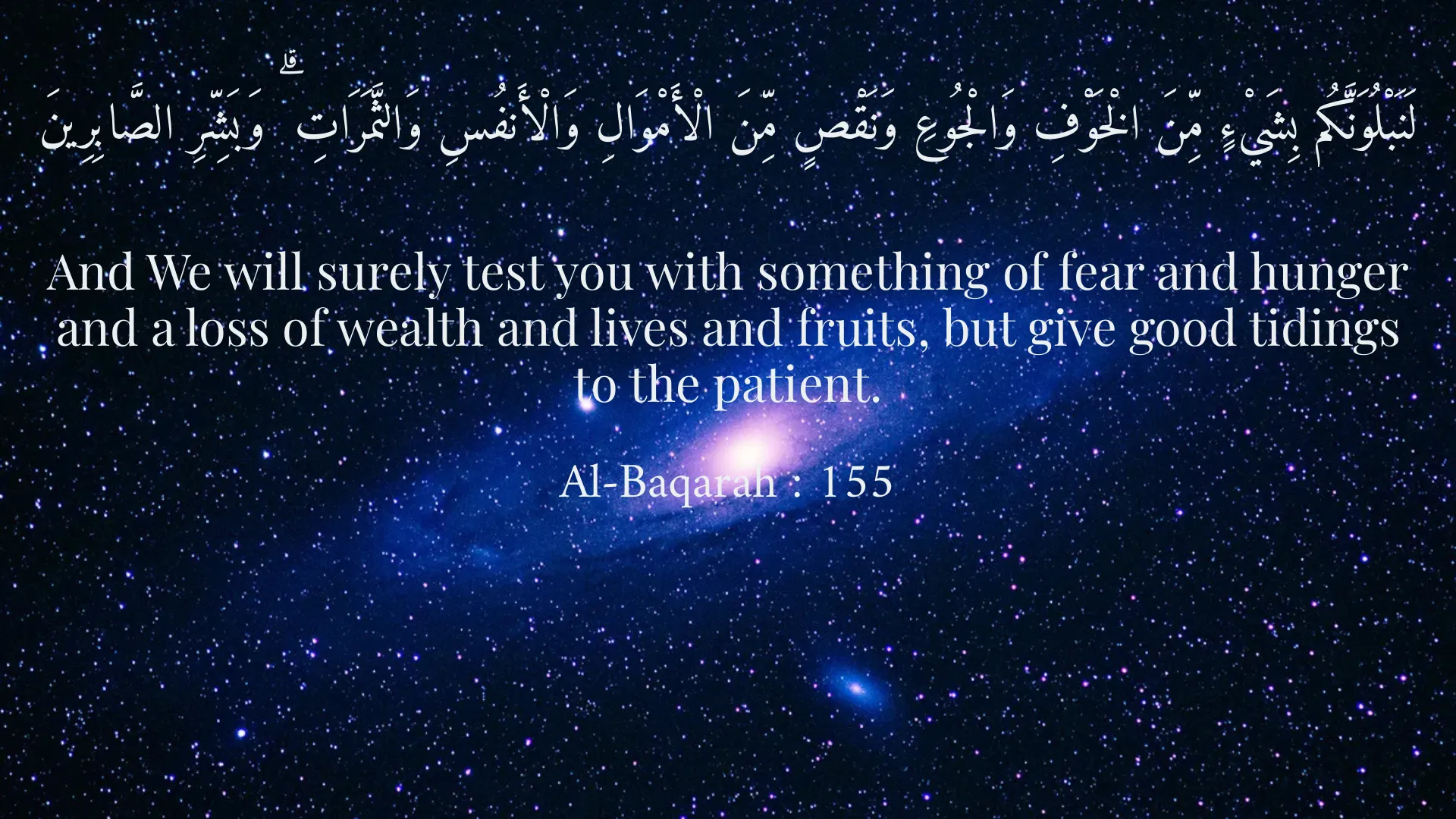
لَنَبْلُوَنَّكُم بِشَيْءٍ مِّنَ الْخَوْفِ وَالْجُوعِ وَنَقْصٍ مِّنَ الْأَمْوَالِ وَالْأَنفُسِ وَالثَّمَرَاتِ ۗ وَبَشِّرِ الصَّابِرِينَ
And We will surely test you with something of fear and hunger and a loss of wealth and lives and fruits, but give good tidings to the patient.
Al-Baqarah : 155
وَ لَتَسْمَعُنَّ مِنَ الَّذِينَ أُوتُوا الْكِتَابَ مِن قَبْلِكُمْ وَ مِنَ الَّذِينَ أَشْرَكُوا أَذًى كَثِيرًا ۖ وَ إِن تَصْبِرُوا وَ تَتَّقُوا فَإِنَّ ذَٰلِكَ مِنْ عَزْمِ الْأُمُورِ
You will surely hear from those who were given the Scripture before you and from those who associated others with Allah much abuse. But if you remain patient and conscious of Allah - indeed, it is of the matters [worthy] of determination.
Al-Imran : 186
Short Story
One day in a small village, a man named Saleh faced difficulties. He often pondered about divine tests and questioned why afflictions existed in his life. One day, while watering the trees in his home, he remembered Quranic verses that hardships are a sign of God's favor. He realized that afflictions should help him transcend himself and draw closer to God. With this new perspective, he began to be grateful for all challenges, and his life gradually transformed.