Quranic Answer
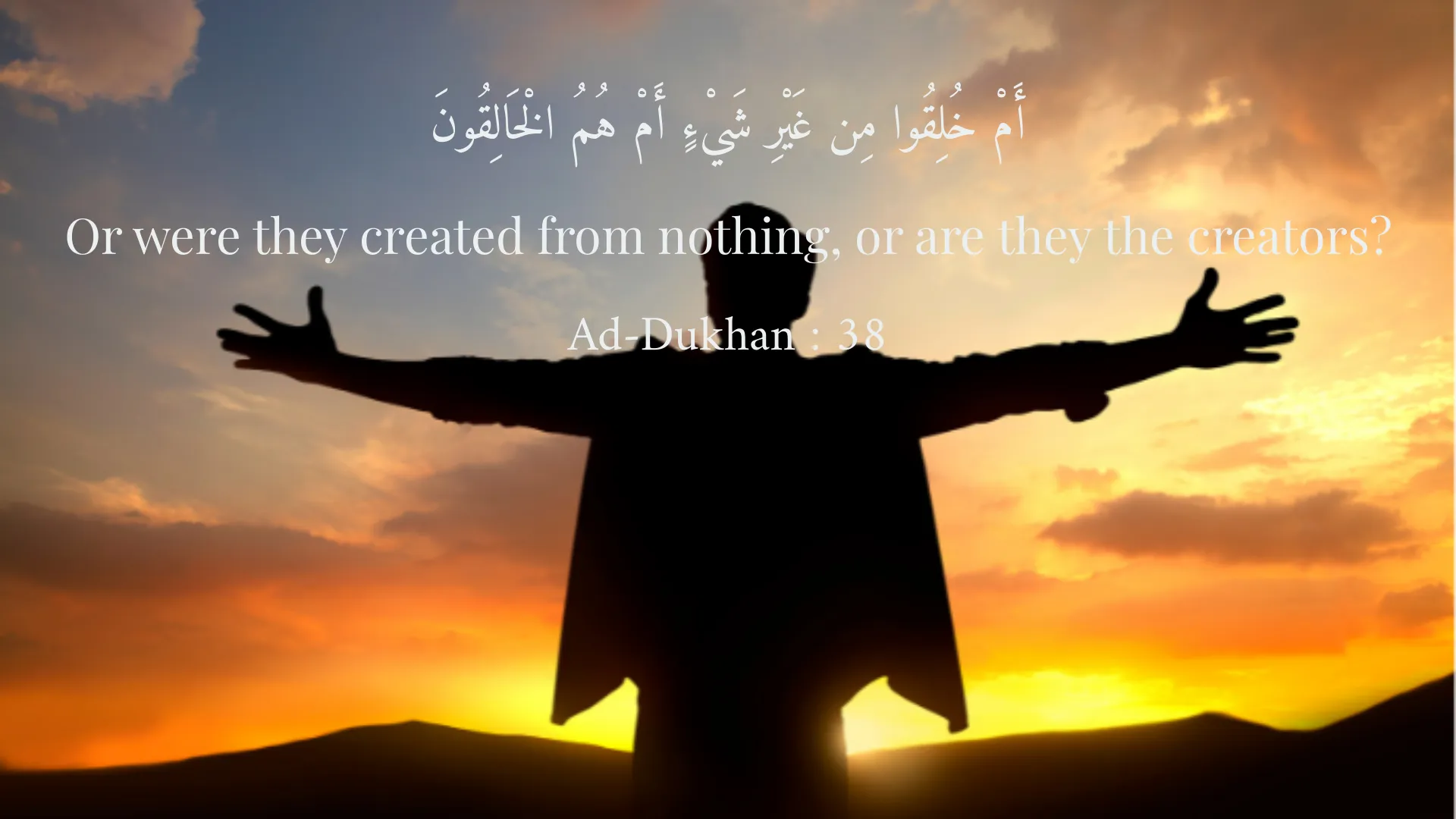
Doubt about the existence of God is a profound topic that many individuals grapple with throughout their lives. This theme of faith, uncertainty, and the quest for understanding transcends cultural and religious boundaries, resonating deeply with people from all walks of life. In the Holy Quran, Allah emphasizes the significance of faith in Him and elucidates the signs of His existence through numerous verses. These divine proclamations support the notion that belief in God is both a logical and spiritual endeavor. One particularly striking verse can be found in Surah Ad-Dukhan (Chapter 44), verse 38, which states: "Or were they created from nothing, or are they the creators?" This rhetorical question serves as a significant reminder that the existence of God is among the most evident realities one can contemplate. The rhetorical nature of this verse invites individuals to reflect on their own existence and the world around them. The inquiry posed in this verse encourages a deep exploration of the origins of life—an exploration that many have engaged in throughout history. While science has made significant strides in elucidating various aspects of the universe, it does not provide a comprehensive explanation for the foundation of existence. For instance, one might consider how the laws of physics operate with such precision, or why the universe exhibits such magnificent order and structure. The intricate and marvelous designs of the natural world compel the human mind to conclude that a Creator deserving of worship must exist. Indeed, the beauty of nature—from the splendor of a sunset to the vastness of the cosmos—often evokes a sense of awe that suggests a higher power. In Surah Fussilat (Chapter 41), verse 53, Allah reiterates His signs: "We will show them Our signs in the horizons and in themselves until it becomes clear to them that it is the Truth." This verse offers an introspective view of God's existence and reveals that His signs are present both within ourselves and throughout the world. This dual aspect of divine signs invites believers to engage in both reflection and exploration. Self-reflection can be immensely powerful in the quest to affirm belief in God. When individuals look inward, they may encounter feelings, thoughts, and experiences that indicate a connection to something greater. For instance, many people describe moments of transcendence or inner peace during times of meditation or contemplation. Such experiences can lead to a profound understanding of one's own existence and the divine. Moreover, the natural world serves as a witness to the Creator's power and will. Histories of science are littered with instances where natural phenomena—from the growth of a seed into a complex plant to the magnificence of the human body—exemplify the wisdom of a higher intelligence. Scholars, scientists, and laypeople alike can all find inspiration in the patterns and laws that govern the universe. Engaging with these elements can lead to a significantly enriched perspective regarding faith and existence. The foundational questions about our purpose and the symbolic representations of life can also provoke doubt. A practical way to confront such uncertainty is through prayer and supplication. Connecting with God through prayer allows individuals to express their doubts and search for comfort. This act of reaching out can often bring solace and reinforce faith. Throughout history, countless individuals have found strength in establishing a personal relationship with God, recognizing that their doubts do not preclude their capacity to connect with the divine. In addition to prayer, studying and reflecting on the verses of the Quran can illuminate the path toward eliminating doubt. The rich narrative and teachings within the Quran cover various aspects of human life—spiritual, moral, philosophical, and social. These teachings guide believers in understanding their faith and establishing a framework to address uncertainties. Many find solace in continuous engagement with the Quran, discovering wisdom that resonates with their life experiences. Furthermore, contemplating the greatness of creation can provide substantial evidence against doubt. The complex biochemical mechanisms that sustain life, the vastness of the universe, and the intricate systems of ecology showcase a divine craftsmanship that is often attributed to God. For believers, such reflections are not mere academic exercises; they often culminate in feelings of reverence, humility, and gratitude for the Creator who has fashioned all of existence. In conclusion, doubt concerning the existence of God is a common experience that many individuals encounter and confront throughout their lives. The Holy Quran serves as a profound source of guidance, providing verses that challenge individuals to reflect on the world around them and within themselves. Surah Ad-Dukhan reminds us of the foundational truths regarding creation and existence, while Surah Fussilat emphasizes the signs that abound, urging individuals to seek the truth. Through prayer and reflection on the Quran, believers can cultivate their faith, fortify their connection to God, and often dispel the shadows of doubt that can loom on their spiritual journey. The quest for a deeper understanding of God's existence reflects the broader human desire for meaning, purpose, and connection—a journey that ultimately leads to the heart of faith itself.
Related Verses
أَمْ خُلِقُوا مِن غَيْرِ شَيْءٍ أَمْ هُمُ الْخَالِقُونَ
Or were they created from nothing, or are they the creators?
Ad-Dukhan : 38
سَنُرِيهِمْ آيَاتِنَا فِي الْآفَاقِ وَفِي أَنفُسِهِمْ حَتَّى يَتَبَيَّنَ لَهُم أَنَّهُ الْحَقُّ
We will show them Our signs in the horizons and in themselves until it becomes clear to them that it is the Truth.
Fussilat : 53
Short Story
One day, a man was in the midst of doubts and uncertainties. He decided to go out into nature to quiet his thoughts. While watching the beauty of creation, the beautiful flowers, the lush trees, and the infinite sky, he felt all his doubts fade away. He remembered the Quranic verses that speak of God's signs. He made a promise to himself to draw closer to God from that moment on.