Quranic Answer
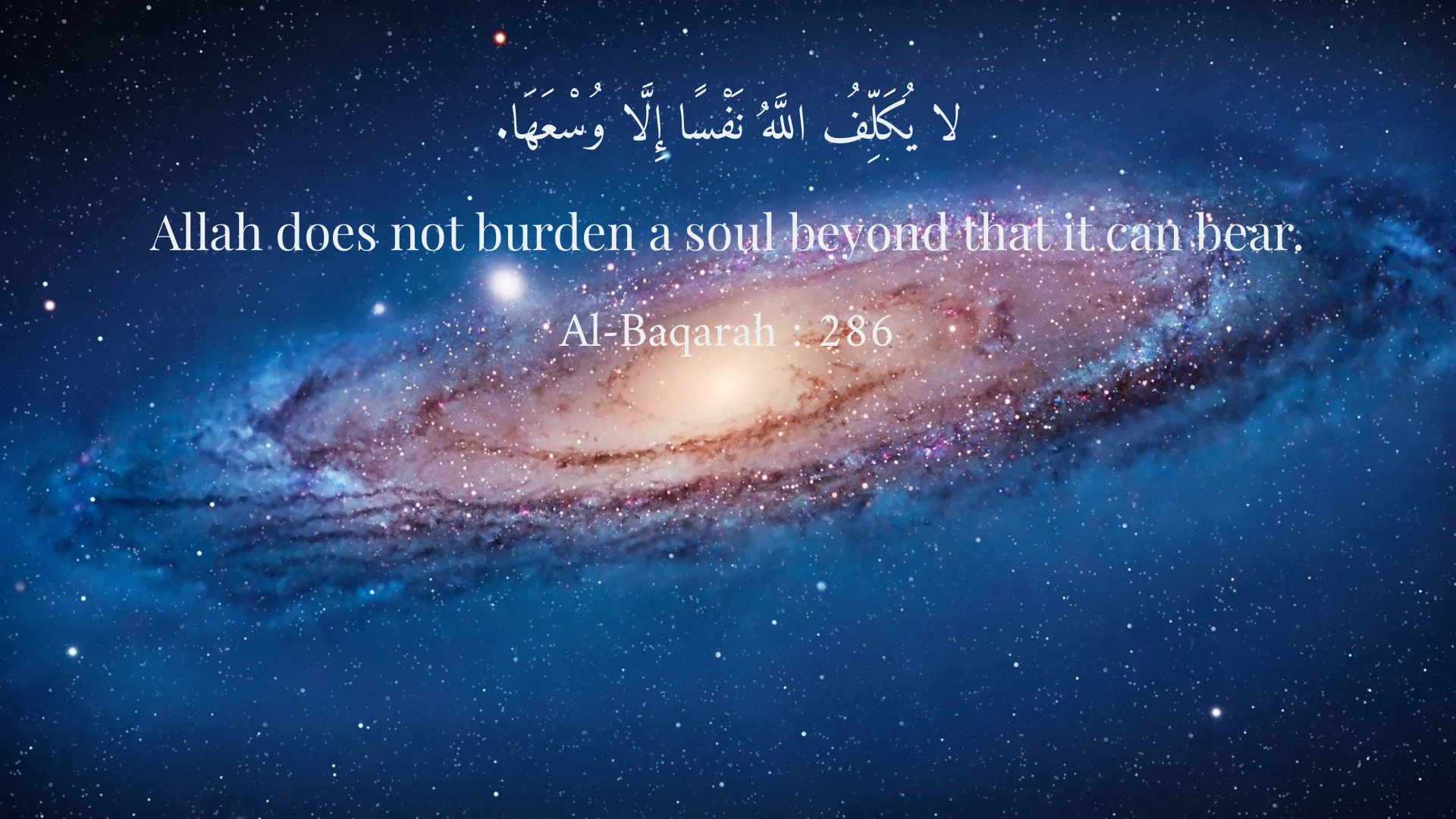
The Holy Quran, revered as the ultimate guide for Muslims, offers invaluable lessons on how to navigate the trials and tribulations of life. One of the fundamental teachings is the approach toward failures and challenges, serving as a source of inspiration for millions worldwide. Among these teachings, verse 286 of Surah Al-Baqarah stands out, stating, 'Allah does not burden a soul beyond that it can bear.' This profound verse encompasses a vital principle of resilience, reminding believers that whatever struggles they may encounter, they are equipped to face them with strength and determination. This verse not only serves as a consolation during times of distress but also acts as a great motivator. It reinforces the belief that challenges, no matter how formidable they appear, are manageable and surmountable. The essence of the verse emphasizes the importance of perseverance and courage. It reminds us that every hardship comes with an inherent capability bestowed by Allah, which can be tapped into when facing life’s trials. Moreover, it teaches us that we should never lose hope, as each difficulty we face is within the limits of our endurance. Building on this foundational principle, Surah Al-Imran, verse 139 echoes a similar sentiment. It states, 'And do not weaken and do not grieve, and you will be predominant if you are believers.' This verse addresses a common human tendency to feel disheartened in the face of setbacks. It urges believers to maintain their strength and resilience, advocating that true faith is reflected in one’s ability to stand firm during challenging times. This idea is essential as it reinforces a sense of community and solidarity among believers, encouraging them to uplift one another even in moments of despair. Failures, as mentioned, are often perceived negatively. However, the Quran encourages us to shift our perspective on these experiences. They are not just endings but rather significant opportunities for learning and growth. Embracing failures provides crucial lessons that can lead to better judgments and enhanced skills in the future. For example, the story of Prophet Job (Ayyub) is a compelling illustration of enduring faith amidst adversity. Job faced tremendous hardships, losing his wealth, health, and family. Yet, he remained patient and steadfast, never losing hope in Allah’s mercy and wisdom. His narrative is an essential reminder of the importance of perseverance in the face of adversities. In Surah Sad, verse 44, Allah references Job's resilience as a model for humanity, highlighting that enduring faith can lead to eventual triumph over hardships. Additionally, the Quran consistently emphasizes the necessity of prayer and supplication as powerful tools in overcoming life’s difficulties. Surah Fussilat, verse 30 states, 'Indeed, those who have said, 'Our Lord is Allah,' and then remained steadfast, the angels will descend upon them, [saying], 'Do not fear and do not grieve.' This verse paints a vivid picture of divine support awarded to those who remain steadfast in their faith. It illustrates the crucial role of maintaining a spiritual connection with Allah, especially during tumultuous periods in life. The importance of prayer cannot be overstated; believers are encouraged to engage in regular communication with Allah through prayer, seeking guidance and strength as they navigate through their challenges. Moreover, the Quran emphasizes the concept of patience (Sabr) as a vital trait for overcoming trials. Surah Al-Baqarah, verse 153 reminds Muslims to seek help through patience and prayer, affirming that Allah is indeed with the patients. This acknowledgment reinforces the belief that challenges are temporary and that the state of patience, accompanied by prayer, can lead to eventual relief and support from Allah. This holistic approach to challenges hence integrates faith, resilience, prayer, and community support, creating a robust framework for believers to follow when faced with adversity. Furthermore, it is essential to understand the narrative of life's tests as a part of a divine plan. The Quran teaches that life is filled with trials meant to test one's character and faith. This testing is not a punishment but rather an opportunity for growth and improvement. Recognizing challenges in this light helps believers approach failures with a constructive attitude, viewing them as a necessary leap in their journey toward spiritual and personal development. In conclusion, the teachings of the Holy Quran present an uplifting perspective on how to confront failures and challenges. From the comforting message in Surah Al-Baqarah that no soul is burdened beyond its capacity to the encouragement found in Surah Al-Imran to remain steadfast and strong, the Quran inspires believers to develop resilience. The narratives of prophets like Job further illustrate the significance of patience and perseverance in times of distress. Ultimately, the Quran not only guides Muslims on the importance of turning to prayer and supplication during hardships but also calls upon believers to redefine their notions of failure and use such experiences as stepping stones toward personal and spiritual fulfillment. By adhering to these teachings, individuals can navigate life’s challenges with an unwavering spirit, ultimately leading to success and fulfillment in both this world and the Hereafter.
Related Verses
لا يُكَلِّفُ اللَّهُ نَفْسًا إِلَّا وُسْعَهَا.
Allah does not burden a soul beyond that it can bear.
Al-Baqarah : 286
وَلَا تَهِنُوا وَلَا تَحْزَنُوا وَأَنتُمُ الْأَعْلَوْنَ إِن كُنتُم مُّؤْمِنِينَ.
And do not weaken and do not grieve, and you will be predominant if you are believers.
Al-Imran : 139
إِنَّا وَجَدْنَاهُ صَابِرًا ۖ نِعْمَ الْعَبْدُ إِنَّهُ أَوَّابٌ.
Indeed, We found him patient. What an excellent servant! Indeed, he was one who frequently turned back [to Allah].
Sad : 44
Short Story
One day, a poor soldier faced defeat in a battle and tried to return home. However, on his way, he encountered a wise old man. The old man said to him, 'You have faced defeat, but failure is not the end; if you learn from it, it will be an opportunity for you.' The soldier listened to the old man's words and took a lesson from this defeat that led him to future victories.