Quranic Answer
In the Holy Quran, vows and the importance of fulfilling them are emphasized as essential components of one's relationship with Allah. Vows are not merely promises; they are sacred commitments made by individuals to honor Allah through acts of worship and service to others. The significance of vows extends beyond mere verbal commitments; they embody an individual's devotion, discipline, and sincerity in faith. This article delves into the profound meanings of vows in the Quran, the implications of fulfilling them, and the overall impact on a believer's life. The concept of vows in Islam is illustrated in several verses throughout the Quran, the most notable being in Surah Al-Insan (also known as Surah Ad-Dahr). In verse 7, Allah states, ‘Indeed, we feed you only for the sake of Allah; we do not want from you reward or gratitude.’ This verse highlights the essence of pure intention behind acts of charity and service to others. When one makes a vow, especially those of helping and feeding the needy, the act should be undertaken with the sole purpose of earning Allah's pleasure, free from expectations of gratitude or recognition from others. It is a reminder that true altruism stems from a deep love for Allah and a desire to live a life that reflects His teachings. Moreover, in Surah Al-Imran, verse 95, Allah emphasizes the rewards for those who fulfill their vows: ‘And whoever fulfills what he has promised Allah, then for him is a great reward.’ This statement serves as an assurance that Allah appreciates the efforts of His servants and promises them a significant reward in the hereafter. It fosters a sense of accountability in believers, encouraging them to honor their commitments and intentions with sincerity and diligence. Fulfillment of vows is not simply about the act itself but is also about fostering a deeper connection with Allah. When a believer makes a vow, it signifies an intention to strive for goodness and an earnest effort to manifest that commitment. This effort is transformative; it propels individuals not only to engage in acts of worship and kindness but also to grow spiritually and morally. Fulfilling vows is an indication of one's love for Allah and an understanding of His commandments, promoting a sense of purpose in everyday life. Generally, fulfilling a vow requires sincere intention, which is the first step toward actualizing one's commitments. Intentions in Islam hold immense weight, as highlighted in various hadiths. The Prophet Muhammad (peace be upon him) stated, ‘Actions are judged by intentions, and every person will be rewarded according to what he intended.’ This principle underscores the importance of approaching vows and commitments with the right mindset. Sincerity in intention transforms mere acts of worship and service into profound expressions of faith. In addition to a sincere intention, fulfilling a vow also demands effort in doing good deeds. This effort may encompass various forms, from devoting time to pray, engaging in community service, or even committing to behaviors that foster personal growth and morality. It is crucial to remember that the journey of fulfilling a vow is as significant as the completion of the vow itself. During this journey, individuals may face hurdles and challenges. Thus, patience and perseverance become pivotal traits that one must cultivate. Seeking help from others is another essential aspect of fulfilling a vow. Whether it is reaching out to fellow believers for companionship in acts of worship or partnering with community organizations to fulfill charitable commitments, collaboration can enhance the experience. In Islam, community plays a critical role in an individual's spiritual journey. Working alongside others not only eases the burden but also fosters a sense of unity and collective purpose in striving for goodness. Setting realistic goals is equally crucial in the process of fulfilling a vow. It is vital to understand that making a vow should not become a source of stress or unrealistic pressure. Instead, setting achievable objectives allows individuals to track their progress and fosters a positive mindset. Breaking down a significant vow into smaller, manageable tasks can make the fulfillment process more approachable and less daunting. Ultimately, a vow should be seen as an opportunity to draw closer to Allah, engage in noble actions, and develop one’s character. It serves as a channel through which believers can express their love for Allah and cultivate a spirit of service in their communities. Vows inspire individuals to act with purpose, to strive for excellence in their faith, and to recognize their potential to make a positive impact in the world around them. Moreover, the fulfillment of vows has far-reaching implications beyond the individual. When one honors their promises, it builds trust within the community and enhances social cohesion. It contributes to creating a culture of accountability and responsibility, where individuals inspire one another to uplift their moral and spiritual standards. This collective aspiration leads to societal transformation, as acts of kindness fueled by sincere intentions ripple through communities, creating positive change. In conclusion, the teachings of the Quran highlight the profound significance of vows and the necessity of fulfilling them. A vow is more than a simple promise; it represents an individual's commitment to Allah and a sincere intention to engage in meaningful actions that echo through one’s life and the lives of others. The Quran encourages believers to maintain their vows with sincerity, effort, patience, and collaboration. By viewing vows as opportunities for growth and connection with Allah, individuals can embrace them not only as obligations but also as inspiring paths towards fulfilling their spiritual potential.
Related Verses
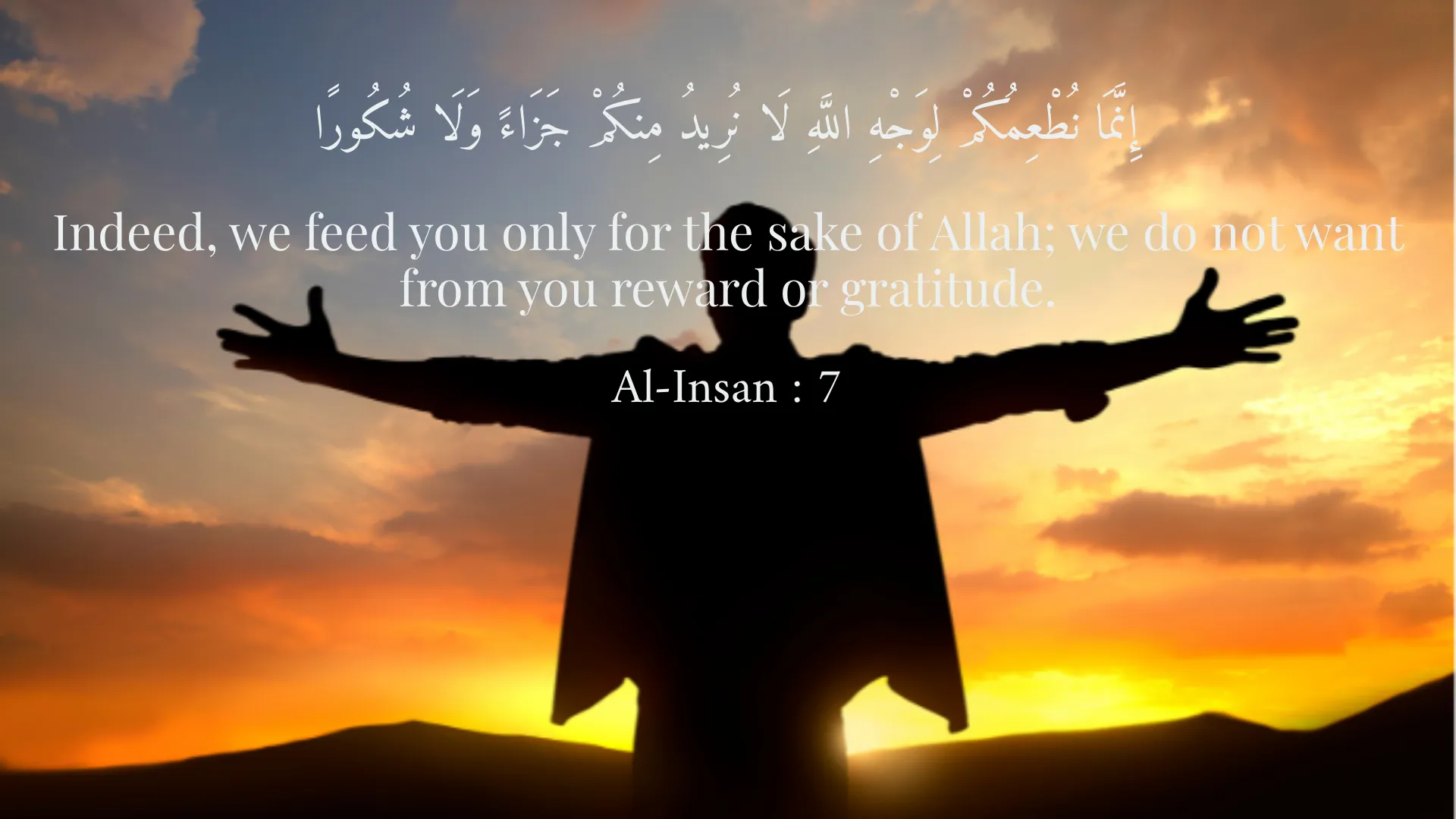
إِنَّمَا نُطْعِمُكُمْ لِوَجْهِ اللَّهِ لَا نُرِيدُ مِنكُمْ جَزَاءً وَلَا شُكُورًا
Indeed, we feed you only for the sake of Allah; we do not want from you reward or gratitude.
Al-Insan : 7
وَمَنْ أَوْفَى بِمَا عَاهَدَ عَلَيْهِ اللَّهَ فَالَ لَهُ أَجْرٌ عَظِيمٌ
And whoever fulfills what he has promised Allah, then for him is a great reward.
Al-Imran : 95
Short Story
One day, Ali decided to make a vow. He prayed for Allah’s help and after some time started assisting the poor and needy. After fulfilling his vow, Ali felt a sense of peace and happiness, and he was so joyful to be able to help others. He realized that a vow not only brought him closer to Allah but also filled his life with blessings and goodness.