Quranic Answer
In the Holy Quran, there is a significant emphasis on the idea of spiritual independence and the reliance solely on Allah. This theme permeates various verses and serves as a guiding principle for Muslims throughout their lives. Spiritual independence, as highlighted in the Quran, encourages individuals to cultivate a direct relationship with their Creator, leading to a profound sense of self-sufficiency. In Surah Al-Ma'idah, verse 55, Allah states: 'Your ally is none but Allah and His Messenger and those who have believed.' This verse acts as a reminder of where our primary allegiance should lie — with God and His Messenger, Prophet Muhammad (peace be upon him). This powerful assertion suggests that believers must foster their relationship with Allah, and prioritize their commitment to Him above all else. The significance of this verse lies not only in the direct guidance it offers but also in the philosophy of reliance on the Divine. It encourages individuals to free themselves from the requirements of others. In a world where social relationships often shape our decisions and define our self-worth, the Quranic message stands out as a beacon, advocating for a reliance on Allah alone. When individuals internalize this teaching, they find the strength to break free from the shackles of external influence, leading to a form of independence that is rooted in spiritual conviction. Additionally, Surah At-Talaq, verse 2 further reinforces this theme: 'And whoever fears Allah - He will make for him a way out.' This verse signifies that an awareness and mindfulness of Allah can lead to liberation from dependency on others. Fear of Allah, in this context, refers to a consciousness that guides our actions and decisions, ensuring they align with divine wisdom. The more we embrace this awareness, the more we are empowered to navigate life’s challenges independently. Religion, often misconstrued as a crutch for the weak, is instead a source of strength and resilience for those who genuinely engage with its teachings. By fostering a profound connection with Allah, individuals can attain a level of spiritual independence that reinforces their self-reliance. This independence is not only beneficial in terms of daily affairs but also cultivates a fulfilling and meaningful life. To avoid dependence on people, individuals should prioritize personal skills and character development. Relying on oneself rather than seeking support from others encourages a proactive approach to life. It is crucial to develop competencies and skills that empower individuals to handle challenges autonomously. This path towards self-improvement is immensely rewarding and aligns closely with the Islamic ethos of self-reliance and personal responsibility. Self-awareness and boosting self-confidence are critical factors that can help individuals steer clear of over-reliance on others. When one understands their strengths and weaknesses, they are better equipped to make informed decisions. Self-awareness allows individuals to recognize their capabilities and encourages them to tackle challenges head-on. Furthermore, fostering self-confidence is essential, as it lays the foundation for believing in one’s abilities. When individuals have confidence in themselves, they are less likely to seek validation from others and more inclined to trust their instincts. Building both self-awareness and self-confidence requires consistent effort and introspection, yet the results can be transformative. Moreover, cultivating a mindset of independence while depending on Allah as the ultimate source of strength can also enhance one’s spiritual journey. This dual approach will not only bring peace of mind but will also strengthen faith. As believers navigate through trials and tribulations, their reliance on Allah becomes a focal point, providing solace and guidance amid adversity. Understanding that fulfillment comes from within, supported by the divine guidance of Allah, helps individuals to embrace their spiritual independence authentically. Taking actionable steps toward independence and self-sufficiency includes setting personal goals and actively working toward them. Regularly reflecting on one's progress fosters resilience and determination. When setbacks occur, as they inevitably do in life, turning towards Allah for support emphasizes the balance between self-reliance and divine reliance. Believing that Allah is always there to assist us can lead to breakthroughs in our personal development. In conclusion, the concept of spiritual independence as outlined in the Holy Quran provides a roadmap for Muslims seeking a deeper connection with Allah and a liberated existence free from undue dependence on others. When individuals commit themselves to the teachings of the Quran, such as those found in Surah Al-Ma'idah and Surah At-Talaq, they cultivate a life of confidence, self-sufficiency, and reliance solely on Allah. By focusing on personal skill development, enhancing self-awareness, and boosting self-confidence, believers can effectively navigate their lives with determination and purpose. The journey towards spiritual independence is ongoing, but it is crucial for building a fulfilling and meaningful existence rooted in faith.
Related Verses
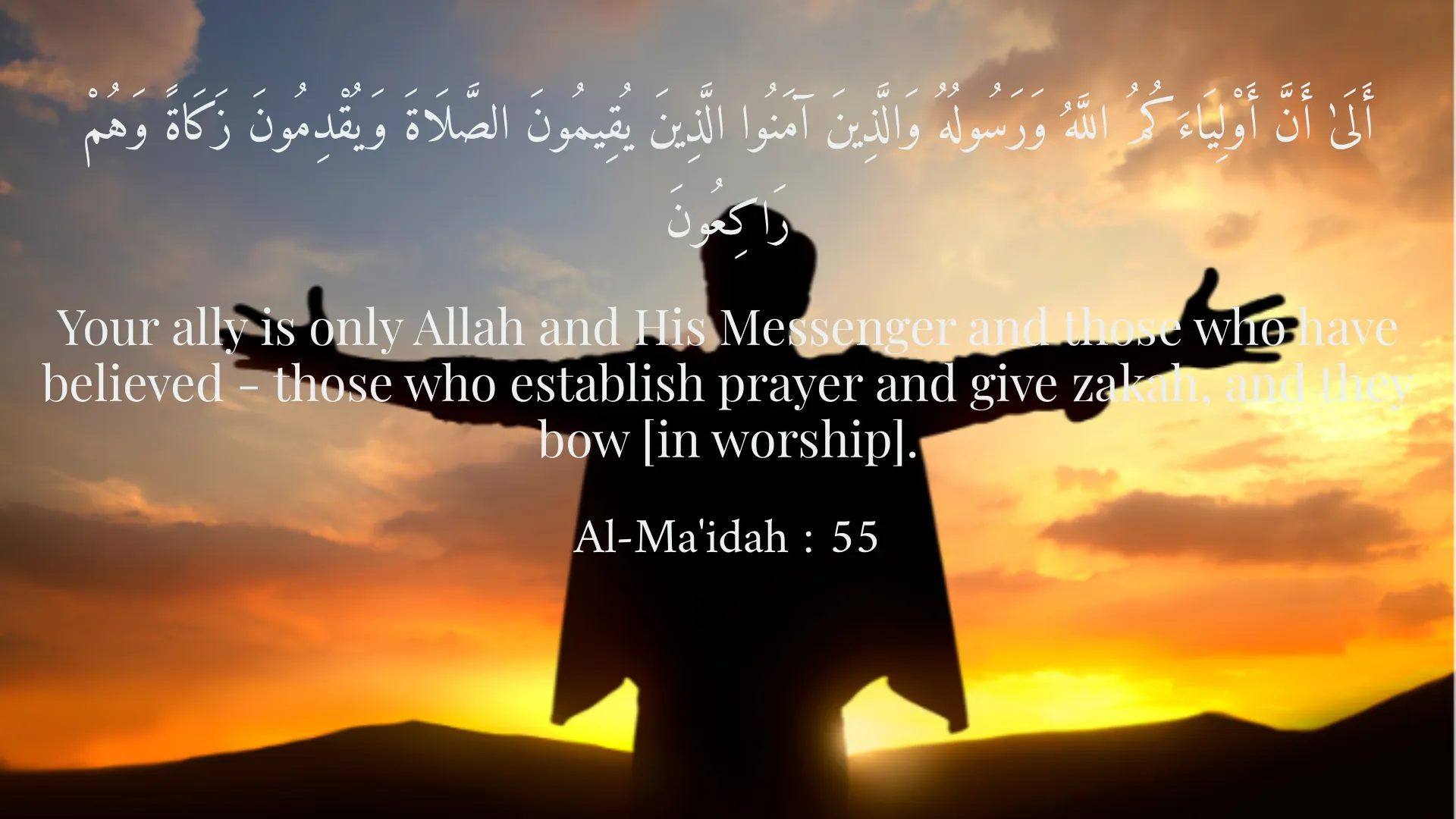
أَلَىٰ أَنَّ أَوْلِيَاءَكُمُ اللَّهُ وَرَسُولُهُ وَالَّذِينَ آمَنُوا الَّذِينَ يُقِيمُونَ الصَّلَاةَ وَيُقْدِمُونَ زَكَاةً وَهُمْ رَاكِعُونَ
Your ally is only Allah and His Messenger and those who have believed - those who establish prayer and give zakah, and they bow [in worship].
Al-Ma'idah : 55
وَمَن يَتَّقِ اللَّهَ يَجْعَل لَّهُ مَخْرَجًا
And whoever fears Allah - He will make for him a way out.
At-Talaq : 2
Short Story
One day, Adel was sitting by the sea, pondering about his life. He always felt dependent on others. However, after studying the Quran, he realized that to receive strength and willpower, he must rely on Allah. He said to himself, 'From now on, my reliance will be solely on God.' And thus, he began to become independent.