Quranic Answer
In contemporary society, navigating through trials and hardships is an unavoidable reality. Life's challenges can manifest in various forms—be it financial difficulties, health-related issues, loss of loved ones, or feelings of despair. These difficult moments can often leave individuals feeling overwhelmed, isolated, and devoid of hope. However, it is in these very moments that one of the most profound and transformative actions one can take is to seek help from Allah and remain steadfast in His remembrance. The Quran, which serves as a comprehensive guide for Muslims, emphasizes the paramount importance of patience (sabr) and prayer (salah) during times of adversity. It provides reassurance and comfort that can ease the burden of trials and provide a pathway to serenity. For instance, in Surah Al-Baqarah, verse 153, Allah explicitly instructs believers, saying: "O you who have believed, seek help through patience and prayer. Indeed, Allah is with the patient." This verse serves as a beacon of guidance. It acknowledges that hardships are a part of life while simultaneously providing a remedy—showing that patience and prayer can serve as vital tools in our pursuit of resilience. The concept of patience is not merely about enduring with silence; it represents a proactive approach to dealing with obstacles. When faced with adversities, patience becomes a means that enables individuals to maintain their equilibrium amidst chaos. In consistently turning to Allah through prayer during life's trials, believers invite divine intervention into their lives, reinforcing their faith that they are not alone. This intrinsic connection to Allah promotes a sense of peace and security, alleviating feelings of stress and despair. Moreover, Surah Al-Anfal, verse 28, reminds us of the impermanence of worldly possessions and the attachment we may feel towards our loved ones. The verse states: "And know that your properties and your children are but a trial, and that Allah has with Him a great reward." This beautiful reminder prompts believers to re-evaluate their priorities and realize that material possessions are fleeting. Instead, one should focus on the eternal rewards that Allah has in store for those who remain patient in times of trials. This perspective allows individuals to detach from worldly concerns and to place their trust in Allah’s infinite wisdom. The act of remembering Allah extends beyond mere acknowledgment; it invites individuals to foster a strong relationship with their Creator. Engaging in regular prayers and supplications not only draws individuals closer to Allah, but it also serves as an emotional and spiritual refuge. Prayer acts as a direct line of communication with Allah, through which individuals can express their fears, hopes, and gratitude. The soothing repetition of prayers and the recitation of the Quran creates an atmosphere of tranquility in the hearts of believers. This meditative state inspires resilience and fortitude, reinforcing the idea that Allah’s presence is a constant source of comfort. In the face of challenges, reciting the Quran and reflecting upon its verses can be particularly enlightening. The Quran, with its profound wisdom and guidance, teaches us that Allah is indeed by our side, unwavering in His support for those who seek Him earnestly. For example, when we meditate on verses of comfort such as Surah Al-Duha, which reassures the Prophet Muhammad that Allah has not abandoned him, we can derive similar solace in our struggles, knowing that Allah does not forsake His servants. Furthermore, the practice of dhikr, or the remembrance of Allah, solidifies an individual’s mindset. Regularly engaging in dhikr helps to drown out negative thoughts and anxieties that often accompany hardship. Remembering Allah through praise, gratitude, and reflection can cultivate a profound sense of inner peace and purpose. It reminds individuals that their worth is not merely based on their material possessions or worldly achievements; rather, it is rooted in their relationship with Allah and their ability to remain steadfast through trials. Ultimately, it is essential to keep Allah alive in our minds and hearts. Through patience, prayer, and remembrance, believers can transform their struggles into opportunities for growth. Hardships can serve as potent reminders of our humanity, humility, and reliance on Allah. Instead of despairing, we learn to view them as stepping stones in our journey toward spiritual elevation. In conclusion, as we navigate the complexities of life and the inevitability of hardship, we must hold steadfast to our faith by seeking help through patience and prayer, as delineated in the Quran. The wisdom imparted through Allah’s messages provides us the tools necessary to overcome adversity and reinforces the belief that He is an omnipresent supporter during our difficult days. Through prayer, remembrance, and reflection, we cultivate a resilient spirit that aligns with divine purpose, ultimately paving the way for hope and tranquility in our hearts.
Related Verses
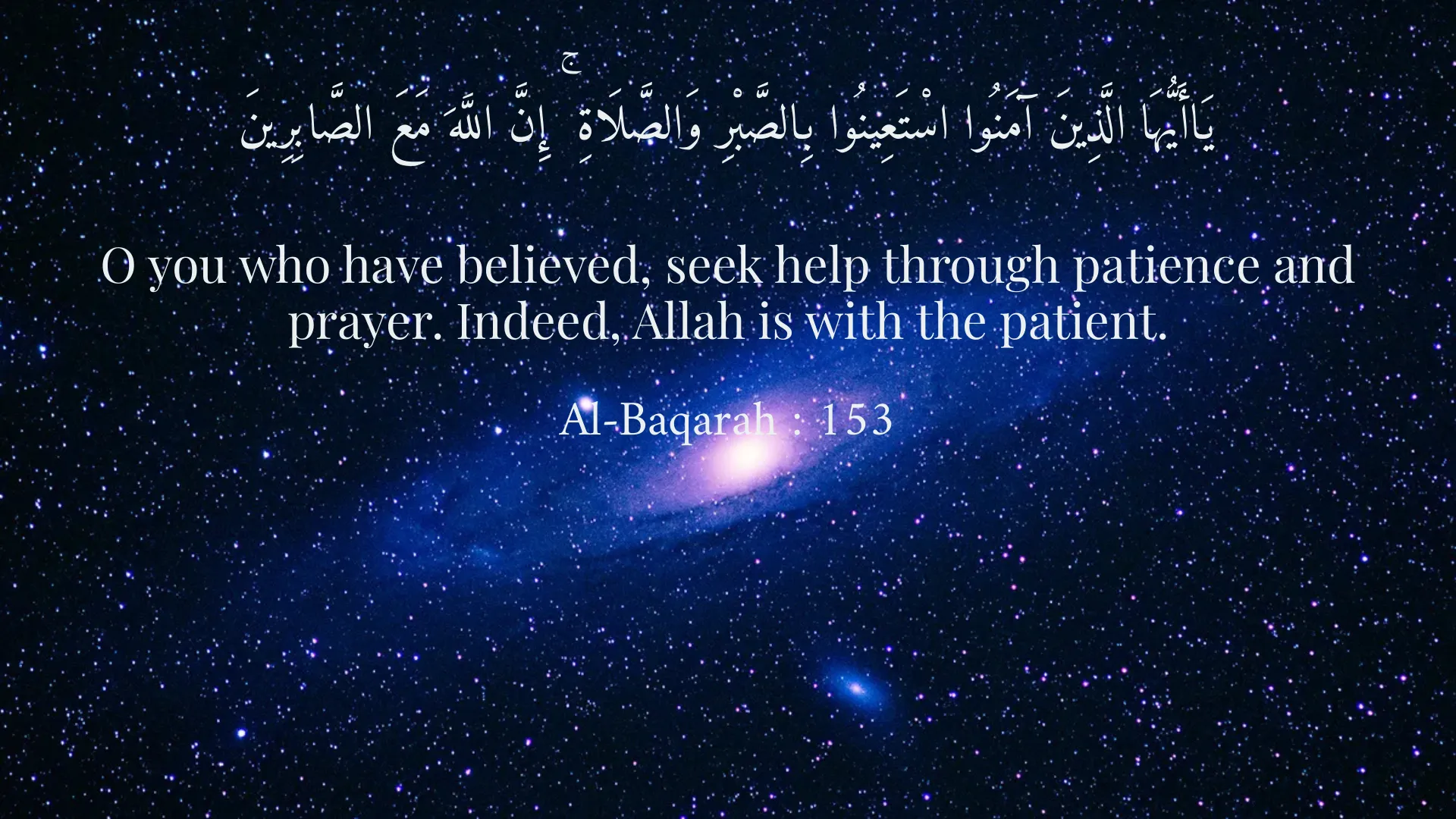
يَاأَيُّهَا الَّذِينَ آمَنُوا اسْتَعِينُوا بِالصَّبْرِ وَالصَّلَاةِ ۚ إِنَّ اللَّهَ مَعَ الصَّابِرِينَ
O you who have believed, seek help through patience and prayer. Indeed, Allah is with the patient.
Al-Baqarah : 153
وَاعْلَمُوا أَنَّمَا أَمْوَالُكُمْ وَأَوْلَادُكُمْ فِتْنَةٌ ۖ وَأَنَّ اللَّهَ عِندَهُ أَجْرٌ عَظِيمٌ
And know that your properties and your children are but a trial, and that Allah has with Him a great reward.
Al-Anfal : 28
Short Story
One day, a tree spoke to a young man and said that one must always stand firm on their roots. The young man replied, 'How can I overcome my hardships?' The tree responded: 'Always remember that in difficulties, God is with you. Do not forget Him, and stay connected through prayer and supplication.' The tree's words helped the young man to strengthen his faith in God and overcome his challenges.