Quranic Answer
In the Holy Quran, the significance of faithfulness to the covenant with Allah is a theme that is underscored with great emphasis throughout numerous Surahs. This notion of a covenant is foundational, indicating not only a promise made by believers to their Lord, but also encompassing the responsibilities and obligations that accompany such a commitment. One cannot merely profess belief without embodying it through actions that reflect loyalty and integrity towards this covenant. Among the pivotal verses that encapsulate his principle is Surah Al-Baqarah, verse 177, which delineates the characteristics of true righteousness. The verse states: 'Righteousness is not that you turn your faces toward the east or the west; but [true] righteousness is in one who believes in Allah, the Last Day, the Angels, the Book, and the Prophets and gives his wealth, in spite of love for it, to relatives, orphans, the needy, the traveler, those who ask [for help], and for freeing slaves; and establishes prayer and gives zakah; [those who fulfill their] promise when they promise; and [those who are] patient in poverty and hardship and during battle. Those are the ones who have traded and have been successful.' This profound verse conveys that the essence of righteousness extends beyond mere outward expressions of faith, such as the direction of prayer. Instead, it places substantial stress on the internal faith and signifies that actions must resonate with the core values of humanity and religious obligations. The Quran emphasizes that belief is intertwined with action. The qualification of being truly righteous involves a profound belief in Allah and His attributes, alongside a commitment to performing good works. These deeds should, as the verse articulates, cater to the needs of those who are often overlooked by society. By extending help to relatives, orphans, and the less fortunate, believers not only fulfill their moral obligation but also reinforce their connection to the foundational aspects of Islam, which advocates care for the vulnerable and disenfranchised. Furthermore, the instruction to fulfill promises in Surah Al-Ma'idah, verse 1, reinforces the critical nature of loyalty in interpersonal and divine relationships. The verse states, 'O you who have believed, fulfill [all] contracts…'. This directive underscores a fundamental principle of integrity that is pivotal not just for individual believers, but for society as a whole. Promises and contracts are more than mere words; they are commitments grounded in faithfulness to oneself, others, and, ultimately, to Allah. To be faithful to God's covenant, individuals must remain ever conscious of their duties and strive to reinforce their relationship with Him through earnest endeavors, including prayer, fasting, and other acts of worship. Additionally, the Quran warns against the dangers of forgetfulness in the context of one's obligations. Surah Al-Imran, verse 76 articulates this idea by asserting that salvation lies in maintaining loyalty to Allah and fulfilling promises made to other individuals. Such reminders serve as a means of keeping believers grounded in their actions and steadfast in their faith. Neglecting such duties can lead to a faltering of one's relationship with God and a detrimental impact on both individual and communal well-being. The implication of faithfulness to the covenant of Allah extends beyond worship and includes the way one conducts oneself in daily life. The manifold expectations set forth in the Quran call believers to a higher standard of living that integrates faith with behavior. By engaging in righteous deeds, believers validate their trust in Allah and serve as exemplars within their communities. Indeed, the notion of performing good works, as highlighted in verse 177, cultivates a spirit of altruism which can be transformative, not just for the individual believer but for society as a whole. When individuals are encouraged to be selfless, to share their wealth, time, and resources with those in need, the fabric of the community strengthens, thereby nurturing a sense of belonging and mutual respect. In exploring the concept of being loyal to God’s covenant, we must consider the ongoing effort required to perform obligations and avoid sins. The Quran does not portray righteousness as a one-time act but rather as an ongoing journey demanding diligence and perseverance. This extensive commitment to faith, remembrance, and righteous deeds invariably leads to success as articulated in Quranic revelations. It brings to light that those who remain steadfast in their commitments to Allah, embrace their responsibilities towards others, and persistently strive in their duties will find success in both this life and the hereafter. Such teachings reveal the depth of the relationship expected between a believer and their Creator and the intricate weave between faith and practical ethics. In conclusion, the significance of loyalty to Allah's covenant, as articulated in several Surah of the Holy Quran, serves as a profound reminder of the holistic nature of faith in Islam. It implores believers to move beyond the superficiality of mere declarations of belief and encourages a thorough integration of faith with action. By nurturing their relationship with Allah through ongoing worship, remembrance, and practical righteousness, believers serve not only themselves but also the broader community by contributing positively to the world around them. Ultimately, it is through these combined efforts that one can truly embody the essence of faithfulness to the covenant with Allah.
Related Verses
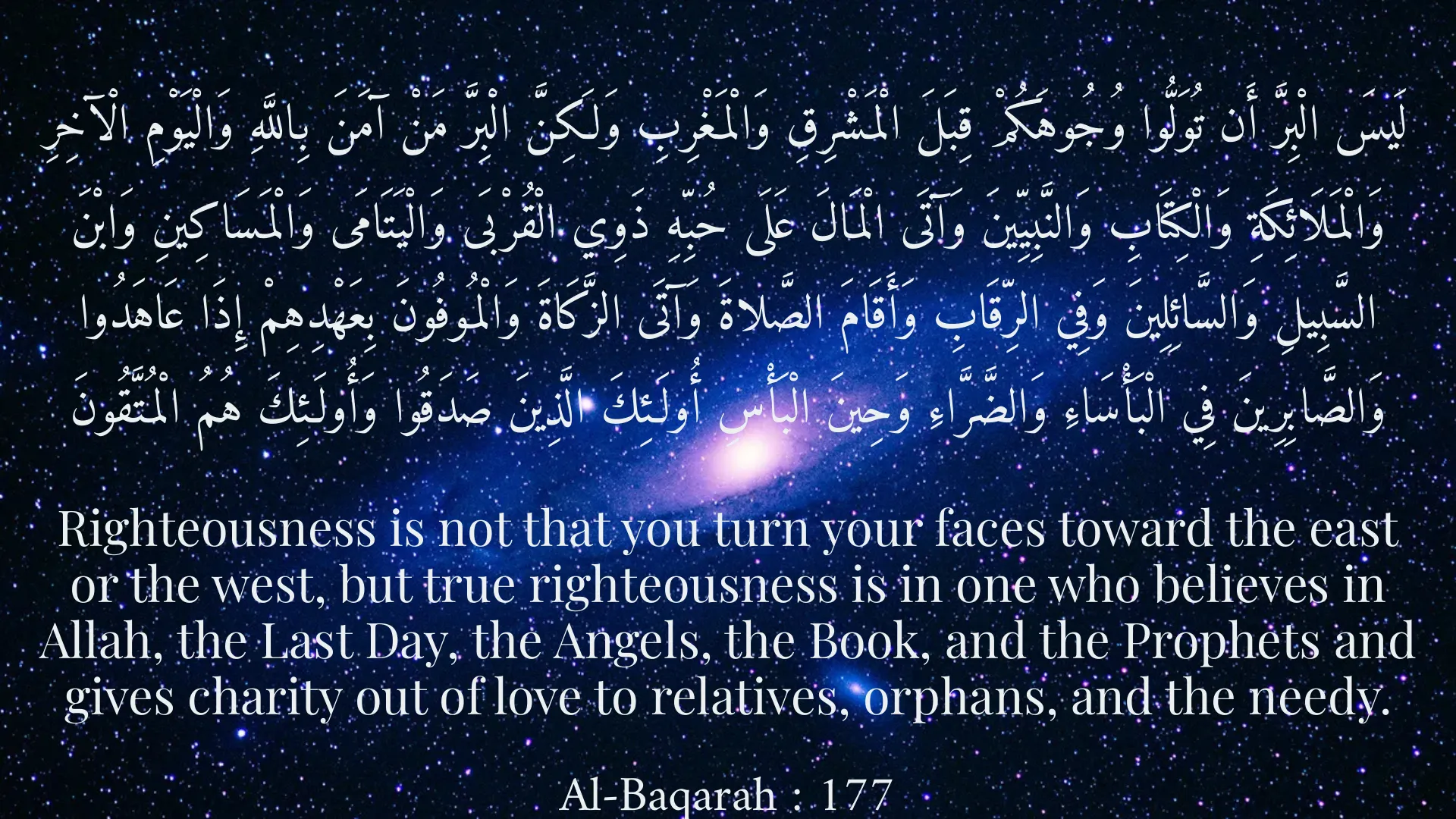
لَيسَ الْبِرَّ أَن تُوَلُّوا وُجُوهَكُمْ قِبَلَ الْمَشْرِقِ وَالْمَغْرِبِ وَلَكِنَّ الْبِرَّ مَنْ آمَنَ بِاللَّهِ وَالْيَوْمِ الْآخِرِ وَالْمَلَائِكَةِ وَالْكِتَابِ وَالنَّبِيِّينَ وَآتَى الْمَالَ عَلَى حُبِّهِ ذَوِي الْقُرْبَى وَالْيَتَامَى وَالْمَسَاكِينِ وَابْنَ السَّبِيلِ وَالسَّائِلِينَ وَفِي الرِّقَابِ وَأَقَامَ الصَّلاةَ وَآتَى الزَّكَاةَ وَالْمُوفُونَ بِعَهْدِهِمْ إِذَا عَاهَدُوا وَالصَّابِرِينَ فِي الْبَأْسَاءِ وَالضَّرَّاءِ وَحِينَ الْبَأْسِ أُولَـئِكَ الَّذِينَ صَدَقُوا وَأُولَـئِكَ هُمُ الْمُتَّقُونَ
Righteousness is not that you turn your faces toward the east or the west, but true righteousness is in one who believes in Allah, the Last Day, the Angels, the Book, and the Prophets and gives charity out of love to relatives, orphans, and the needy.
Al-Baqarah : 177
يَا أَيُّهَا الَّذِينَ آمَنُوا أَوْفُوا بِالْعُقُودِ...
O you who have believed, fulfill [all] contracts...
Al-Ma'idah : 1
إِنَّمَا يَفْتَرِي عَلَى اللَّهِ الَّذِينَ لَا يُؤْمِنُونَ بِاللَّهِ وَالْيَوْمِ الْآخِرِ وَإِنَّ اللَّهَ لَا يَهْدِي الْقَوْمَ الظَّالِمِينَ
Faith in Allah and the Last Day leads to righteousness, and going against divine decrees leads individuals to failure.
Al-Imran : 76
Short Story
Once upon a time, there was a man named Ehsan who was pondering ways to change his life. He was tired of his daily routine and was seeking more tranquility. One day, he realized that he needed to be more faithful to his covenant with God. He decided to pray on time and read the Quran more often. After some time, he noticed that his life became calmer and more vibrant, and he felt a closer connection to God. Ehsan understood that positive changes were happening in his life, all because of his faithfulness to the promises he made with God.