Quranic Answer
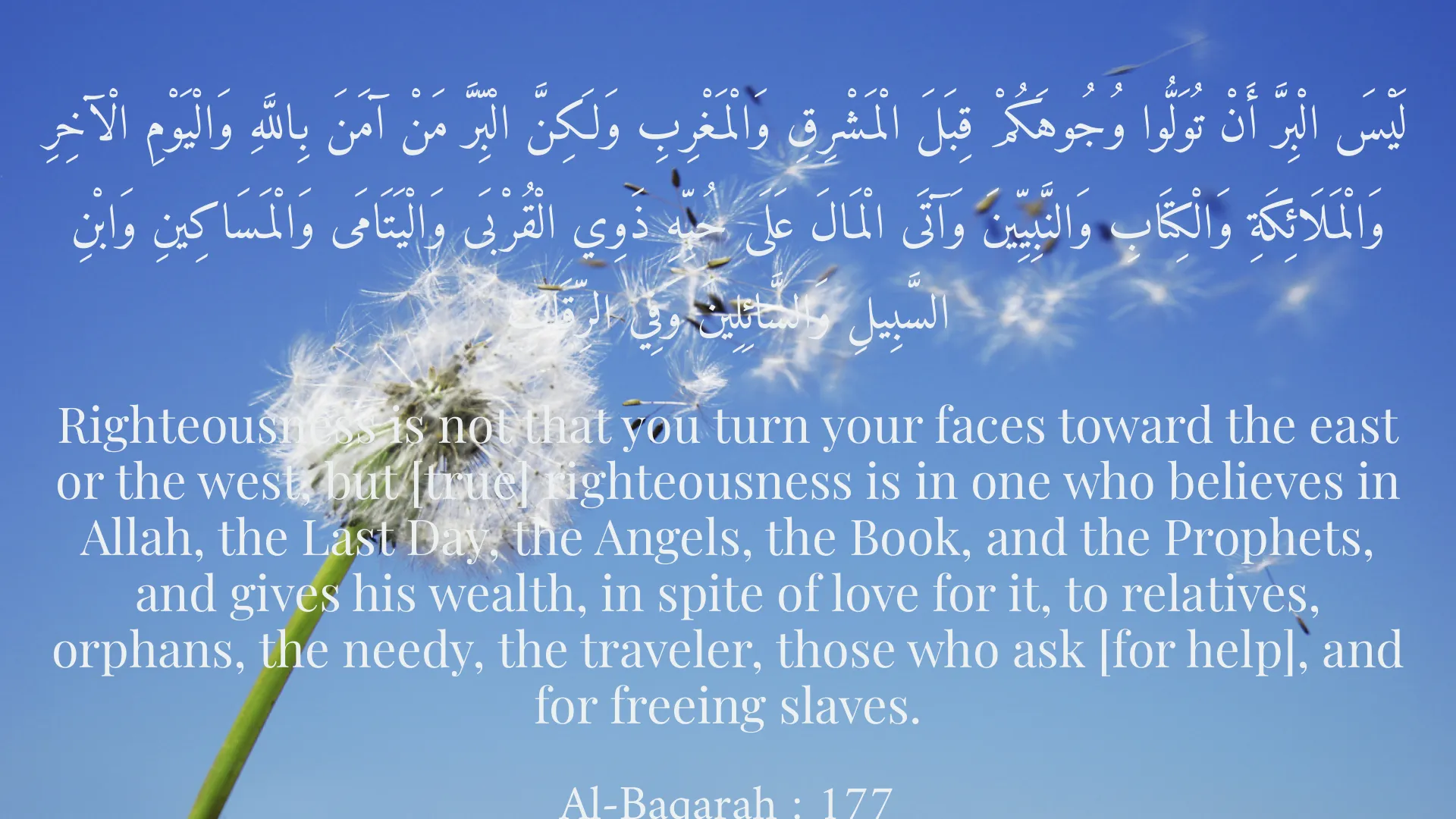
The pursuit of divine satisfaction is a profound journey that every believer is encouraged to undertake. In Islam, the quest for the satisfaction of God, known as Allah, encompasses not only a personal desire for spiritual fulfillment but also an adherence to the teachings and principles outlined in the Holy Quran. The Quran serves not merely as a book of guidance but as a comprehensive blueprint for leading a life that aligns with the expectations and desires of Allah. It emphasizes that devotion and obedience to God are essential pathways to achieving His satisfaction, a concept deeply rooted in both faith and action. One of the most poignant verses that encapsulate this idea is found in Surah Al-Baqarah, verse 177. It states: 'Righteousness is not that you turn your faces toward the east or the west, but [true] righteousness is in one who believes in Allah, the Last Day, the Angels, the Book, and the Prophets, and gives his wealth, in spite of love for it, to relatives, orphans, the needy, the traveler, those who ask [for help], and for freeing slaves.' This verse serves as a powerful reminder that righteousness transcends mere rituals and outward actions. It emphasizes that belief in the fundamental tenets of Islam—namely, faith in Allah, the Last Day, the Angels, the Book, and the Prophets—is at the core of a believer's journey toward divine satisfaction. Furthermore, it calls for tangible actions of charity and assistance to others, highlighting a unique aspect of Islamic teachings: the intertwining of personal faith with social responsibility. The act of giving, as suggested in the verse, is particularly illustrative of the selflessness that is required to seek God's love. By sacrificing a portion of one's wealth to help those in need, a believer not only fulfills a moral obligation but also cultivates a spirit of empathy and compassion within the community. This principle is enshrined further in the ethos of Islamic practice, urging followers to prioritize the well-being of others alongside their spiritual pursuits. Thus, it becomes evident that the pathway to Allah's satisfaction is not solely based on individual worship but is intricately linked to communal welfare and the betterment of society. Another critical aspect of seeking Allah's satisfaction is captured in Surah Al-Imran, verse 31, where Allah instructs the Prophet Muhammad (peace be upon him) to communicate to the believers: 'Say, [O Muhammad], 'If you should love Allah, then follow me, so Allah will love you.' This verse reflects the essential relationship between love and obedience in Islam. The verse suggests that true love for God manifests itself through the following of His Messenger and adherence to his teachings. By modeling one's life according to the example set by the Prophet, believers are promised the love and satisfaction of Allah. This directive not only reinforces the significance of prophetic teachings in everyday life but also serves as a reminder that the pursuit of divine love is an active, engaging process that requires commitment and adherence to a higher standard of living. Moreover, ethical conduct plays a vital role in our daily interactions and endeavors to be aligned with divine satisfaction. Surah Al-Asr underscores this sentiment succinctly with its verses: 'Indeed, mankind is in loss, except for those who have believed and done righteous deeds and advised each other to truth and advised each other to patience.' In just a few words, these verses encapsulate the essence of human interaction and the importance of community in striving for righteousness. Belief, righteous actions, and mutual encouragement to uphold truth and patience form the foundational triad that safeguards humanity from spiritual loss and deviation. The call to advise one another reinforces the significance of camaraderie and support in maintaining the moral and ethical compass of a community. In an age often characterized by individualism and competition, these verses remind us of the importance of collective responsibility. The encouragement to uphold patience—especially in times of distress or adversity—illustrates the need for resilience in maintaining a faithful life and pursuing God’s satisfaction. So how can believers implement these principles in their daily lives? Firstly, through the consistent practice of faith and the fulfillment of obligatory acts of worship—such as daily prayers, fasting during Ramadan, and the giving of zakat (charity)—individuals demonstrate their commitment to Allah. Each of these rituals serves to strengthen a believer's connection with Allah and reinforces the foundations of faith that are essential for achieving satisfaction. Secondly, engaging with the Quran and reflecting on its teachings can provide believers with additional guidance and inspiration. Studying the verses, contemplating their meanings, and applying them to everyday situations fosters a deep understanding of how to live righteously. Alongside personal reflection, participating in community teachings and discussions enhances collective understanding and reinforces the moral and ethical frameworks upheld by Islam. Additionally, by embodying good character traits—such as honesty, kindness, humility, and respect—believers can cultivate an atmosphere of love and support within their communities. Practicing these qualities not only serves to please Allah but also fosters a sense of unity and harmony among individuals, promoting an environment conducive to spiritual growth. In conclusion, the journey toward seeking the satisfaction of Allah is a multifaceted endeavor that encompasses faith, righteous actions, community support, and ethical living. The Holy Quran lays down clear and profound principles to guide believers in this pursuit. Through the teachings of the Quran and the example of the Prophet Muhammad (peace be upon him), Muslims are equipped with the knowledge and motivation to strive for the divine pleasure and live a life that reflects the values of compassion, charity, and truth. By embracing these principles wholeheartedly, believers can not only find personal satisfaction and peace in their spiritual lives but also contribute to a just, harmonious, and compassionate society. In this quest lies the true essence of Islamic belief, a commitment to personal and communal upliftment, and ultimately, a deep-seated yearning for Allah's love and satisfaction.
Related Verses
لَيْسَ الْبِرَّ أَنْ تُوَلُّوا وُجُوهَكُمْ قِبَلَ الْمَشْرِقِ وَالْمَغْرِبِ وَلَكِنَّ الْبِّرَّ مَنْ آمَنَ بِاللَّهِ وَالْيَوْمِ الْآخِرِ وَالْمَلَائِكَةِ وَالْكِتَابِ وَالنَّبِيِّينَ وَآتَى الْمَالَ عَلَى حُبِّهِ ذَوِي الْقُرْبَى وَالْيَتَامَى وَالْمَسَاكِينِ وَابْنِ السَّبِيلِ وَالسَّائِلِينَ وَفِي الرِّقَابِ
Righteousness is not that you turn your faces toward the east or the west, but [true] righteousness is in one who believes in Allah, the Last Day, the Angels, the Book, and the Prophets, and gives his wealth, in spite of love for it, to relatives, orphans, the needy, the traveler, those who ask [for help], and for freeing slaves.
Al-Baqarah : 177
قُلْ إِن كَانَ اللَّهُ يُحِبُّكُمْ فَاتَّبِعُونِي يُحْبِبْكُمُ اللَّهُ
Say, [O Muhammad], 'If you should love Allah, then follow me, so Allah will love you.'
Al-Imran : 31
وَالْعَصْرِ (1) إِنَّ الْإِنْسَانَ لَفِي خُسْرٍ (2) إِلَّا الَّذِينَ آمَنُوا وَعَمِلُوا الصَّالِحَاتِ وَتَوَاصَوْا بِالْحَقِّ وَتَوَاصَوْا بِالصَّبْرِ (3)
Indeed, mankind is in loss, except for those who have believed and done righteous deeds and advised each other to truth and advised each other to patience.
Al-Asr : 1
Short Story
One day, a man was walking through the streets of the city, feeling very anxious. He remembered the verses of the Quran that spoke about how to seek God's satisfaction. He decided to help others more in his life and strengthen his connection with God. From that day on, he seized every opportunity to do good deeds and felt responsible for his faith and family. With these actions, he became happier and more content each day.