Quranic Answer
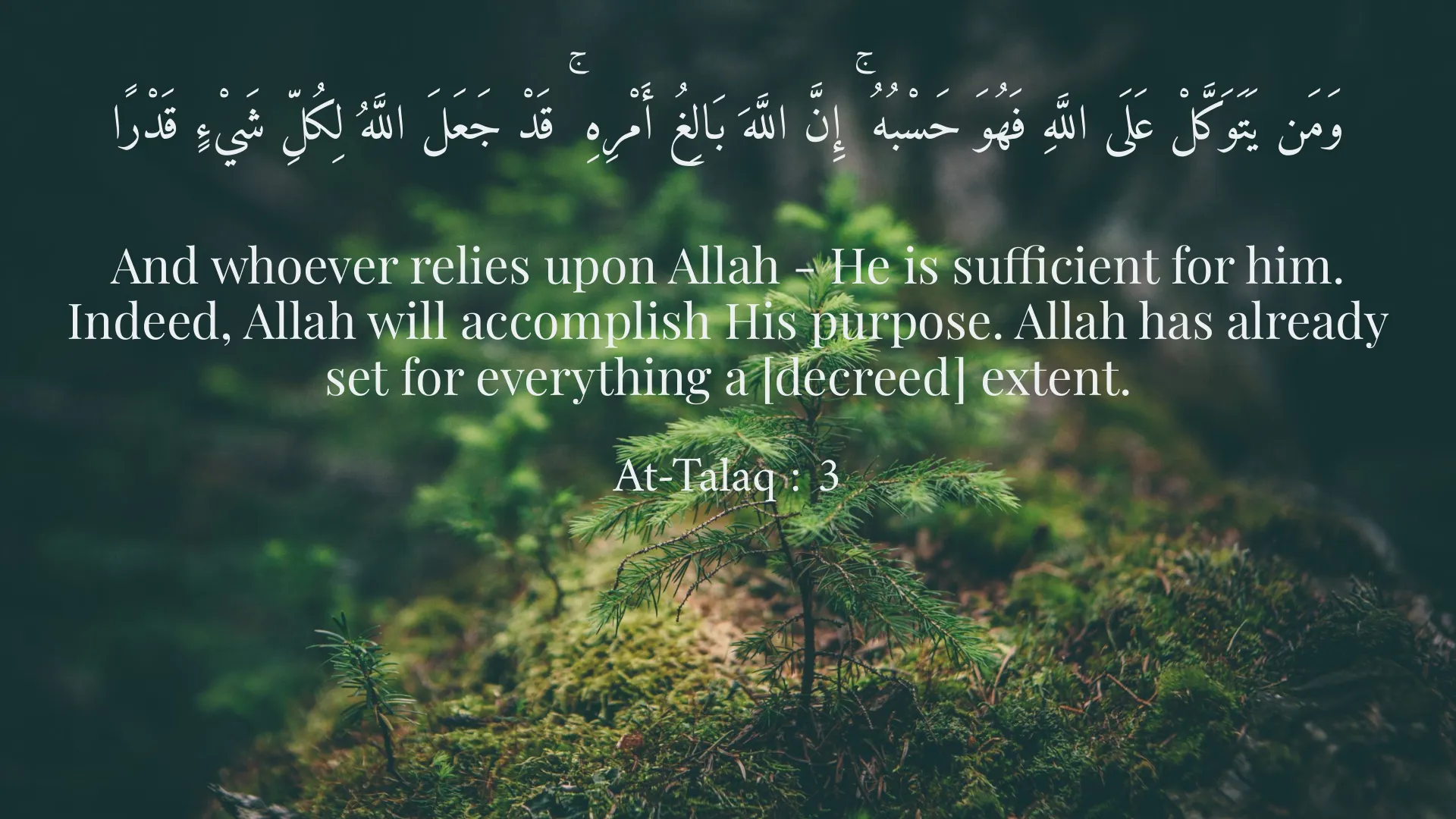
In our contemporary era, where the world grapples with an abundance of challenges, unsettling news, and a bewildering pace of change, a pervasive sense of distrust can swiftly take root in people's hearts. This distrust extends beyond merely other individuals, sometimes seeping into our outlook on the future, the order of the world, and even our own capabilities. In such an environment, strengthening our trust in Almighty God is not just a religious recommendation but a vital necessity for preserving inner peace, hope, and spiritual resilience. The Holy Quran, as a book of divine guidance, offers profound and practical strategies for cultivating this trust, serving as a guiding light in any time and place, especially in an age defined by widespread distrust. The first and foremost pillar of trust in God is “Tawakkul,” or reliance on Him. Tawakkul signifies entrusting one's affairs to God after having exerted all possible effort and striving. This concept is by no means an invitation to passivity or idleness; rather, it implies that after diligent planning and hard work, one ultimately commits the final outcome to God's absolute power. The Quran repeatedly emphasizes this principle. For instance, in Surah At-Talaq, verse 3, it states: “And whoever relies upon Allah - He is sufficient for him. Indeed, Allah will accomplish His purpose. Allah has already set for everything a [decreed] extent.” This verse provides a strong guarantee for those who surrender their hearts to God. In an age of distrust, where every piece of news can sow seeds of anxiety, awareness of this divine promise acts as a steadfast sanctuary. It helps us understand that even if all doors seem closed, a door from Him will open, and provision and relief will come from sources we least expect. This unwavering assurance of God's sufficiency is the greatest source of tranquility in today's tumultuous world. The second foundation is a deep understanding of God's Names and Attributes (Asma al-Husna). When a person truly believes in God's immense grandeur, power, wisdom, mercy, justice, and infinite knowledge, how can they not trust Him? Meditating on the Divine Names and contemplating their meanings fills the heart with the light of spiritual insight, dispelling doubts and distrust. Knowing that God is “Al-Rahman” and “Al-Rahim”—the Most Gracious and the Most Merciful—ensures that even in the direst circumstances, we do not despair of His mercy. When we know He is “Al-Alim”—the All-Knowing—we become confident that nothing is hidden from His knowledge, and He knows what is best for us, even if we cannot immediately comprehend it. When He is “Al-Hakim”—the All-Wise—we understand that every event, seemingly good or bad, carries a hidden wisdom that will ultimately serve our greater good. This profound comprehension of divine attributes reduces fear of an unknown future and strengthens our sense of security and trust. In a world where economic, social, and political instabilities cause deep anxieties, seeking refuge in God's eternal wisdom and power is the only path to genuine peace. A third key strategy is patience (Sabr) and gratitude (Shukr). The Holy Quran frequently stresses the importance of patience in the face of adversities and gratitude for blessings. Patience is not mere endurance; it is an active and conscious resilience where an individual, amidst the severest difficulties, places their reliance on God, certain that ease follows every hardship. In Surah Al-Baqarah, verse 153, we read: “O you who have believed, seek help through patience and prayer. Indeed, Allah is with the patient.” In an age of distrust, where negative news and livelihood struggles can deplete morale, patience not only prevents us from collapsing but also grants us the ability to see the light of hope in the darkest moments. Gratitude, on the other hand, shifts our perspective from scarcity to abundance, allowing us to recognize the countless blessings we often overlook. This focus on what we possess rather than what we lack elevates our inner contentment and tranquility and naturally reinforces our trust in the Source of all blessings: God. The more grateful we are, the more we feel that God is always with us, supporting us in the best possible way. The fourth step is the consistent remembrance of God (Dhikr). The remembrance of God is not merely the repetition of words; it is a constant awareness of God's presence in life, consciousness of His oversight of our actions and thoughts, and a perpetual reminder of His power and mercy. Prayer (Salat), supplication (Dua), recitation of the Quran, and even contemplating God's creation are all forms of Dhikr. When the human heart finds tranquility in the remembrance of God, there remains no room for distrust or fear. Surah Ar-Ra'd, verse 28, states: “Those who have believed and whose hearts are assured by the remembrance of Allah. Unquestionably, by the remembrance of Allah hearts are assured.” This verse serves as a healing prescription for anxious hearts in today's world. Amidst the bombardment of information and news, when we feel the world is unraveling, taking refuge in divine remembrance connects us to the core of tranquility and assures us that a divine order governs the universe. Continuous remembrance and heartfelt engagement in worship enable individuals to establish a deeper connection with God, which in turn strengthens the roots of trust within them. This strengthened connection signifies an ongoing dialogue with the Creator, where one can share all fears and concerns, confident of being heard and supported. Finally, adhering to divine commands and avoiding forbidden acts also strengthens trust. When a person walks on the path of divine pleasure, they feel protected by God from harm and affliction. Living according to Quranic principles provides a strong moral and spiritual framework that builds resilience against external waves of distrust. When individuals know they are acting justly and righteously, with the aim of seeking God's pleasure, they do not succumb to doubt or despair. This conviction in the rightness of their path is itself the greatest source of self-confidence and, consequently, trust in the Creator of that path. The Quran is not merely a roadmap but a guarantor of success and peace for those who adhere to it. In this age where ethical principles and values are constantly shifting and wavering, clinging to the strong rope of the Quran brings unparalleled stability and trust. Strengthening trust in God in an age of distrust is a continuous process that requires self-cultivation, seeking knowledge, and righteous deeds. Through Tawakkul, understanding divine attributes, patience, gratitude, remembrance, and adherence to divine commands, one can find a safe harbor in the turbulent sea of distrust and move forward into the future with peace and certainty.
Related Verses
وَمَن يَتَوَكَّلْ عَلَى اللَّهِ فَهُوَ حَسْبُهُ ۚ إِنَّ اللَّهَ بَالِغُ أَمْرِهِ ۚ قَدْ جَعَلَ اللَّهُ لِكُلِّ شَيْءٍ قَدْرًا
And whoever relies upon Allah - He is sufficient for him. Indeed, Allah will accomplish His purpose. Allah has already set for everything a [decreed] extent.
At-Talaq : 3
الَّذِينَ آمَنُوا وَتَطْمَئِنُّ قُلُوبُهُم بِذِكْرِ اللَّهِ ۗ أَلَا بِذِكْرِ اللَّهِ تَطْمَئِنُّ الْقُلُوبُ
Those who have believed and whose hearts are assured by the remembrance of Allah. Unquestionably, by the remembrance of Allah hearts are assured.
Ar-Ra'd : 28
إِن يَنصُرْكُمُ اللَّهُ فَلَا غَالِبَ لَكُمْ ۖ وَإِن يَخْذُلْكُمْ فَمَن ذَا الَّذِي يَنصُرُكُم مِّن بَعْدِهِ ۗ وَعَلَى اللَّهِ فَلْيَتَوَكَّلِ الْمُؤْمِنُونَ
If Allah should aid you, no one can overcome you; but if He should forsake you, who is there that can aid you after Him? And upon Allah let the believers rely.
Al-Imran : 160
Short Story
One day, a devout dervish was engaged in worship in a dry, desolate desert. A weary traveler arrived and, seeing him, asked in surprise, "O Dervish, how do you sustain yourself in this lonely, barren desert? With no water, no bread, how do you trust that you will not go hungry or thirsty?" The dervish smiled and replied, "O brother, you rely on a king who is sometimes present and sometimes absent, and who himself is in constant need. But I rely on a King who is always present, whose treasuries are endless, and who is never in need. If I have done my part, then He will never abandon His servant. Would He who created this vast universe and sustains all beings ever forget me? Never! My peace comes from knowing that He is capable of all things and never breaks His promise. He is the only true source of trust in this world." Upon hearing these words, the traveler's heart found peace, and he understood the true meaning of reliance.