Quranic Answer
Title: The Divine Awareness of Allah: An Exploration of Hidden Deeds in the Light of the Holy Quran Introduction In the intricate tapestry of human existence, the concept of accountability looms large. Each action, every thought, and all intentions shape the moral and spiritual fabric of our lives. In the Islamic faith, this concept is deeply intertwined with the divine awareness of Allah. The Holy Quran, the sacred text of Islam, addresses the notion of Allah's omniscience concerning our hidden deeds, reassuredly underscoring that nothing escapes His knowledge. This exploration seeks to illuminate the verses of the Quran that speak to this profound aspect of faith, emphasizing the importance of accountability in our lives. Allah’s Omniscience and Our Deeds The primary theme in discussing Allah's awareness revolves around the fundamental understanding that He is all-knowing. This concept is eloquently captured in Surah Al-Munafiqun, verse 9, where Allah commands the believers to, 'fear Allah and avoid much [negative] assumption.' This phrase serves as a poignant reminder that not only are overt actions recorded, but Allah is also conscious of our beliefs, thoughts, and presumptions. The implications of this awareness are profound; as believers, we are encouraged to cultivate sincerity in our actions, free from deceit and malicious thoughts. The verse also admonishes against activities such as spying and backbiting, which can stem from unfounded assumptions and misguided intentions. Here, it is clear that Allah's knowledge serves as a reminder of the integrity that should underpin our social interactions and, most importantly, our relationship with Him. The Concept of Divine Judgment Furthermore, we find additional layers of wisdom in Surah Al-An'am, verse 60, which states, 'And He is the one who takes your souls by night and knows what you have earned by day.' This verse elucidates how Allah's awareness transcends our visible actions; it penetrates into the realm of our innermost thoughts and motivations. The idea of the soul being taken at night serves as a metaphorical reminder that our lives are transient, and that Allah's knowledge of our deeds is inevitable. Our daily struggles, actions, and choices are constantly under His watchful gaze. This leads to the crucial understanding that our lives are a constant test of morality and virtue. Allah’s awareness encourages believers to strive towards righteous deeds, as these actions are never lost or overlooked. Each good deed, each moment of kindness, and every act of charity is noted by Allah, and this knowledge should act as a motivator for individuals to pursue goodness in all aspects of their lives. Accountability to Oneself Moreover, the message of divine awareness extends to the thoughts and intentions nestled within our hearts. In Surah Ibrahim, verse 51, we are reminded that 'Indeed, Allah is Knowing of the thoughts within the breasts.' This verse not only highlights Allah’s ability to discern our hidden actions but also emphasizes the importance of self-reflection and accountability. The Quran urges us to regularly examine our intentions and mental spaces, ensuring they align with righteousness and piety. This reflection nurtures moral growth, as it compels individuals to aspire towards higher standards of behavior. Given that thoughts can significantly impact actions, aligning our inner motivations with virtuous principles is essential in establishing a harmonious relationship with Allah. Living in Awareness of Allah So, how should this understanding of Allah’s awareness manifest in our daily lives? The realization that Allah is privy to our quietest thoughts and least visible actions can inspire a profound sense of responsibility. It encourages individuals to act with integrity and righteousness, fostering a mindset that remains focused on serving Allah through good deeds. In practical terms, this means that through layers of sincerity and transparency in our dealings, we should cultivate an environment of awareness of Allah's presence. This drives people to regularly engage in acts of worship, increasing their connection with Allah—whether through prayer, charitable acts, or other expressions of goodwill. The aim should be to perform good deeds not merely for public recognition but for the sake of divine appreciation. The Essence of Righteousness Furthermore, the understanding that our good actions are never hidden from Allah should embolden us. In a world where people often seek validation from others, the comfort derived from knowing that Allah acknowledges our efforts can be transformative. When individuals become aware that they are working not just for human praise but in the sight of a compassionate Creator, their motivations are likely to grow purer and more genuine. In essence, the Quranic perspective advises that goodness should not be confined to public visibility or societal validation; it transcends these boundaries. Our primary concern should be to receive Allah’s pleasure, which requires sincerity in our intentions and actions. Conclusion In conclusion, the profound message conveyed by the verses of the Holy Quran regarding Allah's omniscience reshapes our understanding of accountability. The awareness that Allah sees both the hidden and visible aspects of our lives cultivates a sense of peace and intention among believers. As we navigate through life, it is crucial to remember that no deed is too small, and no thought too insignificant to escape the knowledge of Allah. Every righteous act, every good intention, and every moment spent in service to others accumulates in the eyes of Allah. Thus, it is our obligation to strive for righteousness and to understand that, in the grand tapestry of existence, it is the sincerity of our hearts and the awareness of Allah’s presence that ultimately define us.
Related Verses
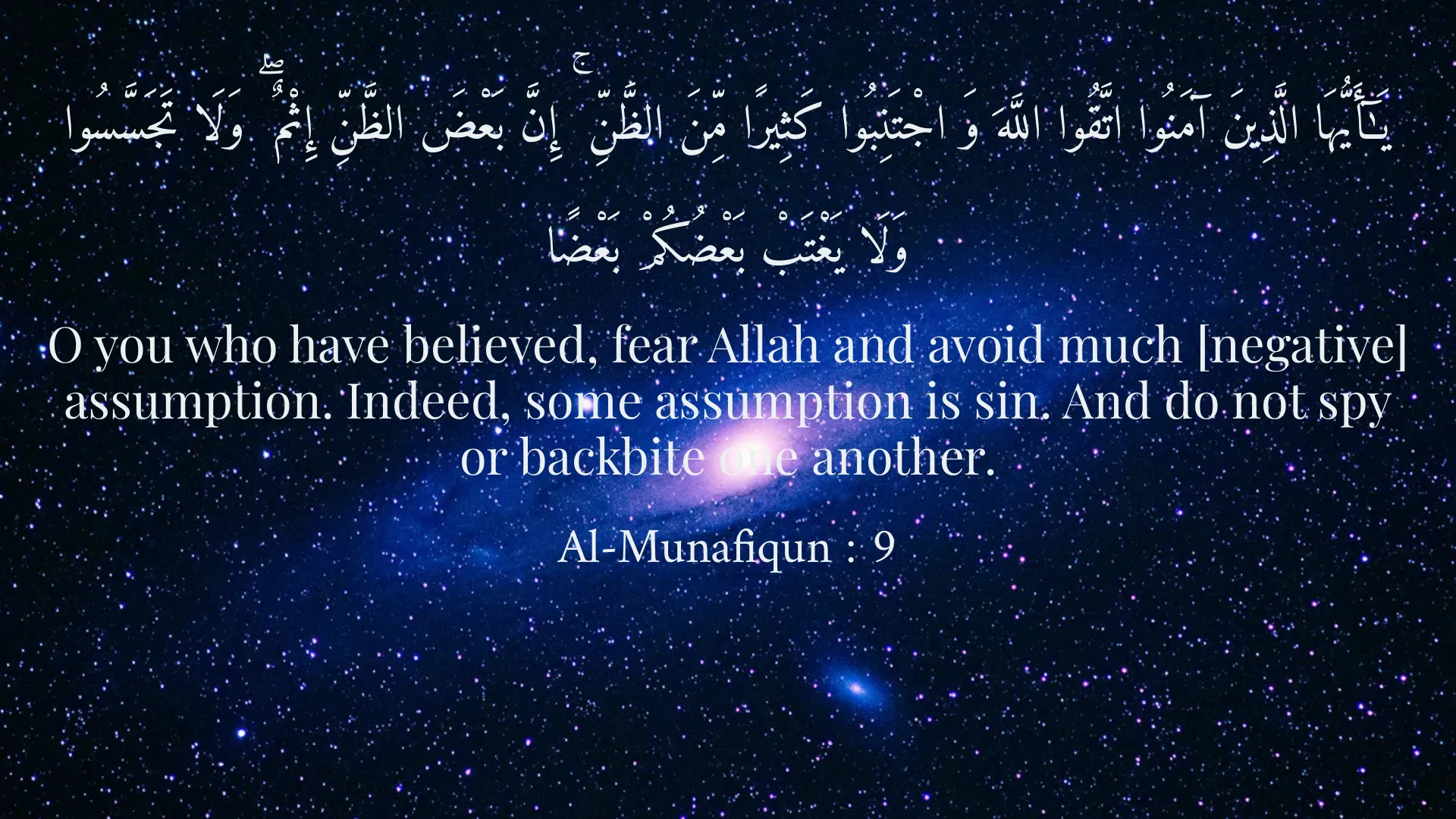
يَـٰٓأَيُّهَا الَّذِينَ آمَنُوا اتَّقُوا اللَّهَ وَ اجْتَنِبُوا كَثِيرًا مِّنَ الظَّنِّ ۚ إِنَّ بَعْضَ الظَّنِّ إِثْمٌ ۖ وَلَا تَجَسَّسُوا وَلَا يَغْتَبْ بَعْضُكُمْ بَعْضًا
O you who have believed, fear Allah and avoid much [negative] assumption. Indeed, some assumption is sin. And do not spy or backbite one another.
Al-Munafiqun : 9
وَ هُوَ الَّذِي يَتَوَفَّاكُم بِاللَّيْلِ وَ يَعْلَمُ مَا جَرَحْتُم بِالنَّهَارِ
And He is the one who takes your souls by night and knows what you have earned by day.
Al-An'am : 60
إِنَّ اللّهَ عَلِيمٌ بِذَاتِ الصُّدُورِ
Indeed, Allah is Knowing of the thoughts within the breasts.
Ibrahim : 51
Short Story
One day, Adel was chatting with his friends about their deeds and behaviors. One of his friends exclaimed, 'I always do good deeds in secret!' Adel smiled and replied, 'Yes, but remember that Allah is aware of all our actions, both hidden and visible. So, we should strive to be virtuous at all times.' This discussion was not only beneficial for them but also served as a reminder of good morals and ethics.