Quranic Answer
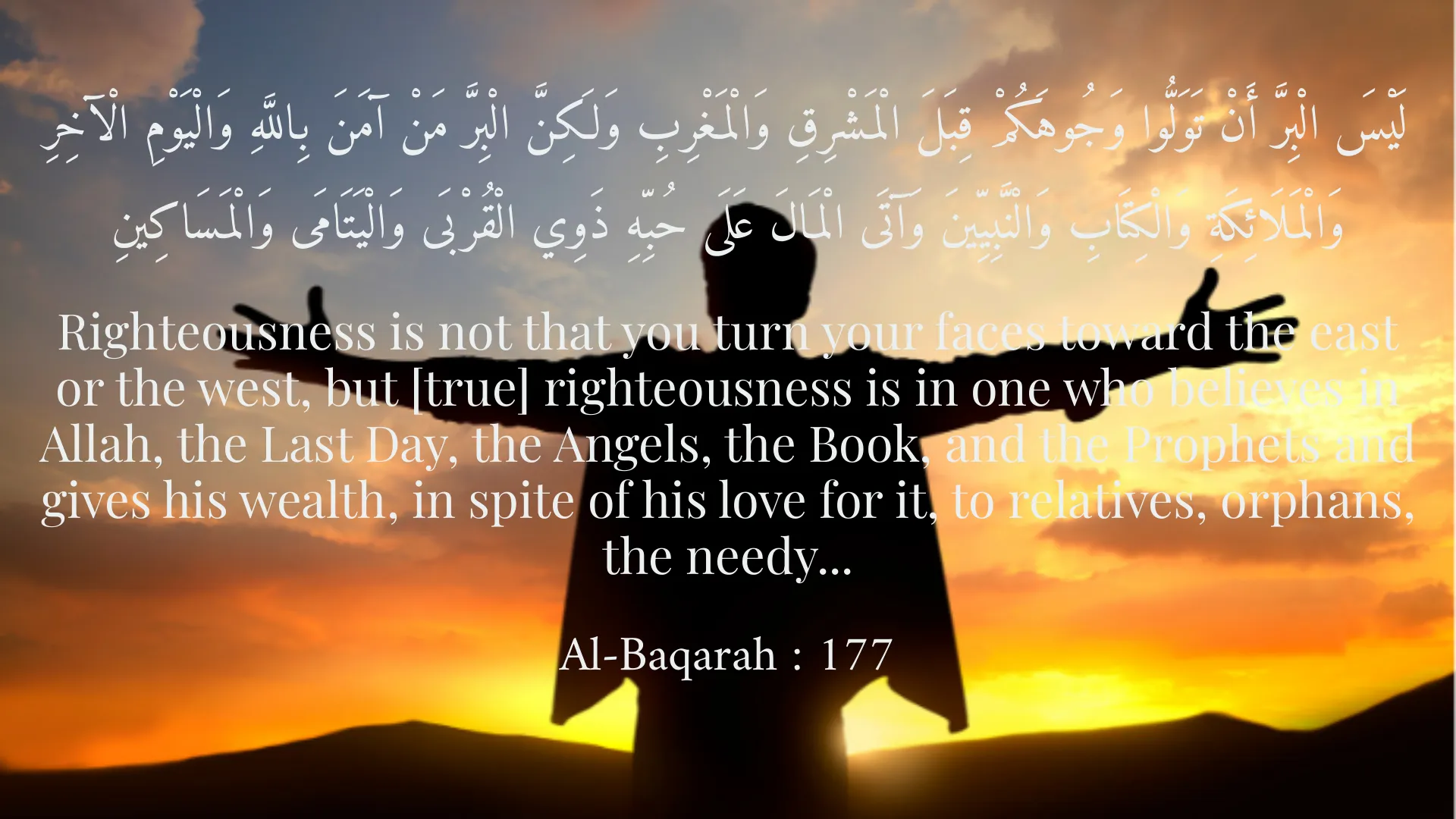
In the Holy Quran, the emphasis on intentions during worship is made very clear, establishing a foundational aspect of religious life that every Muslim must grasp. The concept of intention, or 'Niyyah' in Arabic, is not merely a peripheral thought but rather a core principle that dictates the validity and acceptability of acts of worship such as prayer (Salah), fasting (Sawm), and charity (Zakat). The Quran reinforces that true righteousness does not manifest simply through outward actions but requires the inner awareness and sincere intention behind them. One of the most compelling verses that expresses this emphasis is found in Surah Al-Baqarah, verse 177, which states: 'Righteousness is not that you turn your faces toward the east or the west, but [true] righteousness is in one who believes in Allah, the Last Day, the Angels, the Book, and the Prophets and gives his wealth, in spite of his love for it, to relatives, orphans, the needy...' This verse poignantly illustrates that the essence of righteousness is intimately connected to one's beliefs and intentions. The intricate relationship between actions and intentions is further highlighted by a profound saying of Prophet Muhammad (PBUH): 'Actions are judged by intentions.' This narration serves as a guiding light for Muslims, encouraging a reflection on why they engage in worship. The focus here is on the heart—what it feels and intends during worship rather than just the physical execution of the rituals. For instance, the act of prayer can take on vastly different meanings based on the intention behind it. When a person offers their prayers sincerely, viewing it as a sacred mandate and an opportunity for divine connection, they tap into a deeper reservoir of spiritual rewards and blessings. Conversely, when prayers are performed impulsively, dictated by habit or social obligations, the transformative essence of that ritual is often lost. This pivotal understanding of intention sets a high standard for personal accountability within the framework of Islamic worship. Each act must be paired with conscious awareness, ensuring that believers strive for purity in both their thoughts and intentions. Only then can acts of worship transcend their physical dimensions, morphing into spiritual journeys that fuel further growth in faith and morality. The values instilled within the framework of Islamic teachings urge individuals to cultivate sincere intentions when engaging in worship. Just as intention breathes life into an act, the purity of one’s heart and mind directs the path toward divine acceptance. This is crucial to grasp, especially in a world often overwhelmed by distractions and superficial motivations. To foster a genuine relationship with Allah, Muslims are encouraged to check their intentions regularly, seeking to improve the quality of their worship and ensuring that their actions align with their faith. One illustrative example is the practice of fasting during the month of Ramadan. Fasting is not only about abstaining from food and drink but is deeply rooted in the intention of purifying the soul, developing self-discipline, and empathizing with the less fortunate. A believer who fasts with a heartfelt intention to seek closeness to Allah and spiritual elevation will certainly reap much more profound benefits compared to someone who simply refrains from eating due to societal pressures or fear of judgment. This differentiation can lead to a unique Ramadan experience characterized by spiritual awakening and reflection. Moreover, the significance of intention isn't limited to specific acts of worship—it permeates all aspects of a Muslim's life. Engaging in acts of kindness, honesty in dealings, and sincere efforts to improve oneself must be coupled with the right intention. Whether it is charitable giving or community service, the outcomes are significantly enhanced when actions stem from a place of genuine desire to please Allah. The Quran beckons Muslims to give their wealth for the betterment of society, stating that true charity comes from a place of love and selflessness, not obligation or show. In addition, the importance of intention can also be observed in the context of everyday actions. For example, going to work can be an act of worship if the individual sets the intention of providing for their family and rendering a service to society. When ordinary tasks are imbued with the right intention, they gain a higher purpose, transforming daily life into a continuous act of devotion. Furthermore, the practice of regular self-evaluation allows believers to maintain a clear understanding of the purity of their intentions. Conducting occasional moral inventories can help Muslims assess whether their actions align with their intentions. This requires an inward journey, a process of contemplation that saves one from becoming complacent in their worship and encourages ongoing spiritual growth. In conclusion, the significance of intention in worship is profound and far-reaching—it is essential for validating acts of worship and elevating ordinary actions to divine experiences. Sincerity and intention not only enhance individual acts but also foster communal spirituality, guiding believers toward shared values rooted in faith, morality, and compassion. As one navigates through life’s complexities, maintaining clarity of intention becomes pivotal in paving the path toward a meaningful connection with God. The journey of faith is one that calls for precision, commitment, and the unwavering pursuit of purity in intentions—each of which transforms mundane moments into extraordinary experiences of divine servitude. In this regard, Muslims are continually reminded to act with mindfulness in their relationships with Allah, nurturing sincere intentions that breathe life and depth into the fabric of their worship.
Related Verses
لَيْسَ الْبِرَّ أَنْ تَوَلُّوا وَجُوهَكُمْ قِبَلَ الْمَشْرِقِ وَالْمَغْرِبِ وَلَكِنَّ الْبِرَّ مَنْ آمَنَ بِاللَّهِ وَالْيَوْمِ الْآخِرِ وَالْمَلَائِكَةِ وَالْكِتَابِ وَالْنَّبِيِّينَ وَآتَى الْمَالَ عَلَى حُبِّهِ ذَوِي الْقُرْبَى وَالْيَتَامَى وَالْمَسَاكِينِ
Righteousness is not that you turn your faces toward the east or the west, but [true] righteousness is in one who believes in Allah, the Last Day, the Angels, the Book, and the Prophets and gives his wealth, in spite of his love for it, to relatives, orphans, the needy...
Al-Baqarah : 177
Short Story
One day, a young believer was in the mosque engaged in worship. He wondered why he did not feel the purity in his devotion. After some reflection, he realized that his intentions were not sincere. Thus, he decided to carefully check his intentions before each prayer and perform his worship with pure intention. With this change, he felt a greater sense of peace, and his acts of worship illuminated his heart with spirituality.