Quranic Answer
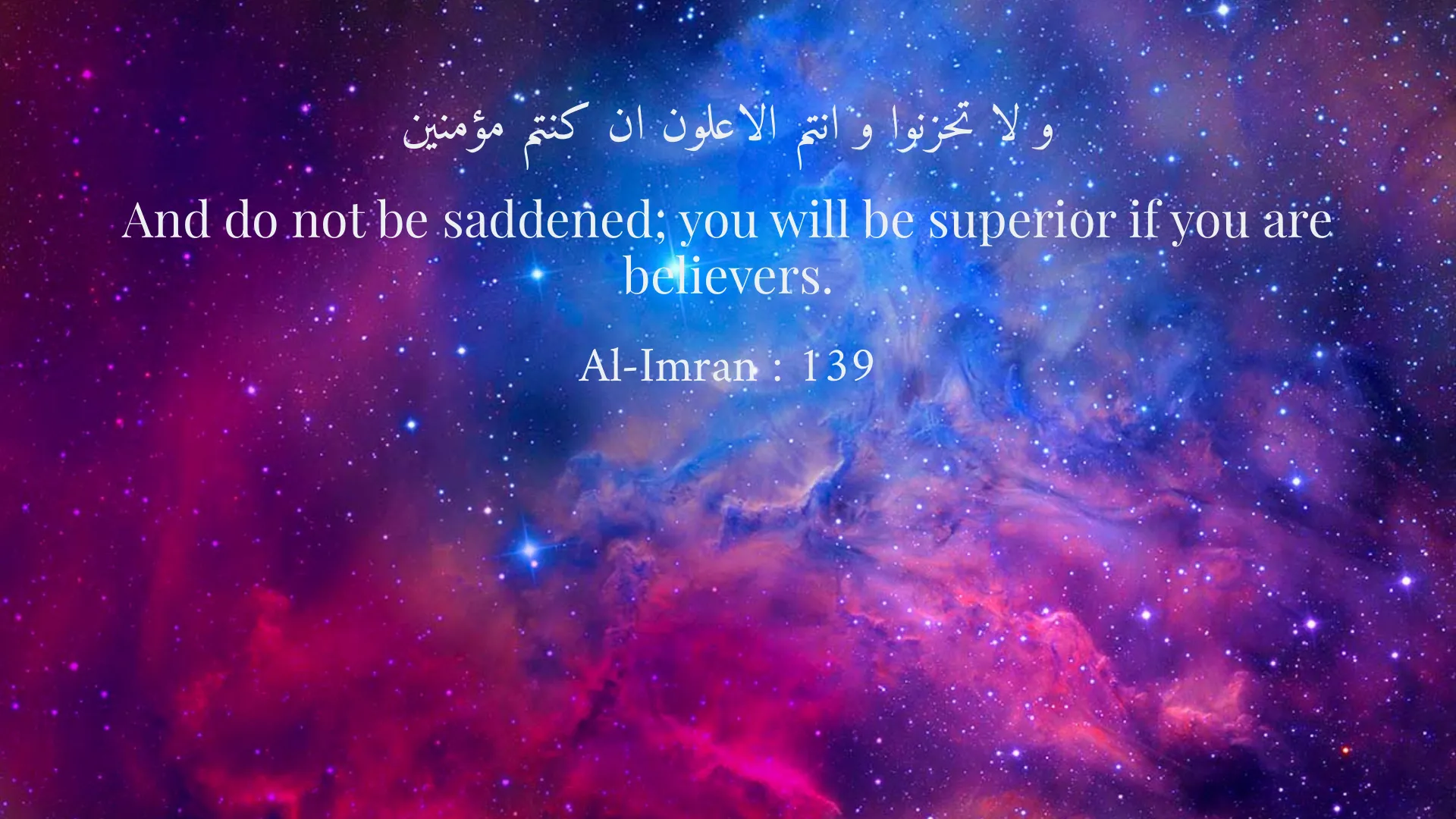
Sadness and sorrow are inherent parts of human life, and everyone may experience feelings of sadness at various points in their lives. As social creatures, humans inevitably face a range of emotional states, from joy to despair, and among these emotions, sadness holds a significant place. It can be triggered by numerous factors such as loss, disappointment, or societal pressures. However, in the context of Islamic teachings, being sad is not viewed as a sign of weak faith. On the contrary, the relationship between sadness and faith is complex and deeply rooted in the resilience and human experience as understood within Islam. The Holy Quran, which serves as a guide for millions of Muslims around the world, teaches us that sadness can, in fact, be a sign of stronger faith. In Surah Al-Imran, verse 139, the Quran states: "And do not be saddened, for you will overcome if you are believers." This verse is profound as it encourages believers to maintain their faith during tough times and challenges. The simple yet impactful message embedded in these words serves to remind us that though we experience sadness, we should not allow it to cloud our judgment or weaken our spirits. Instead, this verse encourages us to look to our faith as a source of strength and comfort. Furthermore, the teachings of Islam emphasize the importance of seeking refuge in God during times of sorrow. In moments of despair, it is natural for individuals to feel isolated or hopeless. However, seeking solace in the Almighty can serve as a powerful means of coping with these difficulties. In Surah Al-Baqarah, verse 286, it is mentioned: "Allah does not burden a soul beyond that it can bear." This assertion speaks volumes about the compassionate and understanding nature of God, reminding us that challenges we face in life are within our capacity to handle. This divine assurance can provide comfort and hope to those who feel overwhelmed by their sadness. The significance of seeking help is crucial in navigating the complex feelings tied to sadness. In Islam, believers are encouraged to turn to prayer and supplication as tools for coping with their emotions. Engaging in these practices not only strengthens one’s connection to God but also fosters a sense of community and support among fellow believers. Whether it is through formal prayers, reciting the Quran, or engaging in personal reflection, these spiritual practices can serve as a balm for the wounds of sorrow. Furthermore, it is essential to understand that feeling sad is natural and does not equate to weakness of faith. Instead, it reflects the human experience and emotional depth inherent within all individuals. Emotions such as sadness provide us with important insights into our lives, helping us to recognize our vulnerabilities and grapple with the human condition. In Islam, true faith is not the absence of emotions but rather the ability to remain steadfast and seek help from Allah with patience and resilience when faced with challenges. In times of sadness, it is valuable to reach out to others, as the teachings of Islam promote a sense of community and support. The Prophet Muhammad (peace be upon him) emphasized the importance of helping one another, particularly during difficult times. Acts of kindness, whether through words of encouragement or simply being present for someone in need, can serve to uplift those who are experiencing sorrow. In fostering these connections, individuals can find solace in knowing that they are not alone in their struggles, thus turning moments of sadness into opportunities for strengthening bonds with others and enhancing their faith. Moreover, scholars and spiritual leaders in the Islamic community often illustrate that the trials of life, including moments of sadness, are often tests from God. This perspective can lend a greater sense of purpose to one’s suffering, as believers are encouraged to view challenges as opportunities for spiritual growth and development. In recognizing the potential for personal development during times of sorrow, individuals can forge a deeper connection to their faith and emerge from their struggles as stronger, more resilient beings. While sadness is a universal experience, experiencing it within the framework of Islamic beliefs allows for a more constructive understanding of this emotion. Islamic teachings provide a roadmap for navigating chaotic feelings with grace and resilience, encouraging believers to lean on their faith and the support of their community. In this way, sadness transforms from a mere burden into a possible catalyst for personal and spiritual development. Through prayer, reflection, and the support of others, believers can cultivate hope and remain steadfast in their pursuit of faith, reminding themselves of God’s promises and guidance during their darkest moments. Ultimately, sadness, when accepted as an intrinsic component of the human experience, guides individuals toward a deeper understanding of themselves and their relationship with God. The essence of faith is not merely to avoid experiences of pain or difficulty but to walk through them with strength, seeking divine guidance while remaining anchored in belief. By doing so, believers uphold their faith and transform their experiences of sorrow into meaningful journeys of resilience and spiritual growth, leading them to greater peace and understanding within themselves and their connection to the divine.
Related Verses
و لا تحزنوا و انتم الاعلون ان کنتم مؤمنین
And do not be saddened; you will be superior if you are believers.
Al-Imran : 139
الله لا یکلف نفساً الا وسعها
Allah does not burden a soul beyond that it can bear.
Al-Baqarah : 286
Short Story
Once upon a time, there was a young man named Ali who was overwhelmed with sadness during his studies. He had failed the entrance exam to university and felt he hadn't reached his goals. In this situation, he decided to turn to the Quran and pay attention to the divine verses. Ali read verse 286 of Surah Al-Baqarah and realized that God would never leave him alone, and he just needed to keep trying. With this thought, Ali regained his energy and decided not to give up on his efforts. When the day of the next exam arrived, Ali showed up with renewed faith and hope, and ultimately succeeded in achieving his dreams.