Quranic Answer
In the Holy Quran, charity extends beyond mere monetary donations and encompasses acts of kindness and assistance to others in various forms. Charity is not restricted to financial aspects alone; rather, any good deed carried out with the intention of benefiting others can be considered a form of charity. This emphasis on intention is a significant cornerstone of Islamic teachings. The Quran promotes a holistic view of charity, presenting it as an essential and multifaceted component of spirituality and social responsibility. One of the most illustrative references to the nature of charity is found in Surah Al-Baqarah, verse 177. In this verse, Allah states that charity includes feeding the poor, clothing the needy, and performing acts of justice and patience. These elements are not only indicators of true faith but also highlight the diverse nature of charitable acts. Feeding the hungry and clothing the poor are direct forms of assistance that address immediate needs, while justice and patience demonstrate a commitment to moral principles that uplift society as a whole. This verse illustrates that charity can take multiple forms, including non-financial assistance such as dedicating time to counsel the needy and supporting the deprived. Actively engaging with those who are struggling and providing emotional support can be just as crucial as providing financial aid. By dedicating time and effort to help others, individuals contribute to the social fabric of their communities and foster a sense of unity and compassion. In Surah Al-Munafiqun, verse 10, Allah emphasizes that individuals must partake in good deeds with pure hearts and righteous intentions. This speaks to the core of charitable actions, reminding believers that the essence of charity lies in the sincerity of the heart. Actions devoid of genuine intent may lack the blessings associated with charitable deeds. Thus, charity transcends mere actions and encompasses the dignity of intention behind them. The notion of engaging in charitable acts for recognition or self-glory undermines the true spirit of giving. Instead, the Quran encourages believers to approach charity humbly and sincerely, fostering a personal connection with those they help. Moreover, selfless acts of kindness not only improve the living conditions of others but can also foster love and friendship among communities. In many instances, charity serves as a bridge that connects people from different backgrounds, helping to promote understanding and empathy. In a world often plagued by division and strife, the act of giving can create bonds that defy boundaries and cultivate a sense of global community. The Quran presents various examples of charitable acts throughout its narrative, encouraging readers to embrace a broad understanding of what charity can be. Charitable contributions can manifest in myriad ways: from offering a warm smile to a stranger to providing support for community projects aimed at uplifting individuals. Every act of kindness counts as charity, and every good intention holds the power to effect meaningful change, regardless of its financial or material aspect. Charity in the divine school, or the teachings of Islam, is regarded as a significant value. It is defined by various forms, including smiles, help, and service to others. A smile shared can diffuse tension in a moment, a helping hand can lift burdens, and sincere support can enable people to overcome obstacles that they face. The cumulative effect of these many forms of charity is profound, often transforming not only the lives of individuals but also the landscape of entire communities. It is essential to recognize the deeply ingrained connection between charity and spiritual fulfillment. The Quran illustrates charity as a purifying force for the soul. In Surah Al-Baqarah, verse 267-273, it specifies that believers should spend from the good things they have earned and what We have produced for them from the earth. This commandment emphasizes that charity should come from what is pure and valuable, thus encouraging individuals to reflect on their resources and their usage. Furthermore, the act of giving charity nurtures humility and gratitude within oneself. Understanding that one can impact another's life fosters a sense of appreciation for one’s own blessings. Gratitude for personal provisions motivates the spirit of giving, reinforcing a cycle of generosity and community support. This path of charitable acts ultimately leads to personal growth, spiritual elevation, and a more profound connection with others. From a broader perspective, understanding the importance of charity as portrayed in the Quran can also instigate social change. The promotion of charitable values within communities can inspire collective action toward more significant societal issues such as poverty, injustice, and inequality. By rallying around acts of charity, individuals can transform their immediate surroundings and contribute positively to the world. Ultimately, charity is a broader concept than just financial aid and is tied to both intention and action. Any action that improves the living conditions of others and fosters love and friendship among people can be classified as charity. This encompasses the essence of genuine care and concern for fellow beings, urging believers to embody the principles of compassion and benevolence in their daily lives. As emphasized in these teachings, anything performed with good intentions, regardless of its financial nature, can be considered a form of charity. Therefore, as individuals engage with the world around them, they are encouraged to recognize the many faces of charity. Whether through monetary donations or simple acts of kindness, each contribution, when motivated by a desire to help others, holds a significant place in the divine framework of charity as outlined in the Holy Quran.
Related Verses
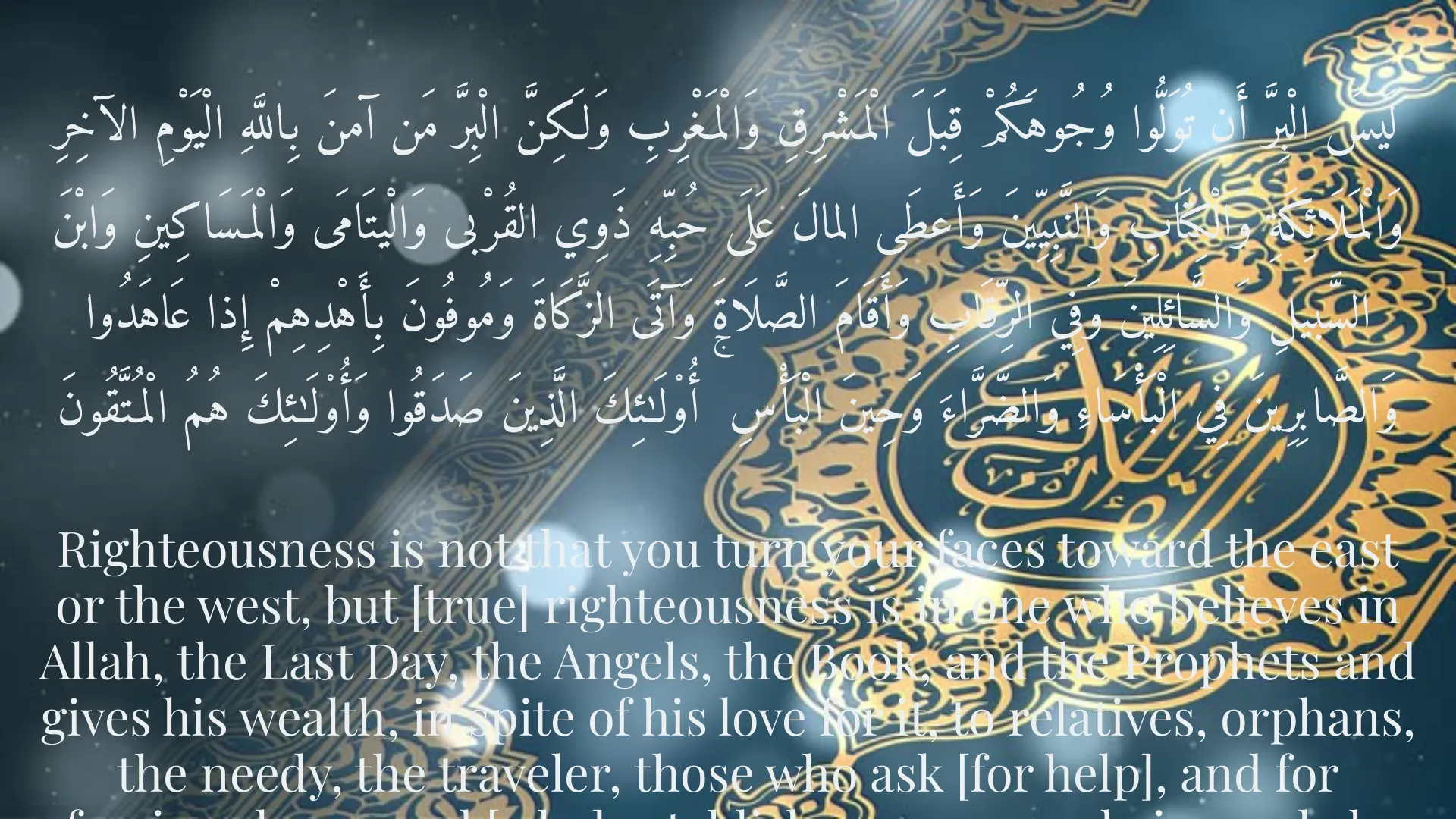
لَيسَ الْبِرَّ أَن تُوَلُّوا وُجُوهَكُمْ قِبَلَ الْمَشْرِقِ وَالْمَغْرِبِ وَلَكِنَّ الْبِرَّ مَن آمنَ بِاللَّهِ الْيَوْمِ الآخِرِ وَالْمَلَائِكَةِ وَالْكِتَابِ وَالنَّبِيِّينَ وَأَعطَى المالَ عَلَى حُبِّهِ ذَوِي القُرْبى وَالْيتَامَى وَالْمَسَاكِينِ وَابْنَ السَّبيلِ وَالسَّائِلِينَ وَفِي الرِّقَابِ وَأَقَامَ الصَّلَاةَ وَآتَى الزَّكَاةَ وَمُوفُونَ بِأَهْدِهِمْ إِذا عَاهَدُوا وَالصَّابِرِينَ فِي الْبَأْسَاءِ وَالضَّرَّاءَ وَحِينَ الْبَأْسِ ۚ أُو۟لَـٰئِكَ الَّذِينَ صَدَقُوا وَأُو۟لَـٰئِكَ هُمُ الْمُتَّقُونَ
Righteousness is not that you turn your faces toward the east or the west, but [true] righteousness is in one who believes in Allah, the Last Day, the Angels, the Book, and the Prophets and gives his wealth, in spite of his love for it, to relatives, orphans, the needy, the traveler, those who ask [for help], and for freeing slaves; and [who] establishes prayer and gives zakah; [those who fulfill their promise when they promise]; and [those who] are patient in poverty and hardship and during battle. Those are the ones who have been true, and it is those who are the righteous.
Al-Baqarah : 177
وَأَنفِقُوا مِمَّا رَزَقْنَاكُمْ قَبْلَ أَن يَأْتِیَ أَحَدَکُمُ الْمَوْتُ فَیَقُولَ رَبِّ لَوْلَا أَخَّرْتَنِی إِلَى أَجَلٍ قَرِیبٍ فَأَصَّدَّقَ وَأَکُن مِّنَ الصَّالِحِينَ
And spend from that which We have provided you before death comes to one of you and he says, 'My Lord, if only You would delay me for a brief term so I may give charity and be among the righteous.'
Al-Munafiqun : 10
Short Story
One day, a man named Hasan was walking down the street when he encountered an elderly needy man. He gave all the money he had in his pocket to the old man, but after parting ways, he noticed the old man had also helped another person. Hasan quickly recalled the verses of the Quran and decided that simply giving money was not enough. He began to assist others in various forms; whether listening to others' life stories or helping them with good intentions. These actions brought him greater satisfaction, and he realized that helping others is not always limited to financial means.