Quranic Answer
In the Holy Quran, doubt and uncertainty in faith are recognized as major obstacles to strong belief. The Quran serves as a guiding light for Muslims around the world, providing not just a framework for understanding the divine will, but also tackling complex human emotions, such as doubt and uncertainty. Among the many themes explored in this sacred text, the challenges faced by believers due to doubts and misgivings come prominently forward, especially in Surah Al-Baqarah. This surah specifically addresses the gravity of hypocritical behavior and the inner turmoil of those who possess doubt in their faith. Surah Al-Baqarah is the longest surah in the Quran, rich in rules and guidance for individual and communal conduct. In verses 8 and 9, Allah warns the believers that among them exist those who harbor doubts in their hearts. These individuals are labeled as hypocrites, highlighting a crucial aspect of faith: that it must be grounded in sincerity and conviction. The message here is not only intended for the believers of that time but also resonates with followers today. Doubt, when unaddressed, can manifest into actions and thoughts that lead to hypocrisy, where one may outwardly appear faithful but inwardly grapple with uncertainty. Such doubt in faith can prove to be perilous, diverting a person from the right spiritual path. It becomes a catalyst for misguidance and can even lead to actions that not only affect the individual but also ripple through their community. This is especially concerning in communal aspects of Islam, where faith is not merely a personal journey but a collective responsibility. Misguided actions born from doubt can lead to societal instability, as believers are called upon to support one another in their faith, fostering an environment of mutual encouragement and strength. Furthermore, faith brings peace of mind and reconciliation with the heart. It acts as a shield, warding off the anxieties and uncertainties that plague human existence. In Surah Aal-Imran, verse 156, Allah calls upon the believers to remain patient and steadfast against doubts. This call for resilience is a reminder that struggles with faith are not a sign of weakness, but rather a part of the spiritual pilgrimage that many believers experience. The act of seeking solace in patience during tumultuous times, and cultivating steadfastness, serves as a gateway to overcoming doubt. By nurturing patience, individuals can cultivate a deeper understanding of their faith, ultimately allowing them to weather storms of uncertainty more effectively. The verses mentioned indicate that doubt in faith not only leads to negative spiritual consequences for the individual but can extend the effects to the wider community as well. Distrust in God and relying solely on externalities create distance from divine mercy and compassion. Faith is depicted as a source of comfort and strength, and when that faith is compromised by doubt, individuals may find themselves emotionally adrift, unable to anchor themselves in hope. Therefore, the message becomes clear: believers should strive ceaselessly to strengthen their faith. This endeavor requires persistent effort and commitment, as well as a proactive approach to address doubts about the divine. Seeking guidance in the verses of the Quran invites believers to engage with the text more deeply, offering a path for enhancing their certainty and, consequently, their spiritual lives. By contemplating the Quran’s teachings, believers can confront and dispel their doubts, aligning themselves more closely with their convictions. In other words, true faith in Allah and His prophets should ideally overcome all fears and doubts. This belief is not an automatic state; rather, it involves continuous self-evaluation and engagement. Paying attention to knowledge and awareness in religious practice is essential, as it ultimately arms the believer against the onslaught of doubt. The acquisition of knowledge not only enriches one's understanding but also fortifies one’s spiritual stance in the face of existential questions that may arise throughout life. Moreover, education in religious zones is multi-faceted. It transcends rote memorization of scriptures, encouraging critical engagement with themes and principles that govern Islamic teachings. Understanding the context of verses, reflecting on their implications in contemporary lives, and discussing them with knowledgeable individuals can create a fertile ground for deeper faith. Such comprehensive religious literacy can turn doubt into inquiry—a process wherein doubts can lead to constructive questions, guiding one toward a more profound understanding of faith. In conclusion, the Quran addresses doubt and uncertainty as impediments on the path of faith, urging believers to confront and transcend these obstacles. Allah's guidance in Surah Al-Baqarah and Surah Aal-Imran is a potent reminder of the importance of faith, and how it is inherently linked to peace of mind and community stability. Employing patience, seeking knowledge, and fostering a supportive religious environment can further shield believers from the corrosive effects of doubt. Therefore, one must consider that in the journey of faith, engaging with one’s doubts can ultimately catalyze personal growth and strengthen one's resilience, joyfully embracing the profound tenets of Islam with unwavering assurance.
Related Verses
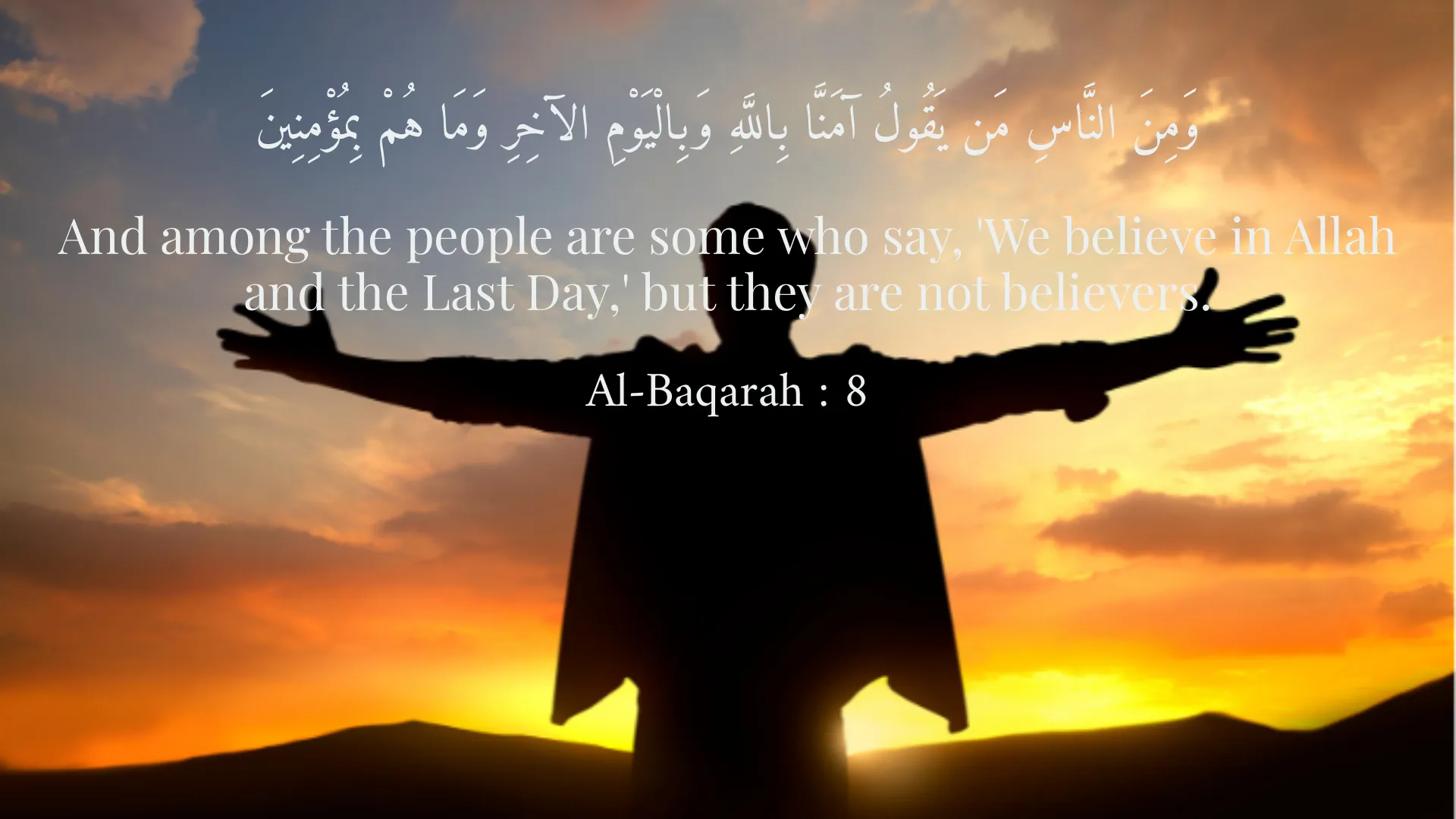
وَمِنَ النَّاسِ مَن يَقُولُ آمَنَّا بِاللَّهِ وَبِالْيَوْمِ الآخِرِ وَمَا هُمْ بِمُؤْمِنِينَ
And among the people are some who say, 'We believe in Allah and the Last Day,' but they are not believers.
Al-Baqarah : 8
لَا تَكُونُوا كَالَّذِينَ كَفَرُوا وَقَالُوا لِإِخْوَانِهِمْ إِذَا ضَرَبُوا فِي الْأَرْضِ أَوْ كَانُوا غُزًىٰ: لَوْ كَانُوا عِندَنَا مَا مَاتُوا وَمَا قُتِلُوا.
And do not be like those who disbelieved and said to their brothers when they traveled in the land or were in battle: 'If they had been with us, they would not have died or been killed.'
Aal-Imran : 156
Short Story
One day, a man was sitting in a corner pondering his faith, doubts settled in his heart, and he was searching for answers. Suddenly, he recalled the verses of the Quran and realized that doubting not only gave him no peace but also led him astray from the right path. He decided to read more and pray to Allah to nurture certainty in his heart. From that day on, he tried to view everything through the lens of faith and stay away from doubts.