Quranic Answer
Doubt on the path of faith is a natural and human phenomenon. It is an occurrence that nearly every person grapples with at some point in their spiritual journey. It doesn't signify weakness but instead reflects the complexity of faith and the human desire for understanding. The Holy Quran, the Islamic sacred text, provides numerous examples of individuals who have experienced doubt in their faith. Interestingly, in these narratives, Allah demonstrates His immense mercy and love by drawing closer to those who doubt, offering guidance, reassurance, and an opportunity for growth. Starting with the exploration of doubt in faith, it is essential to recognize that doubt is not synonymous with disbelief. Rather, it is the mind's natural inclination to question, inquire, and seek clarity. The Quran acknowledges this intrinsic characteristic of human beings and offers examples of some of the greatest figures in Islamic history—prophets—who themselves faced doubt. These examples serve not only to validate the occurrence of doubt but to illustrate how it can be a crucial part of the divine journey of self-discovery and faith development. In Surah Al-Baqarah, verse 253, Allah states: "Those messengers, some of them We caused to exceed others; and among them were those to whom Allah spoke, and He raised some of them in degrees; and We gave Jesus, the son of Mary, clear proofs and supported him with the Pure Spirit." This verse reminds us that even the messengers chosen by Allah, those who were bestowed with extraordinary signs and miracles, had their moments of doubt. For instance, the story of Prophet Moses is one such example. He often questioned his abilities and the mission bestowed upon him, seeking assurances from Allah as he faced the daunting task of confronting Pharaoh and leading the Israelites out of bondage. Similarly, the historical account of Prophet Abraham and his conversation with Allah regarding the resurrection of the dead showcases the nuance of doubt. Prophet Abraham expressed a desire to understand the process, which reflects a yearning for knowledge rather than a lack of faith. Allah responded not with anger or judgment but with an invitation to demonstration and understanding. This response highlights an essential aspect of faith; it acknowledges that seeking clarification is an integral part of the belief process. The Quran further reinforces this point in Surah Al-Mu'minun, verse 14, which states: "Then We developed him into another creation. So blessed is Allah, the best of creators.” This verse is significant because it emphasizes the multifaceted nature of human creation. The journey from a mere biological entity to a thoughtful, conscious being is intricate; thus, doubts naturally arise during this developmental journey. Each stage of life presents its own set of challenges and uncertainties, prompting individuals to grapple with their beliefs and convictions. Moreover, Surah Al-Anfal, verse 53 elaborates on the consequence of internal change within believers, stating: "That is because Allah would not change a favor which He had bestowed upon a people until they change what is within themselves." This divine wisdom suggests that personal transformation is vital for strengthening one’s faith. Simultaneously, it provides reassurance that our struggles with doubt are part of a broader process of growth and alignment with one’s spiritual path. It is through the act of questioning, seeking, and transforming our internal selves that faith is solidified. Tackling doubts can cultivate a profound understanding and connection with faith. For individuals dealing with uncertainty, it is helpful to recognize that they are not alone in their experiences. Engaging with religious texts, participating in community discussions, and seeking insights from knowledgeable individuals can demystify the challenges posed by doubt. These avenues enable believers to explore their faith more deeply, fostering endurance and a more profound appreciation of spiritual truths. Doubt can also serve as a catalyst for a deeper understanding of faith. When approached constructively, it prompts individuals to explore the foundations of their beliefs, leading to more meaningful convictions. For instance, when confronted with theological questions or societal challenges, believers may be inspired to undertake independent research, embark on discussions with peers, or seek guidance from scholars. All of these actions can enrich one's spiritual journey and enhance their understanding of faith. Moreover, contemplation and reflection can also play crucial roles in addressing faith-related insecurities. Many spiritual traditions, including Islam, encourage practices such as prayer, meditation, and self-reflection to help believers navigate through their doubts. In these quiet moments of introspection, individuals can connect with their inner selves, engage with their questions, and find solace in their relationship with Allah. Prayer serves as a direct line of communication with the Divine, allowing believers to express their fears, seek guidance, and ask for clarity in their doubts. Additionally, faith communities can provide much-needed support. Sharing personal experiences within a group creates a sense of belonging and reassures individuals that they are not isolated in their struggles. Stronger bonds forged through shared doubts can produce a more empathetic and supportive community, conducive to spiritual growth. In group settings, doubts are often normalized, and members can inspire one another with stories of faith celebrated despite their uncertainties. In conclusion, doubt on the path of faith is a profoundly natural human experience. The Holy Quran acknowledges the existence of doubt while portraying it as part of a larger journey. Through the examples of prophets and the verses that embrace the nuances of human faith, it is clear that doubt does not equate to heterodoxy; instead, it is a phase of development that can ultimately fortify faith. The struggle against doubt can lead to transformation within oneself and pave the way for a deeper understanding of the Divine. It assuredly reflects that even amidst uncertainty, the mercy and love of Allah will always prevail, creating space for believers to grow, learn, and, ultimately, strengthen their faith.
Related Verses
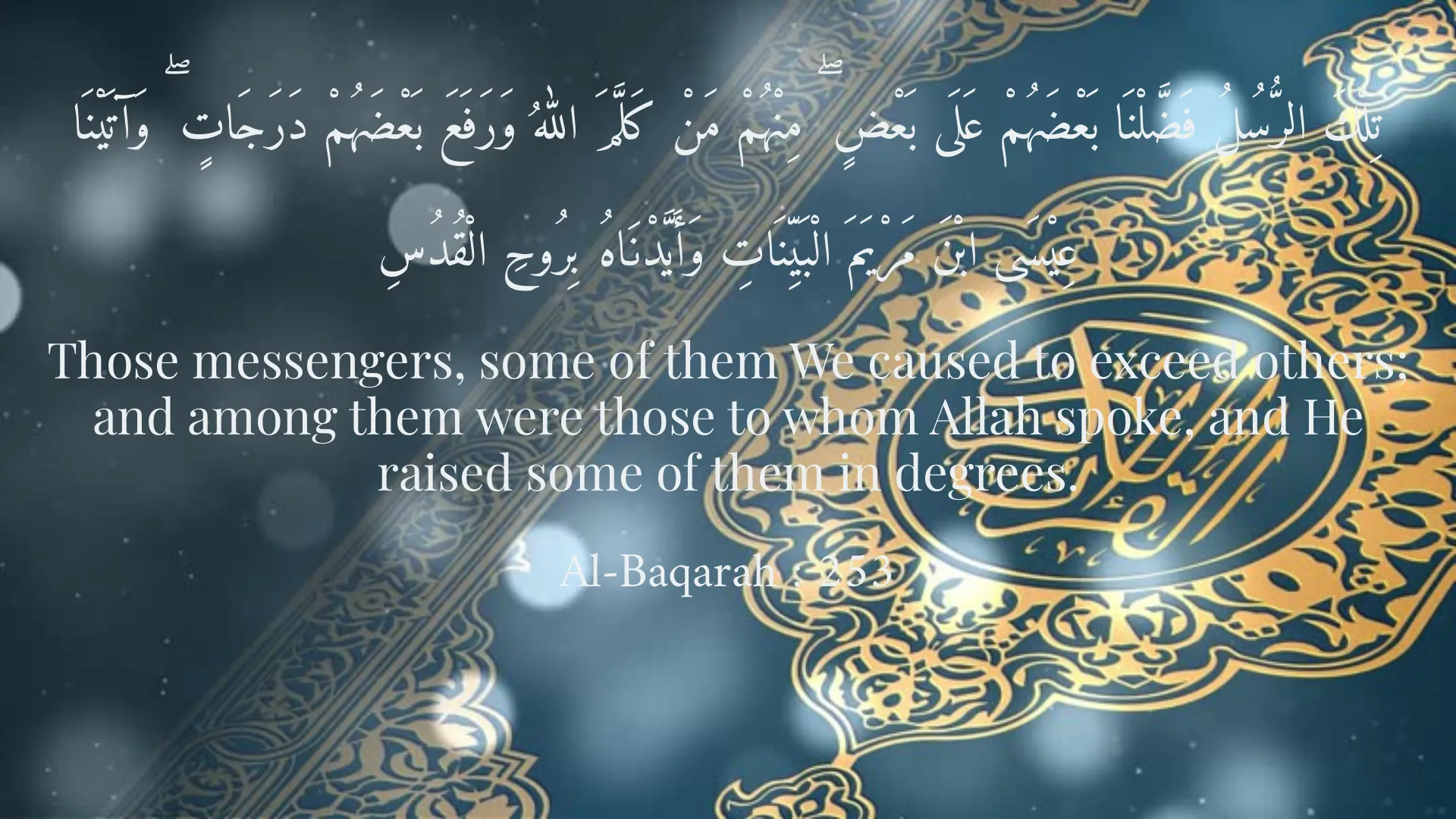
تِلْكَ الرُّسُلُ فَضَّلْنَا بَعْضَهُمْ عَلَى بَعْضٍ ۖ مِنْهُمْ مَنْ كَلَّمَ اللهُ وَرَفَعَ بَعْضَهُمْ دَرَجَاتٍ ۖ وَآتَيْنَا عِيْسَى ابْنَ مَرْيَمَ الْبَيِّنَاتِ وَأَيَّدْنَاهُ بِرُوحِ الْقُدُسِ
Those messengers, some of them We caused to exceed others; and among them were those to whom Allah spoke, and He raised some of them in degrees.
Al-Baqarah : 253
ثُمَّ أَنْشَأْنَاهُ خَلْقًا آخَرَ ۖ فَتَبَارَكَ اللَّهُ أَحْسَنُ الْخَالِقِينَ
Then We developed him into another creation. So blessed is Allah, the best of creators.
Al-Mu'minun : 14
ذَلِكَ بِأَنَّ اللَّهَ لَمْ يَكُ مُغَيِّرًا نِعْمَةً أَنْعَمَهَا عَلَى قَوْمٍ حَتَّى يُغَيِّرُوا مَا بِأَنفُسِهِمْ
That is because Allah would not change a favor which He had bestowed upon a people until they change what is within themselves.
Al-Anfal : 53
Short Story
Once upon a time, a traveler sat by the riverbank gazing at the clear water. He said, 'O God, I always believe in You, but sometimes doubt overwhelms me.' Suddenly, a gentle voice within him said, 'O friend, doubt is a sign of seeking. I am always by your side.' The traveler smiled and realized that these doubts are part of the journey of faith, and he must learn to embrace them.