Quranic Answer
The Holy Quran, a profound spiritual guide and the ultimate source of guidance for Muslims, addresses numerous aspects of human life, including the issue of doubts and questions faced by believers. In a world where uncertainties abound, grappling with doubt is a common experience that many individuals encounter, especially when it comes to matters of faith. Throughout its verses, the Quran reassures its followers that it is natural to have doubts; however, it emphasizes the importance of seeking truth and embracing it. This complex relationship between doubt, faith, and the search for answers forms the crux of many believers' spiritual journeys. One pertinent example can be found in Surah Al-Imran, verse 186. In this verse, Allah acknowledges that believers will face difficulties and challenges, which can, in turn, lead to doubts and uncertainties about their faith. The Quran does not shy away from addressing the human experience of doubt; rather, it acknowledges that such feelings can surface, particularly during stressful conditions or in the face of life's numerous obstacles. The verses serve as a reminder that patience and perseverance in facing these challenges are vital. Believers are encouraged not to succumb to these doubts easily, reminding them that the path to faith is not devoid of difficulties. Allah's acknowledgment of the challenges believers face is crucial, as it normalizes doubt as part of the human experience. What sets true believers apart is their ability to confront these doubts head-on rather than allowing them to derail their faith. Surah Al-Ma'idah, verse 54, further emphasizes this point by indicating that Allah does not allow true believers to reach a dead end in their prayers. This verse serves as a powerful reminder that even during moments of doubt, believers can seek solace in prayer and connection with Allah. The act of turning to divine guidance reinforces the notion that doubt is not the end of faith but rather a catalyst for deeper inquiry and understanding. The Quran’s teachings emphasize that instead of succumbing to despair when faced with doubts, believers should actively seek guidance and clarity. Engaging in conversations with knowledgeable individuals, studying religious texts, and participating in community discussions can significantly enhance one’s understanding and strengthen faith when confronted with uncertainties. The pursuit of knowledge is esteemed in Islam, and it encourages individuals to explore their beliefs deeply, allowing them to confront and question their doubts in healthy, constructive ways. The journey of faith is multifaceted and often circular. While believers may encounter various doubts throughout their lives, the essential aspect is their commitment to seeking the truth. Each doubt presents an opportunity for growth, introspection, and renewed faith. Encouraging individuals to embrace their questions can lead them to a more profound understanding of their spirituality. This exploration can often manifest itself in various forms—through prayer, reflection, or engaging with trusted figures who can guide them on their path. Moreover, the Quran encourages a community-oriented approach to faith. Engaging with fellow believers can provide support and reassurance, creating an environment where doubts can be openly discussed without fear of judgment. Together, individuals can explore their uncertainties, share their experiences, and find comfort in shared struggles. This communal aspect of faith allows believers to feel less isolated in their experiences with doubt, reinforcing the sense that they are part of a larger spiritual family united in their journey toward truth. Another dimension to understanding doubt in the context of faith is the importance of self-reflection. Individuals are urged to examine the roots of their doubts and consider what lies behind their skepticism. Are they based on external influences, personal experiences, or a lack of knowledge? By identifying the sources of their uncertainties, believers can approach them more critically and find relevant answers rooted in their faith and the teachings of the Quran. Furthermore, it is essential to distinguish between healthy doubt and skepticism that leads to denial. The Quran encourages believers to ask questions and seek understanding. However, persistent doubt that stems from a refusal to believe can lead to a schism in one's faith journey. In this regard, the Quran acts as both a source of reassurance and a call to action for believers to engage with their doubts positively. Ultimately, the relationship between doubt and faith is dynamic and continuous. The quest for truth is a journey that every believer must undertake, often encountering obstacles along the way. The Quran serves as a guiding light for individuals navigating their uncertainties, urging them to seek patience, maintain perseverance, and cultivate a deep commitment to understanding their beliefs. This journey involves embracing doubts as part of the spiritual experience, as they often lead to deeper faith and a more profound connection with the divine. In conclusion, the Holy Quran eloquently addresses the doubts and questions posed by believers, reminding them that doubt is a natural part of the faith journey. Believers are encouraged to confront their uncertainties with patience, seek knowledge, and engage with their community. By emphasizing the importance of maintaining the pursuit of truth, the Quran fosters an environment where doubt can coexist with faith, ultimately leading to a stronger and more nuanced understanding of belief. Embracing doubts can become a powerful catalyst for spiritual growth, transforming uncertainties into opportunities for exploration and deeper connection to one's faith.
Related Verses
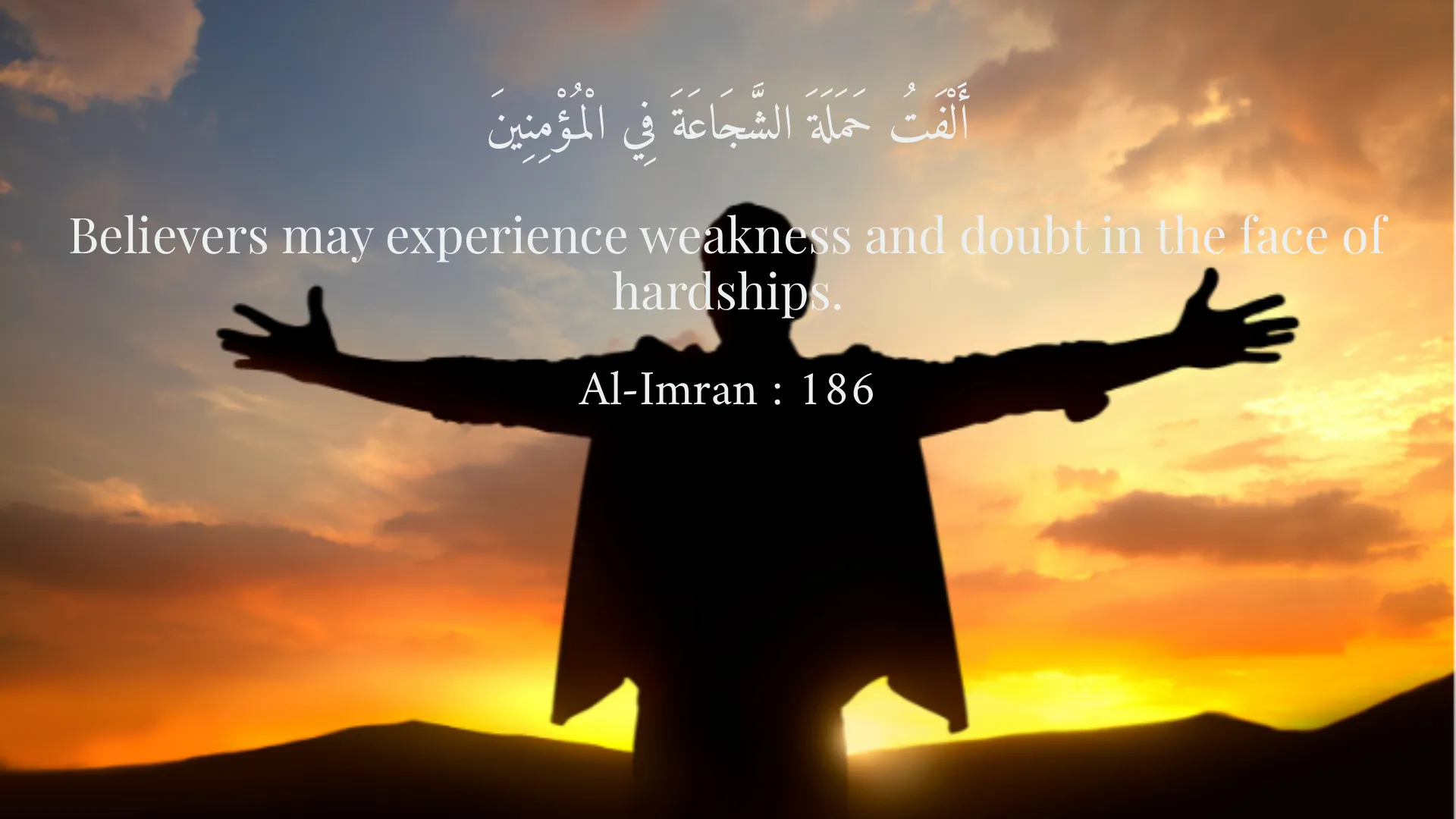
أَلْفَتُ حَمَلَةَ الشَّجَاعَةَ فِي الْمُؤْمِنِينَ
Believers may experience weakness and doubt in the face of hardships.
Al-Imran : 186
إِنَّهُ لَا يُحِبُّ كُلَّ خَوَّانٍ كَفُورٍ
Allah does not let true believers reach a dead end in their prayers.
Al-Ma'idah : 54
Short Story
One day, Ali was sitting near a garden, reflecting on his life. He recalled the verses of the Quran and concluded that every human might doubt their faith. However, he decided to continue striving and educating himself. Gradually, he noticed that these efforts strengthened his faith and brought more peace into his life.