Quranic Answer
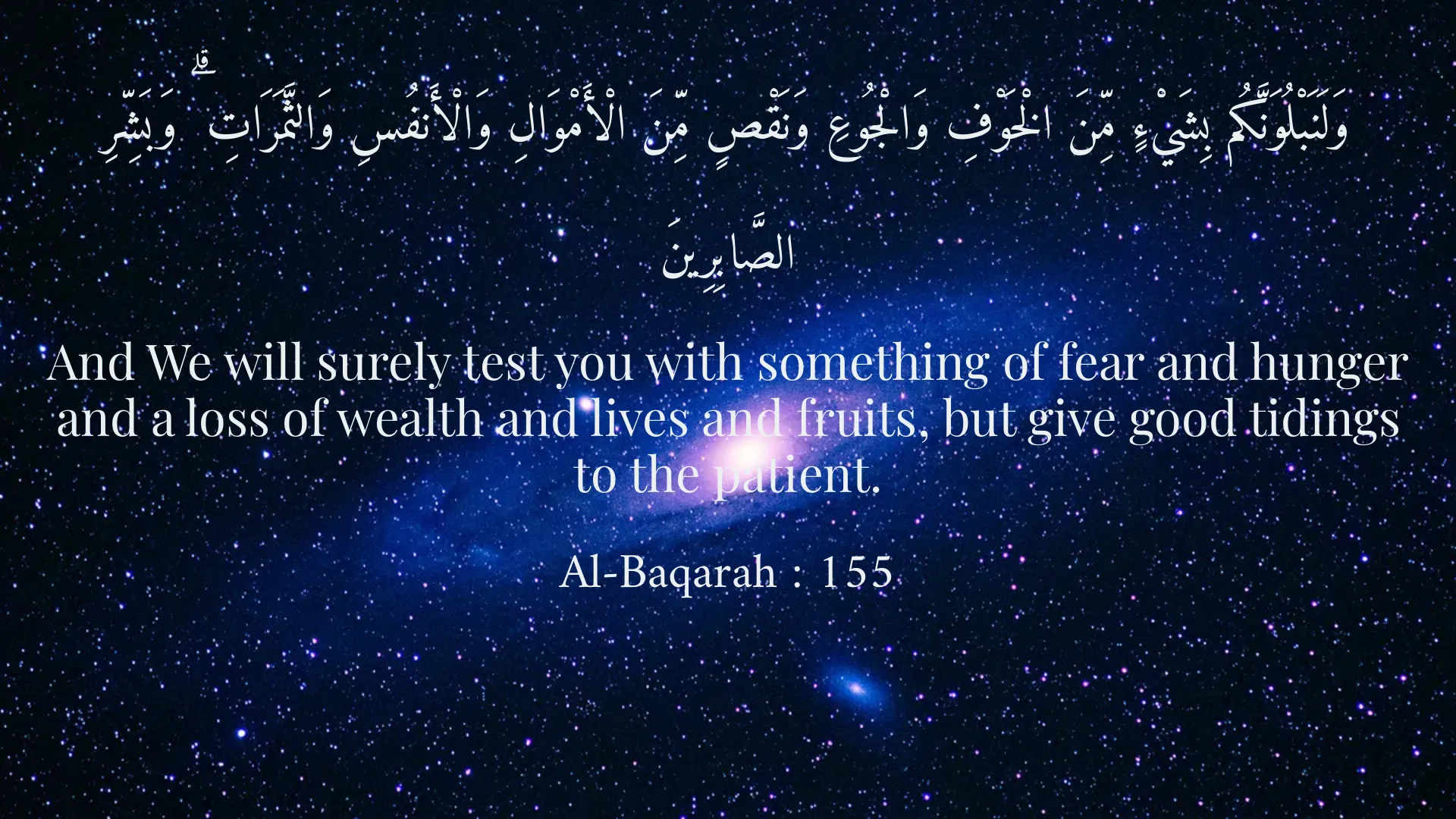
The Holy Quran clearly articulates that problems and afflictions form an inseparable part of human existence, and these challenges are often interpreted as tests for faith and patience. This profound perspective on the nature of life serves to prepare believers for the trials they may face, instilling within them a sense of resilience and faith in a greater purpose. In Surah Al-Baqarah, verse 155, Allah states: "And We will surely test you with something of fear and hunger and a loss of wealth and lives and fruits, but give good tidings to the patient." This verse encapsulates a core principle in Islamic theology: the notion that life’s hardships are both a reality to be faced and an opportunity to demonstrate one’s faith and patience. It emphasizes that enduring trials is part of being a believer and that these experiences are integral to spiritual growth. The Quran further elucidates this concept in Surah Al-Imran, verse 186, which proclaims: "Indeed, your wealth and your children are but a trial, and Allah has with Him a great reward." Here, the divine message reveals that even the most cherished aspects of life—wealth, security, and familial bonds—can serve as tests of one’s devotion and loyalty to Allah. The wealth that brings comfort can also become a source of distraction and can lead individuals away from their spiritual goals. Children, too, if not raised in accordance with faith, may divert parents from their religious commitments. This duality of blessings transforming into tests reinforces the idea that the journey of life is fraught with trials designed to refine the believer's character and increase their reliance on Allah. Every problem that arises in our lives presents an opportunity for personal growth and learning. This is a crucial concept that deserves deeper exploration. Challenges such as loss, career difficulties, and family issues are not merely unfortunate events, but rather opportunities to exercise patience, develop resilience, and deepen one’s faith. When faced with adversity, believers are encouraged to reflect upon these trials as divine opportunities. For instance, experiencing loss can initiate a profound introspection about life’s fleeting nature and compel individuals to prioritize their relationship with Allah. Similarly, struggling with work-related challenges can lead to greater perseverance and innovation, ultimately fostering a stronger work ethic and a more meaningful contribution to society. In this journey of testing, it is crucial to understand that patience (Sabr) and resilience (Istiqama) are essential virtues that assist individuals in navigating these trials successfully. Patience is not a passive state of sadness or acceptance; rather, it is an active and dynamic response that involves maintaining faith and hope amidst the turmoil. The Quran frequently emphasizes patience as a strength and a virtue. Believers are encouraged to seek solace in prayer and to maintain a positive outlook, knowing that Allah is with them in their struggles. Moreover, overcoming obstacles invites individuals to cultivate a deeper connection with their faith. By praying for strength and seeking guidance through the Quran and the teachings of the Prophet Muhammad (peace be upon him), believers find comfort and clarity. The act of turning to Allah during difficult times fosters a rich spiritual experience that can lead to a renewal of faith. The story of Prophet Job (Ayyub) is an inspiring example from Islamic tradition that illustrates the power of patience and faith in the face of overwhelming adversity. Job, a prophet known for his unwavering faith in Allah, endured immense suffering—losing his family, wealth, and health. Yet, in his moment of despair, he did not lose hope. Instead, he exemplified patience, praying fervently to Allah and trusting in His wisdom and mercy. His endurance and faith ultimately led to his restoration, serving as a testament to the notion that Allah rewards those who patiently persevere. In contemporary society, the issues that confront individuals may feel insurmountable—be it economic uncertainty, health crises, or interpersonal conflicts. However, the teachings of the Quran and the example of the prophets provide a framework for understanding these challenges as integral to the human experience. By reframing setbacks as pathways to spiritual growth, individuals are empowered to face difficulties with renewed strength. Each trial can refine one’s character, drawing them closer to a state of submission to Allah’s will. Knowing that life is filled with both trials and rewards can be a source of comfort and motivation, encouraging believers to maintain hope and work towards personal and spiritual development. Ultimately, the journey through life, imbued with tests and challenges, holds the promise of ultimate rewards for those who practice patience and persist in their faith. As stated in the Quran, those who endure these trials with the right mindset will be rewarded by Allah with bountiful blessings both in this life and the Hereafter. Therefore, it becomes essential for believers to embrace each trial with a spirit of gratitude, viewing each challenge as an opportunity to further develop their patience, enhance their faith, and foster a more profound connection with their Creator. Life's tests are not merely struggles to endure; they are invitations to grow, to serve, and to ultimately discover the immeasurable mercy and guidance of Allah in every aspect of our existence.
Related Verses
وَلَنَبْلُوَنَّكُم بِشَيْءٍ مِّنَ الْخَوْفِ وَالْجُوعِ وَنَقْصٍ مِّنَ الْأَمْوَالِ وَالْأَنفُسِ وَالثَّمَرَاتِ ۗ وَبَشِّرِ الصَّابِرِينَ
And We will surely test you with something of fear and hunger and a loss of wealth and lives and fruits, but give good tidings to the patient.
Al-Baqarah : 155
إِنَّمَا أَمْوَالُكُمْ وَأَوْلَادُكُمْ فِتْنَةٌ وَأَنَّ اللَّهَ عِندَهُ أَجْرٌ عَظِيمٌ
Indeed, your wealth and your children are but a trial, and Allah has with Him a great reward.
Al-Imran : 186
Short Story
One day, a young man named Amin was going through the troubles of his life. He didn't know how to face these challenges. During his solitude, he reflected on verses from the Quran and remembered that every problem is an opportunity for learning and growth. After a short while, with patience and trust in Allah, he was able to overcome his difficulties and find peace.