Quranic Answer
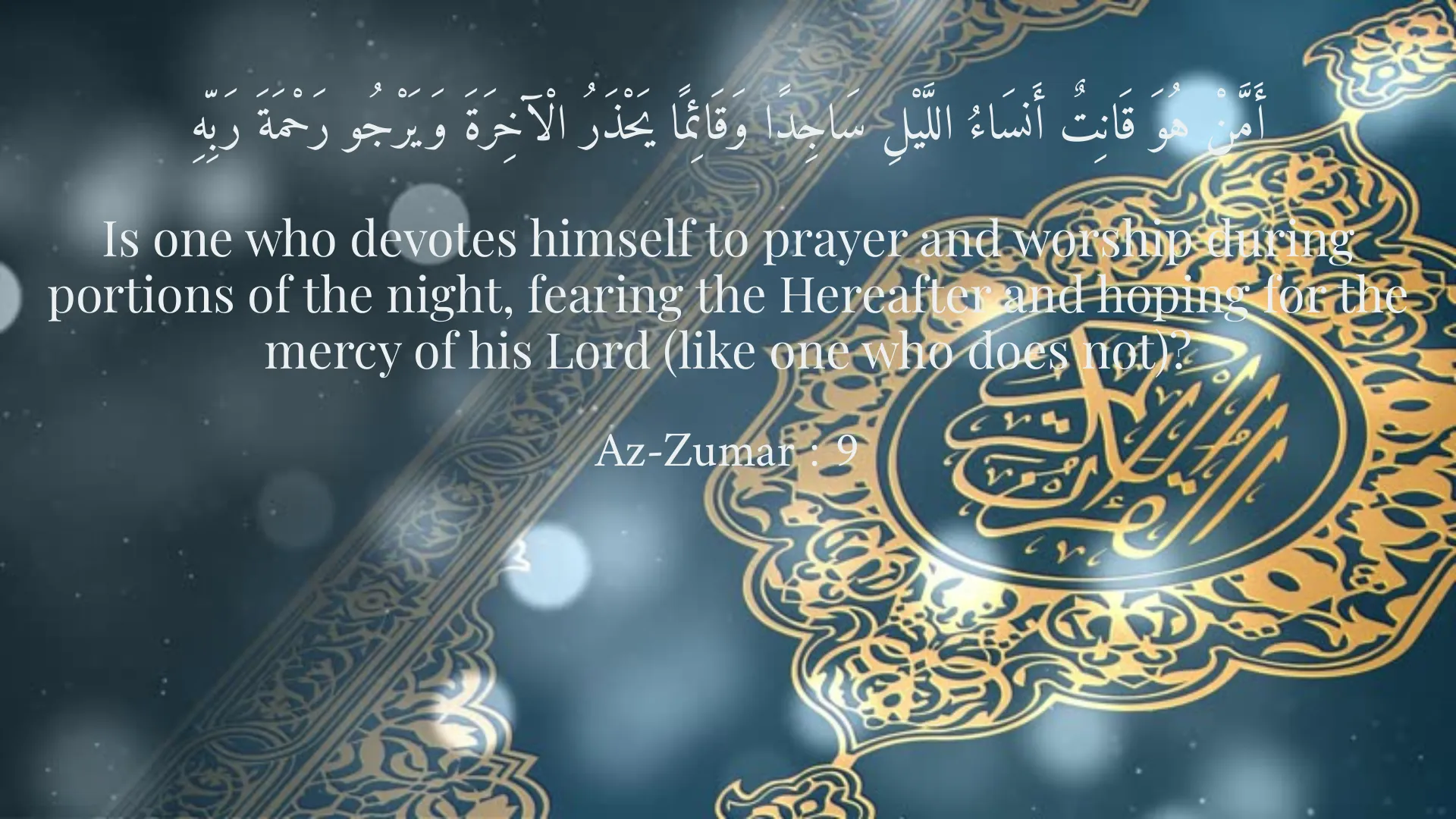
In the Holy Quran, knowledge and faith are not just important; they are fundamentally intertwined components of a believer's spiritual journey. The synergy between these two elements cannot be understated, as they serve as the foundation upon which a devout life is built. This concept is beautifully illustrated through various verses in the Quran, which emphasize the necessity of knowledge in strengthening and solidifying one's faith. To comprehend this connection more thoroughly, it is imperative to examine specific verses that elucidate the relationship between knowledge and faith, and how they work synergistically to enrich the lives of believers. One of the most compelling verses in this regard is found in Surah Al-Zumar, verse 9, where Allah proclaims: 'Is one who devotes himself to prayer and worship during portions of the night, fearing the Hereafter and hoping for the mercy of his Lord (like one who does not)?' This verse highlights an essential paradox in worship—there is a distinct difference between those who engage in sincere worship and those who do not, and the distinction often lies in the understanding of what worship truly entails. Believers who are aware of the intricacies of worship, who understand its purpose and the reverence it entails, approach their acts of devotion with sincerity and commitment. They not only engage in physical acts of worship but also embody a reflective mindset that acknowledges the gravity of their actions in the context of the Hereafter. Therefore, this verse serves as a reminder that effective worship is underpinned by both faith and knowledge, with knowledge enhancing the quality and depth of one’s faith. Furthermore, in Surah Al-Mu'mun, verse 14, we find another profound illustration of the interplay between faith and knowledge: 'Then We made him a drop of fluid in a firm lodging.' This scripture invites believers to contemplate their origin and the wondrous process of creation. By understanding the stages of human development, from the initial drop of fluid to a fully formed human being, believers are called to reflect on the majesty and omnipotence of Allah. This moment of contemplation and understanding fosters a deeper appreciation for the Creator, which in turn strengthens one's faith. The act of reflecting on creation thus serves as both a spiritual exercise and an intellectual endeavor, highlighting that knowledge does not merely complement faith—it enhances it, making it more profound and resilient. The notion that faith without knowledge is inherently unstable is echoed throughout Islamic teachings. Knowledge acts as a stabilizing force that provides clarity and guidance. Without knowledge, faith can waver, as unawareness may lead individuals to misunderstand their beliefs or misinterpret the tenets of Islam. Knowledge enables believers to navigate the complexities of their faith, thus preventing ambiguities that could compromise their devotion. Consequently, it can be argued that true faith requires a thorough understanding of the principles that govern it; this understanding cultivates a strong bond between the believer and their Creator. Moreover, various verses in the Quran manifest this intimate connection between knowledge and faith. For instance, in Surah Al-Imran, verse 7, Allah encourages believers to seek knowledge: 'It is He Who has sent down to you the Book. In it are verses that are clear and decisive. They are the foundation of the Book, and others that are metaphorical.' This verse underlines the importance of differentiating between the clear and the metaphorical, which further emphasizes the need for knowledge to interpret divine guidance accurately. Islamic scholars have long emphasized the importance of studying the Quran to hone one's knowledge and understanding of faith. Such scholarly endeavors serve to unite various strands of knowledge—spiritual, ethical, and intellectual—ultimately reinforcing the believer’s journey towards greater faith. The importance of acquiring knowledge is further corroborated by the Hadith literature, where the Prophet Muhammad (peace be upon him) emphasized the significance of seeking knowledge, stating: 'Seeking knowledge is an obligation upon every Muslim.' This hadith highlights the proactive role that believers must take by venturing out into the world to seek understanding, as it is through acquired knowledge that one's faith can evolve and become more robust. As believers deepen their knowledge, they also enhance their capability to practice their faith with sincerity, thus achieving a harmonious balance between intellectual comprehension and spiritual devotion. The transformative power of knowledge extends beyond personal belief systems, influencing social behaviors and communal relationships among believers. Knowledge fosters empathy, compassion, and better understanding of others' perspectives, which are essential attributes for community cohesion and harmony. A well-informed believer is often more considerate, respectful, and actively involved in promoting justice and morality within society. This collective knowledge-centric approach bolsters the moral fabric of the community, leading to a more conscientious and responsible society overall. In conclusion, the relationship between knowledge and faith is foundational in the lives of believers, as emphasized in the Holy Quran. Knowledge not only supports and fortifies faith but also provides essential tools for understanding and interpreting religious practices and principles. The examples laid out in the Quran, as well as the teachings of the Prophet Muhammad (peace be upon him), illuminate the path for believers to seek knowledge ardently. It is through this pursuit of knowledge that individuals can cultivate a robust faith, nurturing a deep, transformative relationship with Allah. Ultimately, as believers commit themselves both to faith and the quest for knowledge, they are better equipped to traverse their spiritual journeys while exemplifying the ideals of their faith. Hence, the interplay between knowledge and faith is a dynamic partnership that nurtures the soul and guides individuals towards a righteous and fulfilling life.
Related Verses
أَمَّنْ هُوَ قَانِتٌ أَنسَاءُ اللَّيْلِ سَاجِدًا وَقَائِمًا يَحْذَرُ الْآخِرَةَ وَيَرْجُو رَحْمَةَ رَبِّهِ
Is one who devotes himself to prayer and worship during portions of the night, fearing the Hereafter and hoping for the mercy of his Lord (like one who does not)?
Az-Zumar : 9
ثُمَّ جَعَلْنَاهُ نُطْفَةً فِي قَرَارٍ مَكِينٍ
Then We made him a drop of fluid in a firm lodging.
Al-Mu'mun : 14
Short Story
Once upon a time, there was a man named Hassan who was always searching for the truth. He was keen on knowledge and understood that to have faith in God, one must have adequate understanding. Hassan decided to embark on a journey of learning and turned to the Quran. After several months of study and reflection, he realized that his faith had grown naturally with his knowledge, bringing him greater peace.