Quranic Answer
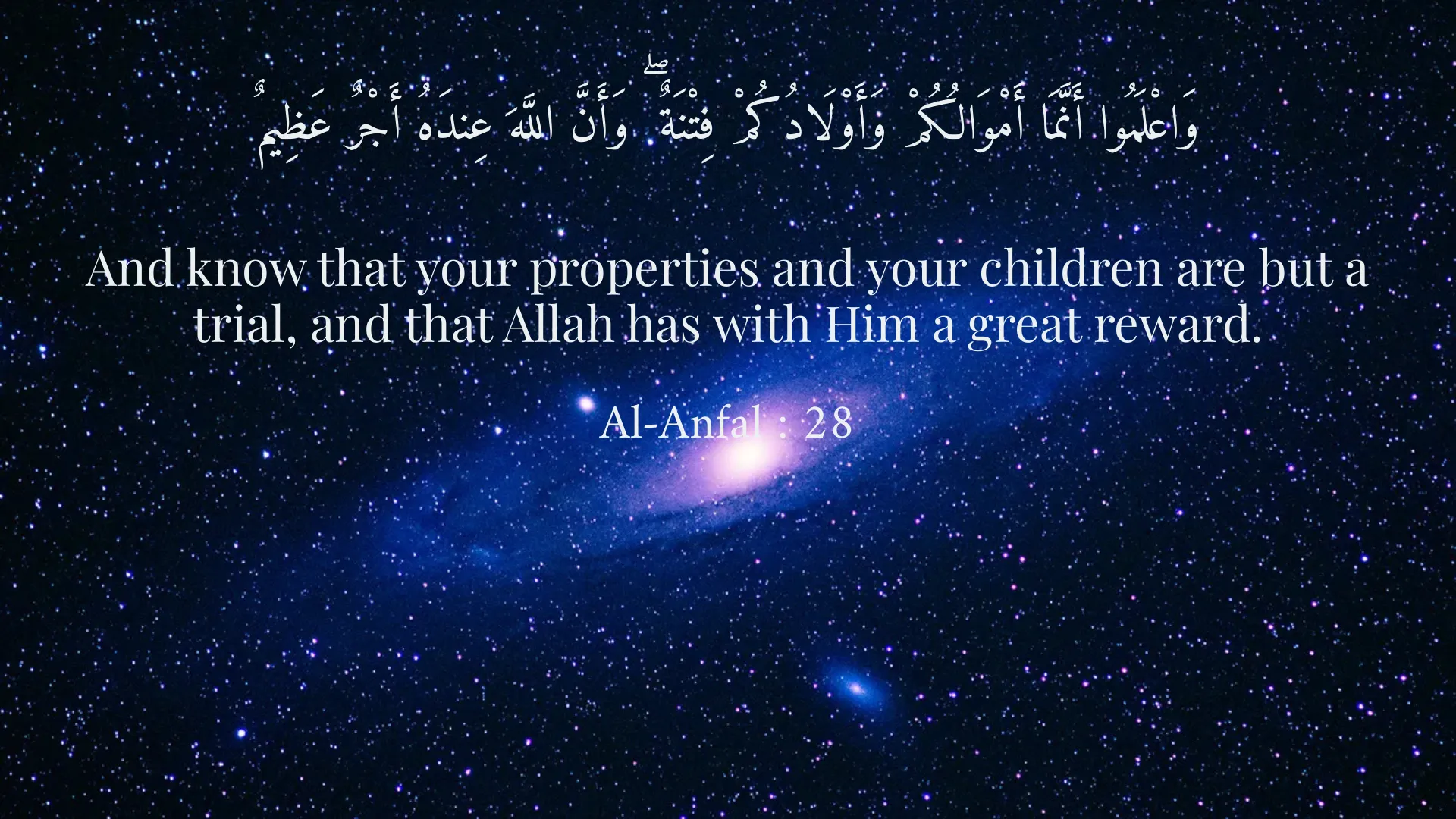
Faith is often viewed as a remarkable force, full of vigor and vitality. However, it is crucial to recognize that faith is not merely an endowment given to a select few, but rather an ongoing process of renewal and growth that can coexist even within weak hearts. This notion of faith being accessible regardless of one’s spiritual condition is beautifully articulated in the Holy Quran, a text that provides guidance, solace, and comfort to countless individuals who find themselves grappling with their belief systems. In the intricate relationship between faith and personal spirituality, the Quran emphasizes the importance of sincere intent and pure motivations over outward displays of strength or certainty. In Surah Al-Anfal, verse 28, Allah proclaims, "And know that your properties and your children are but a trial, and that Allah has with Him a great reward." This profound reminder speaks to the very essence of faith itself. It heavily leans towards the idea that material possessions and even familial ties are temporary tests; their value lies not in their accumulation but in how one navigates these trials with a sincere heart. Many individuals struggle under the weight of their worldly obligations, leading to feelings of inadequacy or spiritual weakness. In such moments, it is essential to remember that the sanctity of faith does not hinge upon appearances or the perceived strength of one’s heart. Instead, it focuses on the individual's intent and the genuine effort they exert to draw closer to Allah. This underscores a more profound truth in spirituality: even those who experience turbulent times and challenging spiritual conditions can find solace in the simple act of repentance, which opens the door to belief in God. Further reinforcing this perspective, Surah Al-Mu'minun, verse 60, illustrates a divine promise: "And those who believe in Us and do righteous deeds, We will elevate them to high ranks." Here, Allah assures believers of elevation and reward through faith coupled with righteous actions. This verse carries significant implications for those who face spiritual struggles. It conveys that while individuals might feel diminished or weak in their faith, it is through steadfastness in belief and the pursuit of good deeds that they can rise to higher spiritual realms. Hence, there is room for gradual growth in faith, regardless of past shortcomings or present struggles. This idea is further underlined in Surah Al-Baqarah, verse 286, where Allah states, "Allah does not burden a soul beyond that it can bear." This phrase captures the essence of divine mercy and forgiveness. It elucidates that weaknesses in one’s heart do not equate to failures in faith; rather, Allah’s understanding encompasses human frailties. His expectations are tailored to each individual’s capacity, meaning that the divine judgment hinges not on the quantity of righteousness but rather on the quality of one’s heart and the thoroughness of their repentance. This segment of the Quran not only reassures us of Allah’s compassion but also encourages believers to engage in an introspective journey. Faith, in this light, becomes less about achieving a state of perfection and more about the continuous striving towards it. The act of reaching out in authenticity—even in weakness—is a form of strength in its own right. The beauty of faith lies in its inclusivity and in the profound realization that even in our lows, we are never beyond the reach of divine compassion. In a world where the challenges of life can often create barriers to faith, it is vital to emphasize the importance of individual journeys toward spiritual empowerment and renewal. Many may incorrectly equate strength of faith with an absence of doubt or struggle. However, it is crucial to understand that doubt may indeed be a component of faith. Acknowledging our uncertainties can lead to more authentic connections with our beliefs and, ultimately, with God. It's critical to bear in mind that faith is a journey rather than a destination. As one navigates the complexities of life, we often experience peaks and valleys that shape our spiritual maturation. At times, we may feel distant from God; at other times, we may feel overwhelmed with His presence. These fluctuations are a normal part of the human experience. The essence of faith resides in our ability to recognize these fluctuations, approach them with humility, and strive to connect with the divine. Thus, even in periods of desolation or spiritual fatigue, it is feasible to rekindle the light of faith within ourselves. Engaging in acts of kindness, maintaining a sincere prayer practice, or even returning to the foundational teachings of the Quran can nourish one’s spirit. Remembering that faith can blossom anew in weak hearts serves as a source of immense hope. Moreover, the communal aspect of faith cannot be undervalued. Surrounding oneself with supportive and understanding individuals can work wonders for one’s spiritual health. In sharing doubts and struggles with others, individuals can often find the encouragement they need to reignite their faith. Support groups, mosques, or community organizations can provide platforms for spiritual dialogue and support, thereby fostering belonging and reinforcing collective faith. In conclusion, faith is an ongoing process of renewal and growth that embraces even the weakest of hearts. In Allah's eyes, it is not the perceived strength of one's heart that defines true belief, but rather the intent behind one’s actions and the sincerity of their desire to return to Him. Recognizing this empowers individuals to navigate their spiritual journeys with grace and resilience, reminding us all to never underestimate the potential for growth—even in moments of personal trial. Faith’s sanctity truly lies in the heart's purity and the strength of one’s intentions, opening the doors for every individual to strive towards the divine light, in both their highs and lows.
Related Verses
وَاعْلَمُوا أَنَّمَا أَمْوَالُكُمْ وَأَوْلَادُكُمْ فِتْنَةٌ ۖ وَأَنَّ اللَّهَ عِندَهُ أَجْرٌ عَظِيمٌ
And know that your properties and your children are but a trial, and that Allah has with Him a great reward.
Al-Anfal : 28
وَالَّذِينَ آمَنُوا بِأَشْيَائِنَا وَعَمِلُوا الصَّالِحَاتِ سَنُدْخِلُهُمْ فِي الدَّرَجاتِ الْعُلا
And those who believe in Us and do righteous deeds, We will elevate them to high ranks.
Al-Mu'minun : 60
لا يُكَلِّفُ اللَّهُ نَفْسًا إِلَّا وُسْعَهَا
Allah does not burden a soul beyond that it can bear.
Al-Baqarah : 286
Short Story
In a small village, there lived a young man named Salim. He always felt that his faith was weak and that he couldn't properly approach God. One day while walking in nature, he came across a Quranic verse that stated, 'Allah does not burden a soul beyond that it can bear.' This verse had a profound impact on Salim and made him realize that even with his weaknesses and limitations, he could approach God with a sincere intention. From that day on, Salim decided to dedicate more time each day to prayer and supplication, gradually finding a stronger sense of faith.