Quranic Answer
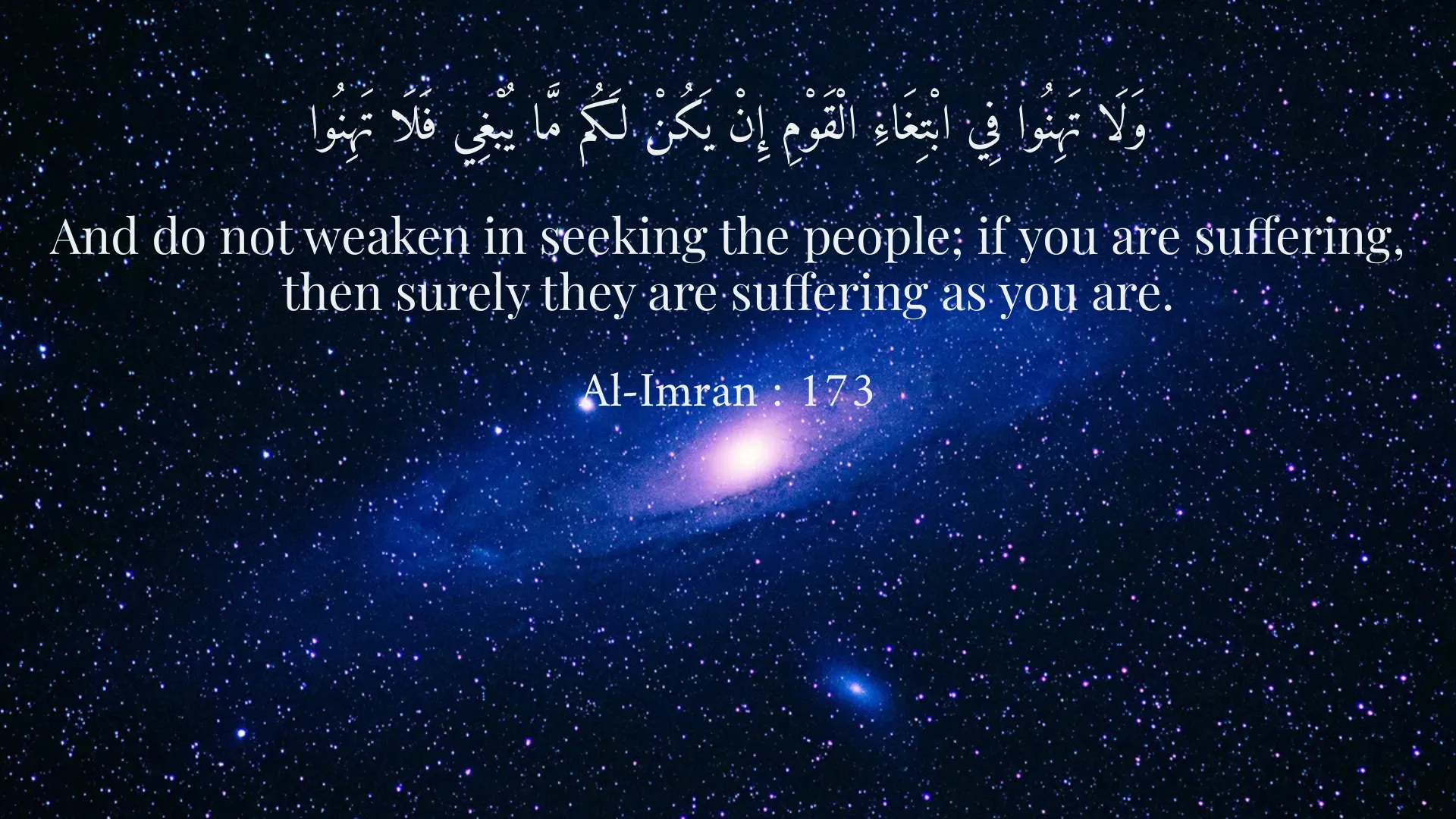
In the Holy Quran, Allah emphasizes the importance of reliance on Him and His wisdom, particularly in the face of life's uncertainties. Believers are urged to steer clear of fear and worry, focusing instead on patience and trust. This foundational principle is reflected in various verses throughout the Quran, particularly in Surah Al-Imran, which offers profound insights into the nature of faith, perseverance, and the struggles that believers may encounter. Surah Al-Imran, verse 173 states: 'And do not weaken in seeking the people; if you are suffering, then surely they are suffering as you are.' This verse serves as a reminder of the shared human experience of hardship and suffering. It is a call to empathy and understanding among believers, urging them to not lose hope in their shared journey. The message here is clear: though challenges may arise, we are all in this together, and suffering can serve as a bridge that connects us to one another. It illustrates the importance of mutual support within the community of believers, fostering a sense of belonging and collective strength. Furthermore, this verse underscores the notion that believers should trust in their fate as well as in God's overarching plan. Fear of the future, which often stems from uncertainty and doubt, can lead to a moral and spiritual weakness that is contrary to the essence of faith. Believers are reminded that placing one's trust in Allah is not merely an act of belief but a profound obligation that cultivates resilience in the face of adversity. Rather than succumbing to fear, they are encouraged to keep striving and working hard, all while upholding their faith in God’s wisdom and mercy. In another enlightening verse, Surah Al-Imran, verse 52, it states: 'Indeed, that is the devil who frightens his allies.' This powerful assertion draws attention to the fact that fears and doubts are instruments of the devil. It reminds believers that succumbing to fear can lead them down a path of despair and hopelessness, which can ultimately detract from their faith and spiritual journey. Fear is recognized as a natural human emotion, a reaction to the uncertainties surrounding us. However, the Quran teaches that experiencing fear should not translate into allowing it to dominate our thoughts or actions. The Quran provides guidance on how to confront fears and anxieties through the nurturing of faith and reliance upon God as a strong buffer against these debilitating feelings. It does not encourage blind optimism; instead, it advocates for an informed faith that acknowledges fears, yet chooses to rise above them through spiritual strength and determination. For believers, faith acts as an anchor in turbulent waters, providing peace and comfort during times of stress and uncertainty. Moreover, the Quran reassures believers that 'Indeed, success is with patience.' This highlights the value of patience as a virtue that leads to success and tranquility in the long term. The idea that endurance can lead to peace is a recurring theme within Islamic teachings. Patience is not solely about waiting in silence; it is an active engagement with one’s circumstances, a commitment to maintain faith under pressure, and a determination to continue moving forward despite challenges. In practicing patience, believers are offered the opportunity to grow spiritually. Trials and tribulations are portrayed as means for personal growth, reflection, and deeper faith. The struggle against fear and adversity is intrinsic to human life, and the Quran encourages believers to approach these challenges with a mindset of perseverance, reminding them that they are never alone in their battles. The community support and the reliance on God's wisdom can offer immeasurable strength along their journey. Furthermore, engaging in prayer and seeking guidance from Allah can equip believers with the tools necessary to navigate their fears. The practice of Du'a (supplication) is particularly emphasized in Islamic tradition as a way for individuals to seek help and clarity from God. It reinforces the relationship between the believer and Allah, whereby individuals can express their fears and concerns, fostering a sense of connection and reliance that bolsters their faith. In conclusion, the Quran poignantly speaks to the human condition, acknowledging that fear and uncertainty are part and parcel of life. However, it offers more than just acknowledgment; it provides a pathway to overcoming these challenges through faith, patience, and community support. Believers are encouraged to trust in Allah's wisdom, recognize the transient nature of their fears, and understand that these moments of trial can ultimately lead to greater spiritual growth and peace. Ultimately, the teachings of the Quran inspire a profound sense of resilience that encourages believers to confront their fears with faith, patience, and continuous effort. Embodying these principles allows believers to navigate the uncertainties of life with a sense of purpose, confidence, and inner peace.
Related Verses
وَلَا تَهِنُوا فِي ابْتِغَاءِ الْقَوْمِ إِنْ يَكُنْ لَكُم مَّا يُبْغِي فَلَا تَهِنُوا
And do not weaken in seeking the people; if you are suffering, then surely they are suffering as you are.
Al-Imran : 173
إنما ذلكم الشيطان يخوف أولياءه
Indeed, that is the devil who frightens his allies.
Al-Imran : 52
Short Story
Once upon a time, there was a young man named Hamed who was very worried about his future. He often wondered if his decisions were right or wrong. But over time, he remembered that he needed to trust God. He decided to take action and instead of worrying, he worked hard. With his dependence on God, he found peace in his heart and was able to achieve his goals easily.