Quranic Answer
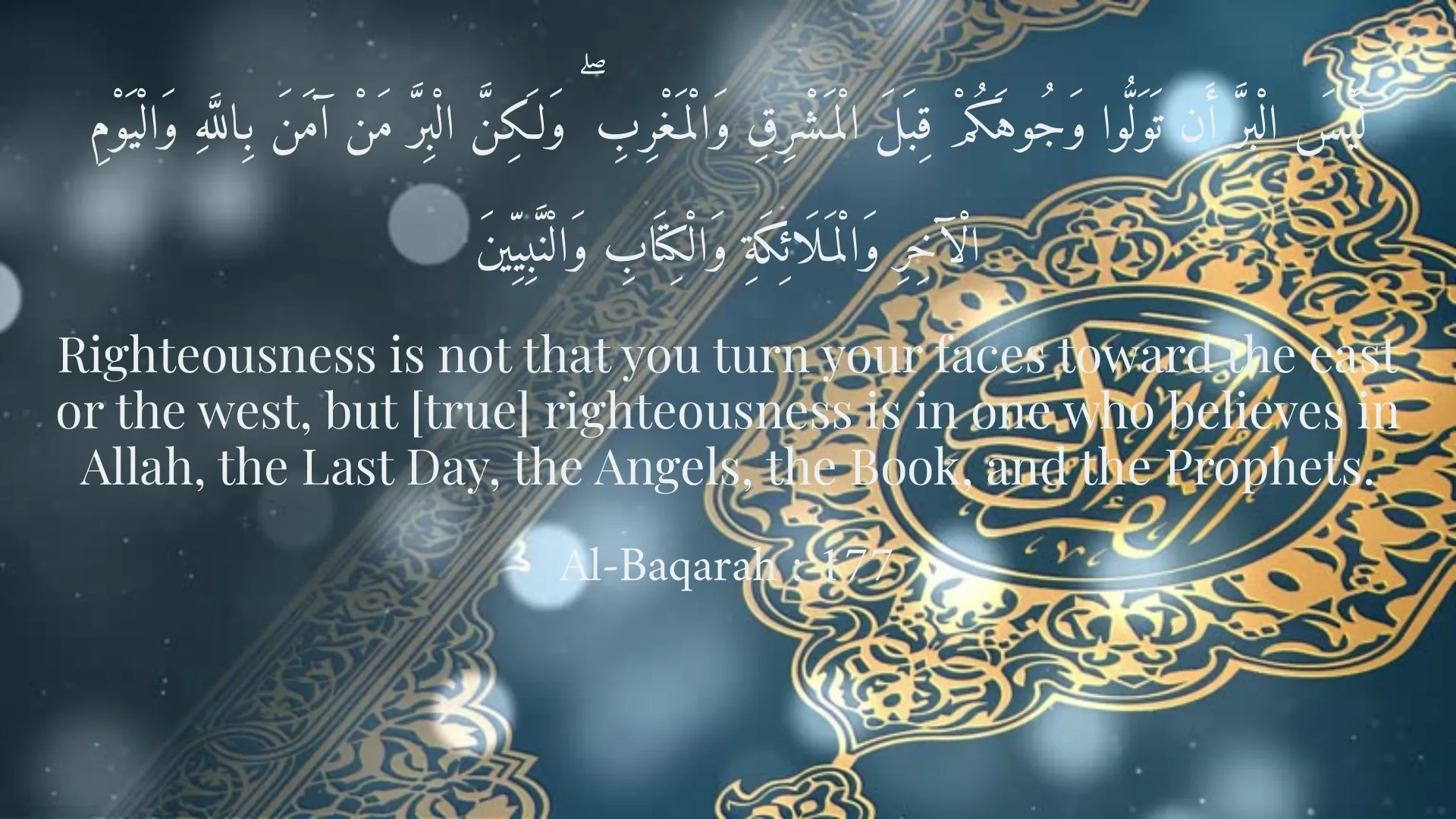
In the Holy Quran, fulfilling obligations stands as a fundamental pillar of a believer's religious life. In Islamic teachings, these obligations include prayer (Salah), fasting (Sawm), almsgiving (Zakat), and pilgrimage (Hajj). Each of these acts serves not only as a means of worship but also plays a crucial role in reinforcing the individual's connection with God and the greater community of believers. However, the question arises: is merely fulfilling these obligations sufficient to embody the true essence of Islam? As we delve deeper into the teachings of the Quran, we find that the concept of religion and adherence extends beyond the surface level of these rituals. In Surah Al-Baqarah, verse 177, Allah elucidates that righteousness transcends merely turning towards the Qibla (the direction of prayer) and engaging in outward practices. The verse reads, "Righteousness is not that you turn your faces toward the east or the west, but (true) righteousness is in one who believes in Allah, the Last Day, the Angels, the Book, and the Prophets" (Quran 2:177). This verse highlights an essential aspect of the Islamic faith: the importance of belief and inner faith alongside the fulfillment of religious duties. It suggests that genuine piety encompasses a belief system that includes faith in God, His angels, His scriptures, and the prophets. Moreover, the Quran emphasizes that performing obligations must go hand-in-hand with pure intentions and ethical behavior. It is not enough to merely perform the outward acts of worship; rather, these acts must be accompanied by an authentic understanding of their significance and purpose. The intention behind performing obligations is a vital aspect that distinguishes mere ritualistic compliance from true worship. In Surah Al-Imran, verse 29, Allah states, "Say, 'Whether you conceal what is within yourselves or reveal it, Allah knows it.'" This verse underscores that God is aware of the intentions behind one's actions, and that sincerity in these intentions is crucial. If a person's intention is sincere, their deeds will be accepted by God. Therefore, one cannot simply conclude that performing obligations alone suffices in Islam. The Quran reminds us that it is essential that these acts are carried out alongside good intentions and moral character. It invites us to reflect on our motivations and the state of our hearts as we engage in acts of worship. This task of self-reflection is a fundamental component of self-improvement in a believer’s spiritual journey. The ethical dimensions of faith in Islam extend beyond individual spirituality; they encompass the social implications of one's actions as well. The performance of religious duties, such as giving to charity through almsgiving (Zakat), is as much about personal obligation as it is about communal responsibility. By sharing one's wealth with those in need, Muslims not only fulfill an obligation but also contribute to the well-being of society as a whole. Acts of charity strengthen community ties, foster empathy, and promote social justice, illustrating that fulfilling obligations can help build a better world. Islam also places much emphasis on character development. The Prophet Muhammad (peace be upon him) encapsulated this principle when he said, "I was sent to perfect good character." Thus, good character and ethical behavior are fundamental outcomes of true devoutness to God's commands. The norms of honesty, kindness, compassion, and justice should be evident in the lives of devout Muslims, serving as an indication of their commitment to living a righteous life. At this juncture, it is vital to recognize that the goal of religion in Islam is not solely worship; it encompasses the spiritual and ethical development of the individual. Therefore, all Muslims are encouraged to pay keen attention to the ethical and social dimensions of their faith. The Quran and the Sunnah (traditions of the Prophet) guide believers to embody a comprehensive understanding of what it means to be a practicing Muslim. This understanding should be reflected in one's everyday actions, motives, and interactions within the community. Furthermore, the teachings of Islam encourage individuals not only to fulfill religious obligations but also to engage in acts that promote the welfare of others. This includes acts of kindness, social justice, and the pursuit of knowledge. In this context, education holds significant importance in a Muslim's life, as the Quran expresses the value of seeking knowledge as a form of worship. The pursuit of knowledge enables individuals to understand their faith better and contributes to personal and communal enrichment. In conclusion, while obligatory acts of worship such as prayer, fasting, almsgiving, and pilgrimage are fundamental to a Muslim's religious duties, they are merely the starting point in a broader spectrum of spiritual and ethical living. As illuminated in the Quran, fulfilling these obligations is essential, but it must be underpinned by sincerity, good intentions, and a commitment to moral character. True adherence to Islam involves not just the rituals but also encompasses a continuous journey toward personal growth and ethical responsibility. In this light, fulfilling religious obligations transforms from a mere duty into an empowering catalyst for spiritual and social betterment. All Muslims should strive to integrate these principles into their daily lives, working towards creating a more compassionate and just society.
Related Verses
لَيْسَ الْبِرَّ أَن تَوَلُّوا وَجُوهَكُمْ قِبَلَ الْمَشْرِقِ وَالْمَغْرِبِ ۖ وَلَكِنَّ الْبِرَّ مَنْ آمَنَ بِاللَّهِ وَالْيَوْمِ الْآخِرِ وَالْمَلَائِكَةِ وَالْكِتَابِ وَالْنَّبِيِّينَ
Righteousness is not that you turn your faces toward the east or the west, but [true] righteousness is in one who believes in Allah, the Last Day, the Angels, the Book, and the Prophets.
Al-Baqarah : 177
يَا أَيُّهَا الَّذِينَ آمَنُوا اتَّقُوا اللَّهَ وَتَنظُرْ نَفْسٌ مَّا قَدَّمَتْ لِغَدٍ ۖ وَاتَّقُوا اللَّهَ ۚ إِنَّ اللَّهَ خَبِيرٌ بِمَا تَعْمَلُونَ
O you who have believed, fear Allah, and let every soul look to what it has brought [for the tomorrow]. And fear Allah. Indeed, Allah is Acquainted with what you do.
Al-Imran : 29
Short Story
One day, Mustafa was reading the Quran and concluded that merely fulfilling obligations was not enough. He decided to work on his ethics and deepen his relationship with God through sincere intentions. By showing kindness to others, not only did he feel greater peace himself, but he also positively impacted the lives of those around him.