Quranic Answer
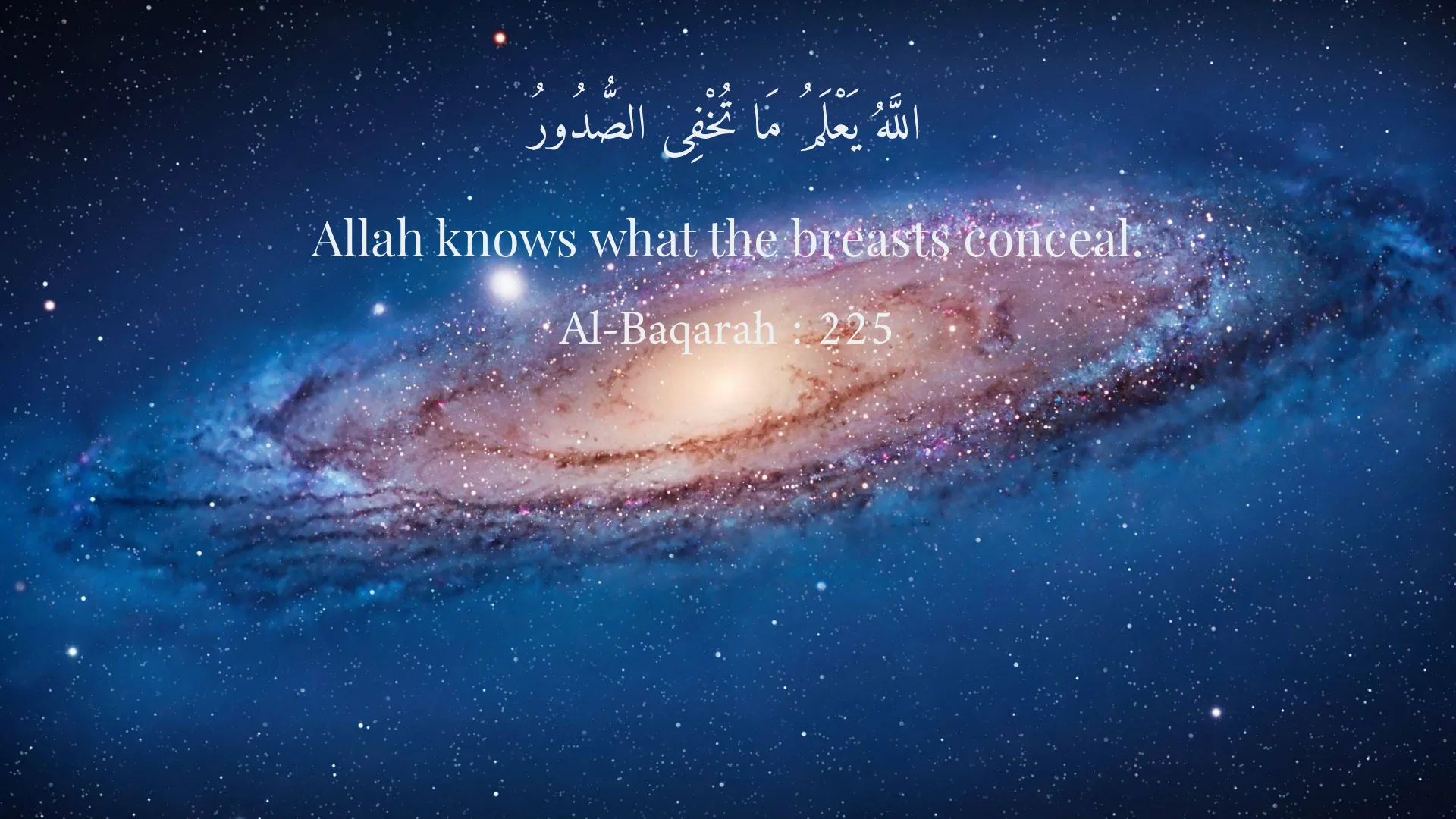
In the Holy Quran, the concept of God's awareness of people's intentions and inner thoughts is not only profound but pivotal to understanding the moral framework within which Muslims are encouraged to live. The Quran articulates clearly that nothing is hidden from Allah, the all-knowing and all-seeing creator of the universe. This idea emphasizes a fundamental aspect of Islamic theology: that God possesses perfect knowledge of every thought, intention, and action that occurs in the hearts of humankind. One particularly poignant instance of this concept is found in Surah Al-Baqarah, verse 225, where it is stated: 'Allah knows what the breasts conceal.' This succinct phrase encapsulates the essence of divine knowledge, suggesting that while humans may successfully hide their feelings or intentions from one another, nothing is concealed from God. The term 'breasts' in this context metaphorically represents one's innermost feelings and thoughts, reinforcing the notion that God's insight extends far beyond mere actions; it penetrates the very fabric of human consciousness. Another verse, Surah Al-Imran, verse 29, further elaborates on this theme: 'Say, 'If you conceal what is within yourselves or reveal it, Allah knows it.' This declaration emphasizes that God is not only omniscient regarding private thoughts but also inherently aware of both disclosed and undisclosed human emotions. By stating this, the Quran compels its followers to recognize and internalize the reality that their true nature and intentions are transparent before Allah. This enduring theological truth serves as a reminder that one's thoughts and sincerity play a crucial role in the assessment of their faith and deeds. The awareness of God over human intentions evokes an essential call for self-reflection and moral accountability. In Islam, the purity of one's intention directly influences the acceptance of their actions. Good deeds, regardless of their magnitude, could potentially go unrecognized if they are not coupled with sincere and righteous intentions. Consequently, the Quran articulates that individuals must be mindful of the internal motivations that guide their actions in life. The relationship between intentions and actions is critically examined through various teachings in Islamic literature. One famous narration states, 'Actions are judged by intentions,' attributed to the Prophet Muhammad (peace be upon him). This narration underscores the principle that, ultimately, it is the intention behind an action that determines its merit in the eyes of God. This perspective molds a framework for ethical behavior and serves as an admonition to ensure that personal endeavors are rooted in sincere and righteous motivations. It reassures believers that God does not merely assess their activities but evaluates the mental and spiritual underpinnings of those actions. Through this lens, individuals are encouraged to constantly evaluate their intentions, especially in times of decision-making and while engaging in acts of worship or charity. A prayer performed with the intention of seeking closeness to God is vastly different from one conducted for show or societal recognition. Similarly, charity given for acclaim crumbles in worth when juxtaposed against an act of generous giving from the heart that seeks nothing but divine pleasure. This doctrine advocates for the purification of one's intentions in all matters, a fundamental concept deeply embedded within Islamic teachings. There is a continuous, unwavering emphasis on the need to align one's heart with the truth of their verbal proclamations and outward actions. Furthermore, the ramifications of failing to maintain correct intentions can be dire. The Quran warns about the consequences of harboring ill or malicious intentions, suggesting that such tendencies can provoke divine disfavor. This theological understanding cultivates a sense of humility and self-awareness among believers, inspiring them to consciously cultivate righteous intentions. The Quranic verses make it clear that Allah's knowledge is not confined to the external performance of actions; rather, it delves right into the hearts of humankind, illuminating the significance of inner moral character. Thus, the heightened awareness of God's perception fosters a culture of sincerity among Muslims, encouraging them to rectify any misguided thoughts or malevolence before they manifest into actions. Moreover, the principle that intentions hold an essential place in Islamic values resonates throughout numerous facets of a believer's life, infusing spirituality into ordinary experiences. Approaching daily interactions with mindfulness towards one's intentions can lead to a more profound societal impact. Whether one is engaging in acts of kindness, love, or even conflict resolution, acknowledging and striving to purify their purpose fosters goodwill, compassion, and empathy. In conclusion, the recognition of Allah's omniscience concerning human thoughts and intentions is a core doctrine of Islam that invites individuals to cultivate purity of heart and intention. The concept transcends mere theological knowledge; it invites Muslims to embark on a path of conscious self-assessment, rectification, and sincerity in both intention and action. The authentic act of worship, charity, and good deeds can only flourish when they are rooted in a heart that seeks to please Allah. As believers navigate through life's choices and interactions, they are continuously reminded that within their intentions lies not just the essence of their relationship with God, but also the greater impact they can have on the world around them.
Related Verses
اللَّهُ یَعْلَمُ مَا تُخْفِی الصُّدُورُ
Allah knows what the breasts conceal.
Al-Baqarah : 225
قُلْ إِن تُخْفُوا مَا فِی صُدُورِکُمْ أَوْ تُبْدُوهُ یَعْلَمْهُ اللَّهُ
Say, 'If you conceal what is within yourselves or reveal it, Allah knows it.'
Al-Imran : 29
Short Story
One day, a young man named Ali felt profound changes within him. He often pondered over his intentions, seeking God's pleasure. One day he came across a verse in the Quran that explicitly stated God's awareness of intentions. This verse reminded him that every good deed he performs should be with a pure intention for the sake of God. Ali decided to review his intentions daily and speak to God in his heart. This practice brought him a greater sense of peace and made sure that nothing remained hidden from God.