Quranic Answer
In the Holy Quran, the presence of numerous promises highlights the profound understanding that God remains with His servants during times of hardship and difficulties. These promises are not mere words; they serve as beacons of hope and reassurance for the believers who navigate through the tumultuous waters of life. The advice to seek divine assistance through patience and prayer encapsulates the essence of reliance upon God during trying moments. This notion is vividly presented in Surah Al-Baqarah, verse 153, where Allah states, 'O you who have believed, seek help through patience and prayer. Indeed, Allah is with the patient.' Here, we witness a divine directive showering believers with encouragement, urging them to turn to prayer as a source of strength. By encouraging patience, God implies that challenges and trials are integral parts of life; however, through steadfastness and devotion in prayer, believers will not only endure but also emerge fortified. The concept of divine companionship during adversities is further fortified in Surah Al-Anfal, verse 30. This verse elaborates that God is acutely aware of the perseverance exhibited by believers when confronting challenges and supportively strengthens them. Such affirmations remind the believers that they are not solitary voyagers in their struggles. Instead, they are accompanied by an omnipotent force that provides guidance and encouragement. Importantly, the believer’s connection with God amplifies during these trials, as faith becomes a source of solace and power. The Quran teaches that every hardship is paired with a relief, forging an indelible link between faith, patience, and overcoming life's hurdles. Moreover, the significance of patience cannot be overstated. In Islamic theology, patience (Sabr) is not merely the act of enduring trials; it embodies a series of virtues including restraint, self-control, and steadfastness. The practice of patience implies a deep-rooted trust in God's wisdom and timing. It is through this act of enduring hardships with a tranquil heart and unwavering faith that believers foster a more profound connection with their Creator. This divine assurance instills a sense of security; it assures the believer that even amidst trials, a higher plan is in motion. In the context of faith and divine assistance, we must explore the response of believers to life's adversities. When faced with challenges, individuals often succumb to despair and hopelessness. However, the Quran provides guidance on a different approach—encouraging takbeer (remembrance) and prayer as means of solace. This serves as a reminder that in their darkest hours, believers are given tools to reconnect with their faith, reminding them that surrendering to difficulties does not yield strength. Instead, it is through faith and the act of turning to God, that they can access a reservoir of divine support. This concept is beautifully encapsulated in the hadith where the Prophet Muhammad (peace be upon him) reassures his followers that one of the most beloved of deeds to Allah is to be patient in times of trials. The intertwining relationship between patience, prayer, and divine presence creates a comprehensive framework for believers. This framework empowers individuals to face their struggles head-on, rooted in faith while also being committed to self-improvement through adherence to divine guidance and teachings within the Quran. Coupled with supplication, the believer's approach to hardship shifts from passive endurance to active engagement. They prune their thoughts of negativity and cultivate gratitude amidst adversity, thereby establishing a more resilient mindset. In synthesizing these ideas, we can conclude that faith in God significantly shapes the believer's response to struggles. The Quran asserts that during difficult times, true believers must place their trust in God, engage in prayer, and practice patience. This leads to not only receiving assistance but also allows peace to permeate their hearts. The divine promises serve as reminders that hardships are not punishments, but rather tests designed to elevate the believer’s spiritual standing. God, in His infinite wisdom, orchestrates tests to fortify one’s character, ensuring growth and profound realization in faith. The promises made within the Holy Quran extend beyond mere words; they are pillars that hold the believer upright during turbulent times, securing them against despair. It is essential for individuals in desperate situations to cling to these promises and remember that God is with them, even when the circumstances seem insurmountable. Patience and faith transform challenges into stepping stones, allowing believers to pull strength from the well of divine support. Thus, the truthfulness of Allah's words stands as a testament to the fact that He will never leave or forsake His servants; instead, He walks beside them, illuminating their path with unwavering support. In conclusion, the exhortation to seek help through patience and prayer, as articulated in the Holy Quran, remains ever relevant. It extends an invitation to believers, encouraging them to cultivate a spirit of resilience and faith, irrespective of life's adversities. It reminds us all that seeking divine assistance is a pathway toward not only overcoming hardship but also discovering inner peace and strength during life's trials. The encouragement to embrace patience and faith serves as both a guiding light and a foundation for a fulfilling spiritual journey. The awareness of God's presence fosters determination and reinforces the belief that ultimately, everything will unfold according to divine wisdom, and that serenity is only a prayer away.
Related Verses
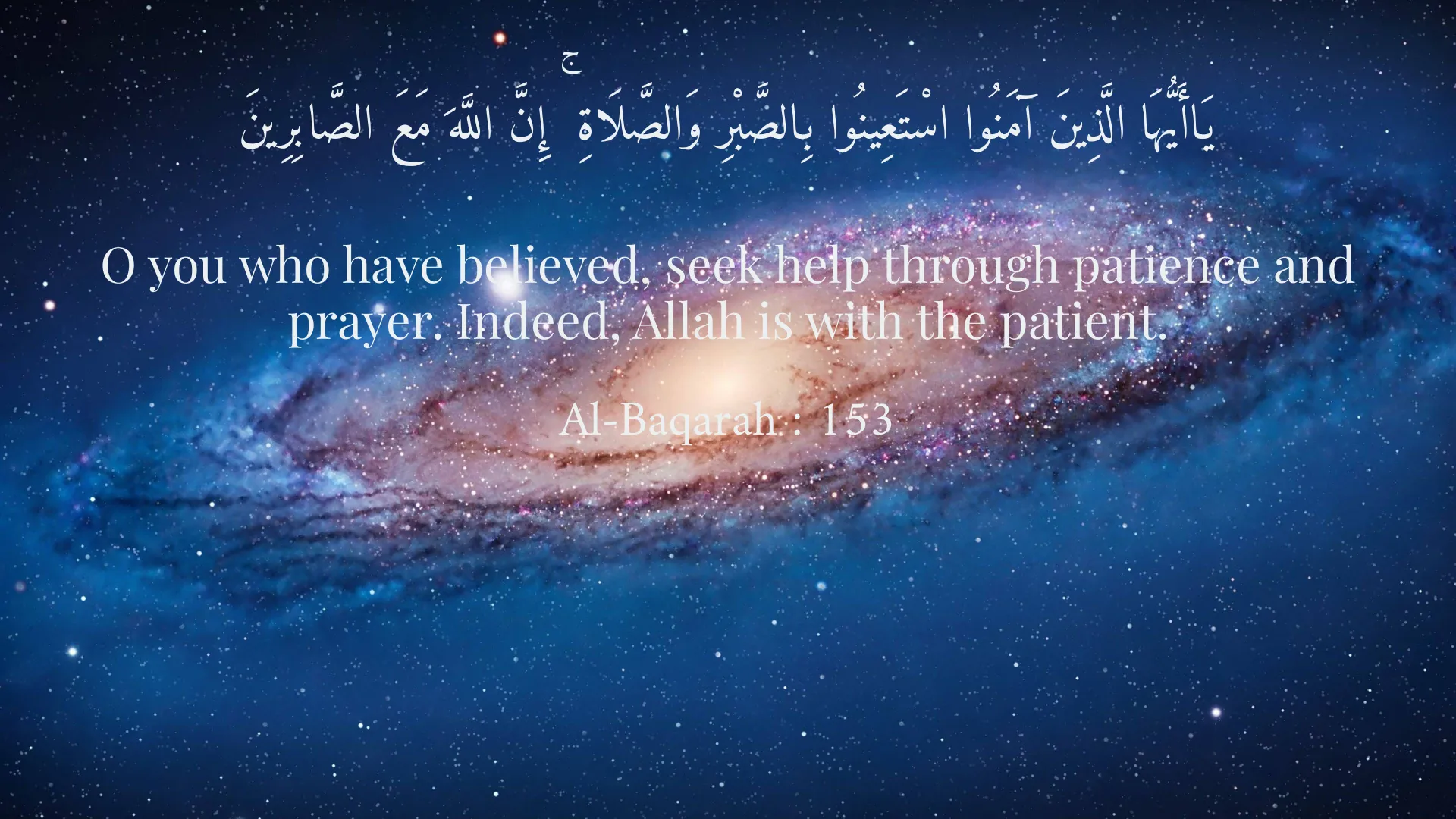
يَاأَيُّهَا الَّذِينَ آمَنُوا اسْتَعِينُوا بِالصَّبْرِ وَالصَّلَاةِ ۚ إِنَّ اللَّهَ مَعَ الصَّابِرِينَ
O you who have believed, seek help through patience and prayer. Indeed, Allah is with the patient.
Al-Baqarah : 153
وَإِذْ يَمْكُرُ بِكَ الَّذِينَ كَفَرُوا لِيُثْبِتُوكَ أَوْ يَقْتُلُوكَ أَوْ يُخْرِجُوكَ ۗ وَمَكَرُوا وَمَكَرَ اللَّهُ ۖ وَاللَّهُ خَيْرُ الْمَاكِرِينَ
And [mention] when those who disbelieved devised against you to imprison you or kill you or evict you. And they were devising, but Allah was devising. And Allah is the best of deceivers.
Al-Anfal : 30
Short Story
Once upon a time, there was a man named Ahmad who faced many challenges in his life. He passed through hardships every day and felt lonely. One day, he decided to read the Quran. He came across the verse 'Indeed, Allah is with the patient' and it reminded him that God is always by his side. Ahmad also began to pray and seek help from God, and after some time, he noticed that his difficulties were gradually easing, and he felt a greater sense of peace.