Quranic Answer
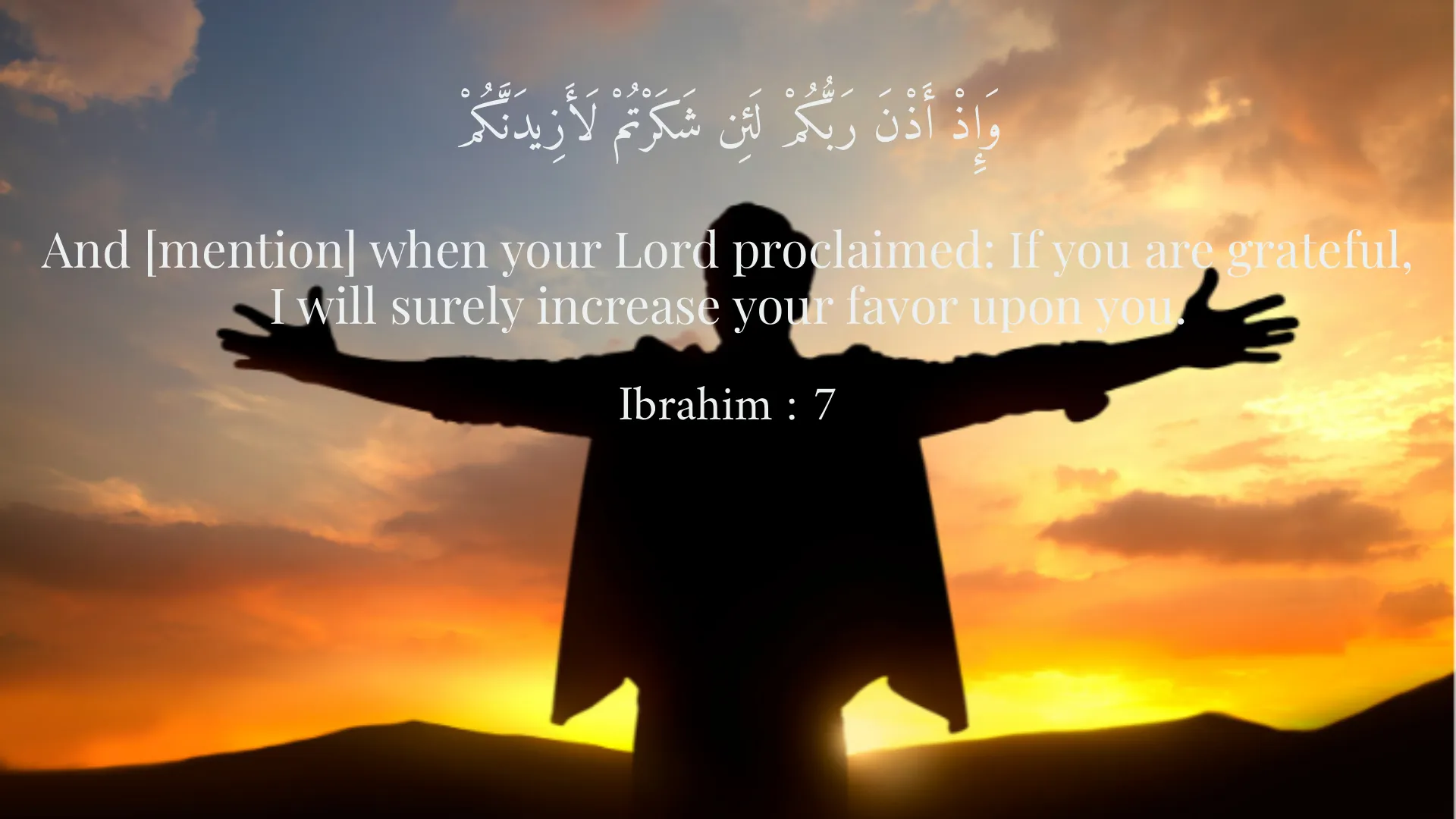
In the Holy Quran, the theme of gratitude is woven intricately throughout various verses, illustrating its paramount importance in a believer's life. The recognition of God's endless blessings and the act of expressing gratitude serve as crucial elements in fostering a strong spiritual connection. Gratitude, or 'shukr' in Arabic, is more than just a simple expression of thanks; it embodies an ethos that can transform the way an individual perceives and receives the divine's generosity. One of the most profound verses illuminating this concept is found in Surah Ibrahim, verse 7. The verse states: 'And [mention] when your Lord proclaimed: If you are grateful, I will surely increase your favor upon you.' This powerful proclamation encapsulates the essence of gratitude as a catalyst for divine blessings. The Quran emphasizes that gratitude is not merely a passive state of being appreciative but an active ingredient that stimulates the flow of blessings. In essence, this verse articulates a reciprocal relationship between God's generosity and human acknowledgment. When individuals consciously express their gratitude for the gifts they have, they create an environment for even greater blessings to manifest in their lives. Moreover, gratitude fosters resilience and fortitude in the face of life's trials and adversities. Surah An-Naml, verse 40 further reinforces this paradigm by stating, 'Whoever gives thanks, he is only giving thanks for the benefit of himself.' This verse highlights a profound principle: gratitude is not just an act of pleasing God but is fundamentally beneficial for the individual. When we cultivate an attitude of thankfulness, we enhance our wellbeing and psychological resilience. This aspect is particularly crucial in understanding how gratitude not only enhances spiritual rewards but also contributes to a person's mental health and overall satisfaction in life. Psychological studies have shown that practicing gratitude can lead to a myriad of benefits. Research suggests that individuals who regularly express gratitude tend to have better mental health, improved relationships, and enhanced emotional wellbeing. From a theological perspective, this religious endorsement of gratitude aligns with psychological findings, suggesting that the Quran not only guides its followers spiritually but also acknowledges the holistic benefits of a grateful mindset. Gratitude, as emphasized in the Quran, has a transformative effect on life's challenges. When we recognize and express thanks for the everyday blessings—even in times of struggle—it enables us to build a buffer against despair and discouragement. This practice enhances one's outlook on life, shifting the focus from what is lacking to appreciating what is present. Such a shift can lead to a more hopeful view of the future and better coping mechanisms in adversity. The act of reflection on our blessings serves as a reminder of divine support, bolstering our faith and inner strength. In the context of the modern world, where stress and anxiety levels are on the rise, the teachings of gratitude in the Quran become even more significant. By integrating gratitude into daily life, individuals can counterbalance the pressures of contemporary existence. Simple practices, such as maintaining a gratitude journal or incorporating thankfulness into daily prayers, can lead to substantial improvements in one’s emotional state and relationships with others. The prevailing wisdom in the Quran about gratitude resonates within communities and inter-personal relationships as well. Expressing gratitude can strengthen bonds among individuals, promoting a culture of appreciation and mutual respect. When persons recognize the efforts of others and express their thanks, it fosters a nurturing environment that is conducive to collective well-being. In family structures, for example, demonstrating gratitude can enhance familial harmony and contribute to a supportive atmosphere that encourages growth and development. Additionally, gratitude as a spiritual practice invites a deeper understanding and appreciation of divine wisdom. Understanding that every blessing—large or small—originates from God engenders humility and a sense of interconnectedness among all creation. This awareness nurtures a culture of compassion and empathy, as recognizing one's own blessings awakens a desire to share and uplift others. In this way, the practice of gratitude acts as both a personal and communal endeavor, promoting social cohesion and spiritual growth. Furthermore, the narrative of gratitude in the Quran is not limited to personal gain but extends to societal upliftment. When individuals embody gratitude and its principles, it cultivates an ethos of generosity and service within communities. Wealth and resources shared with grateful hearts not only amplify the blessings of the giver but also provide necessary support for those in need. This cycle of giving and thanksgiving strengthens the fabric of society, aligning closely with the Quranic ideals of compassion and charitable acts. Ultimately, gratitude serves as both a path towards personal enlightenment and a means of fostering greater community engagement. The wisdom imparted in Surah Ibrahim and Surah An-Naml call for a proactive approach to thankfulness—one that can shape our inner landscape and influence our interactions with the world around us. By embracing the Quranic teachings on gratitude, individuals can open themselves to a wealth of blessings, transforming their lives into a more joyous and fulfilling journey. In conclusion, the Quran places immense value on the concept of gratitude and its manifold effects. The teachings underscore that gratitude is not merely about recognizing received blessings but about actively engaging with them, thus facilitating growth and abundance. By internalizing and practicing gratitude, believers can enhance their spiritual connection, improve their mental wellbeing, and contribute positively to their communities. The reciprocal relationship between gratitude and divine blessings sets the foundation for a hopeful, fulfilling life, ultimately guiding one towards a deeper understanding of God's presence in every moment.
Related Verses
وَإِذْ أَذْنَ رَبُّكُمْ لَئِن شَكَرْتُمْ لَأَزِيدَنَّكُمْ
And [mention] when your Lord proclaimed: If you are grateful, I will surely increase your favor upon you.
Ibrahim : 7
مَن شَكَرَ فَإِنَّمَا يَشْكُرُ لِنَفْسِهِ
Whoever gives thanks, he is only giving thanks for the benefit of himself.
An-Naml : 40
Short Story
Once upon a time, there was a man named Hassan who lived his life seeking ways to increase his blessings. One day, he stumbled upon a book of the Quran where Allah stated: 'If you are grateful, I will surely increase your blessings.' From that day on, Hassan decided to start his day by recalling his blessings and implementing the best forms of gratitude in his life. He realized that by being grateful, he breathed new life into his daily existence, and indeed, he found his blessings multiplying day by day.