Quranic Answer
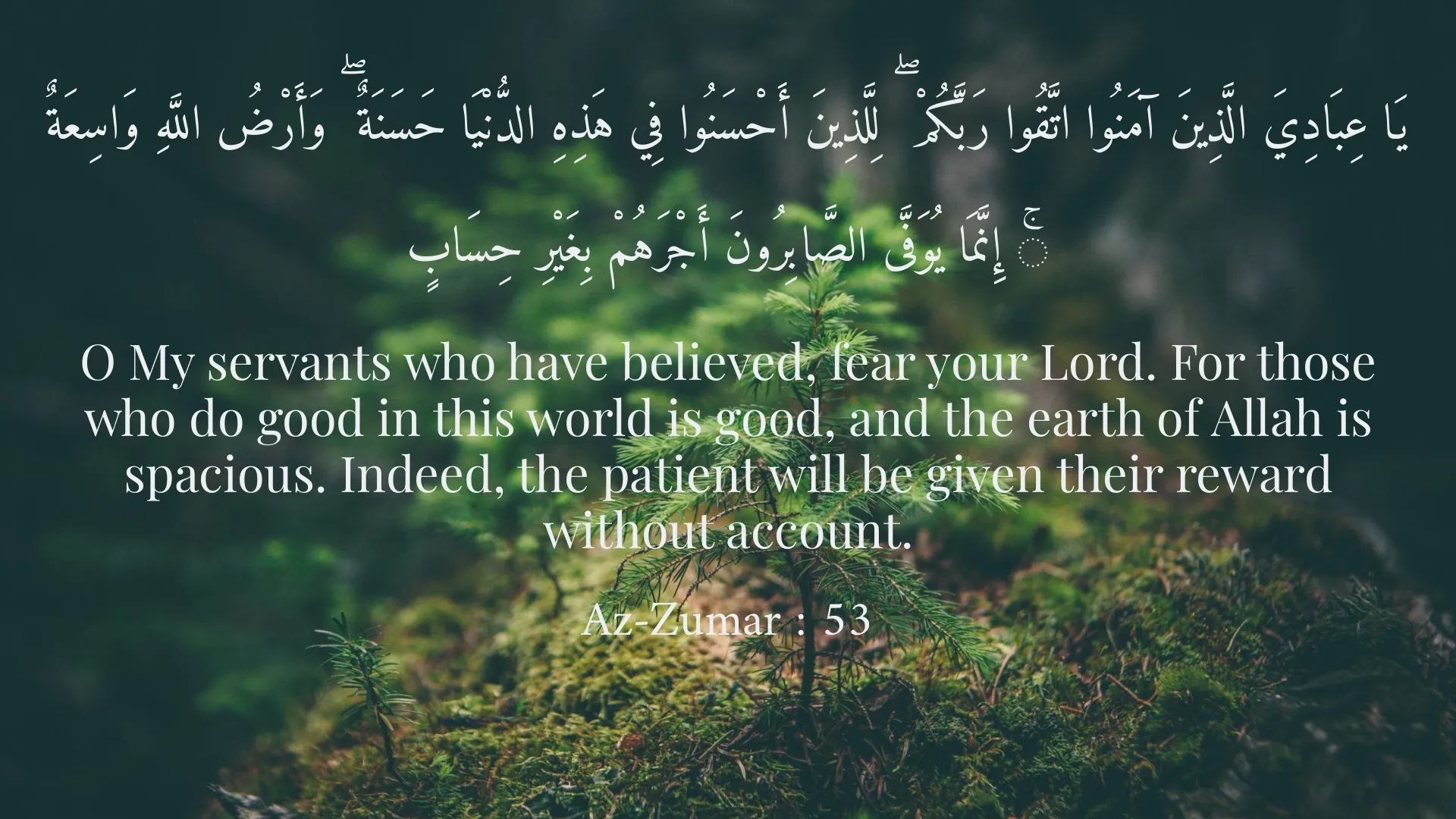
In the Holy Quran, hope in God's mercy is not merely a philosophical concept but a core tenet of Islamic faith. Understanding the nature of God's mercy provides essential guidance for the behavior and mindset of believers. The Quranic verses that emphasize hope in divine mercy reflect a deep understanding of the human condition, acknowledging struggles while encouraging a trust in the Almighty's compassion. The verses serve not only as spiritual encouragement but also as a call to action for believers to embody that mercy in their lives. The first and foremost aspect that merits attention is how Allah directly emphasizes hope in His mercy in Surah Az-Zumar, verse 53, where He states, 'O My servants who have believed, fear your Lord. For those who do good in this world is good, and the earth of Allah is spacious. Indeed, the patient will be given their reward without account.' This verse encapsulates a profound message. Here, Allah is speaking to those who already have faith and urging them to have a sense of hope coupled with fear—fear of His discontent and hope in His everlasting mercy. The phrase 'the patient will be given their reward without account' offers a reassuring perspective that endurance in faith and good deeds will lead to immeasurable rewards, dispelling anxiety and promoting a sense of peace among believers. Furthermore, the assurance that 'no sin is greater than His mercy' signifies that Allah's compassion surpasses our transgressions. This forms a cornerstone of Islamic theology, reinforcing the belief that sincere repentance can always lead one back to divine grace. In everyday life, knowing that one is never too far gone to seek forgiveness can bring a tremendous sense of relief and motivation to change. It creates a safe space for believers to confront their shortcomings, knowing there is always hope for redemption. Moreover, in Surah Al-Baqarah, verse 286, it is stated, 'Allah does not burden a soul beyond that it can bear.' This particular verse highlights the merciful nature of Allah, asserting that even in the face of trials and tribulations, divine assistance is always present. It serves as a reminder that life’s challenges are purposeful, meant to help shape and develop character rather than break an individual down. In tough times, this verse empowers believers, reinforcing the idea that they are not alone in their struggles. Each hardship they face is a test, and the subsequent relief that comes is an embodiment of Allah's mercy. Thus, believers are encouraged to remain steadfast and resilient, with the assurance that their burdens are known and calculated by their Creator. In addition, Surah Al-Imran, verse 135 states, 'And let not those who withhold their provisions think that it is good for them; rather, it is worse for them.' Here, the message is clear: selfishness and withholding kindness leads to loss rather than gain. This warning speaks to an essential quality that believers should strive to possess in their interactions with others—generosity and compassion. It is vital for believers to mirror the mercy they seek from Allah in their everyday lives. This verse challenges them to understand that sharing what has been entrusted to them is a form of divine mercy that brings rewards both materially and spiritually. The connection between faith in God's mercy and the behavior it inspires cannot be overstated. For believers, recognizing this divine attribute fosters a closer relationship with God, enhancing their daily existence. Each interaction and decision becomes intertwined with a broader understanding of Allah’s compassionate nature. The optimistic outlook that stems from the hope in divine mercy encourages honesty, integrity, and altruism. It is a reminder to pause and reflect on their actions, to ask themselves whether they are embodying the very mercy they seek. This realization fosters a community where individuals support one another, sharing blessings rather than hoarding them, and building a society grounded in compassion. The psychological impacts of hope in God's mercy are significant as well. In a world rife with challenges ranging from individual hardship to global issues, maintaining hope becomes crucial. The Islamic belief in God's mercy acts as a buffer against despair. When life becomes overwhelming, believers can turn to their faith, finding solace in the belief that their struggles have meaning and that relief is always round the corner. In fostering a positive mindset, this belief not only transforms personal outlooks but also enchants interpersonal relationships, leading to more cohesive and supportive communities. In summary, the principle of hope in God's mercy as outlined in the Quran serve as both spiritual and practical guidance for believers. From the verses in Surah Az-Zumar to Al-Baqarah and Al-Imran, it is clear that this hope is multifaceted. It emphasizes the importance of patience, faith, and an unwavering belief that God's compassion is boundless. By integrating this understanding into daily life, Muslims are called to create a culture that values mercy, kindness, and generosity. As a foundational principle of human faith, hope reflects not only an aspiration for an individual’s relationship with the Almighty but also for collective societal progress. In a world filled with uncertainty, this hope provides a pathway to peace, guiding believers in their spiritual journey and influencing how they relate to others. Ultimately, hope in God's mercy becomes a beacon in the storm of life, lighting the way toward faith, compassion, and community.
Related Verses
يَا عِبَادِيَ الَّذِينَ آمَنُوا اتَّقُوا رَبَّكُمْ ۖ لِلَّذِينَ أَحْسَنُوا فِي هَذِهِ الدُّنْيَا حَسَنَةٌ ۖ وَأَرْضُ اللَّهِ وَاسِعَةٌ ۚ إِنَّمَا يُوَفَّى الصَّابِرُونَ أَجْرَهُمْ بِغَيْرِ حِسَابٍ
O My servants who have believed, fear your Lord. For those who do good in this world is good, and the earth of Allah is spacious. Indeed, the patient will be given their reward without account.
Az-Zumar : 53
لَا يُكَلِّفُ اللَّهُ نَفْسًا إِلَّا وُسْعَهَا ۚ لَهَا مَا كَسَبَتْ وَعَلَيْهَا مَا اكْتَسَبَتْ ۗ رَبَّنَا لَا تُؤَاخِذْنَا إِن نَّسِينَا أَوْ أَخْطَأْنَا ۚ رَبَّنَا وَلَا تَحْمِلْ عَلَيْنَا إِصْرًا كَمَا حَمَلْتَهُ عَلَى الَّذِينَ مِن قَبْلِنَا ۚ رَبَّنَا وَلَا تُحَمِّلْنَا مَا لَا طَاقَةَ لَنَا بِهِ ۖ وَاعْفُ عَنَّا وَاغْفِرْ لَنَا وَارْحَمْنَا ۗ أَنتَ مَوْلَانَا فَانصُرْنَا عَلَى الْقَوْمِ الْكَافِرِينَ
Allah does not burden a soul beyond that it can bear. It will have [the consequence of] what [good] it has gained, and it will bear [the consequence of] what [evil] it has earned. Our Lord, do not impose blame upon us if we have forgotten or made a mistake. Our Lord, and lay not upon us a burden like that which You laid upon those before us. Our Lord, and burden us not with that which we have no ability to bear. And pardon us; and forgive us; and have mercy upon us. You are our protector, so give us victory over the disbelieving people.
Al-Baqarah : 286
وَالَّذِينَ إِذَا أَصَابَتْهُم مُّصِيبَةٌ قَالُوا إِنَّا لِلَّهِ وَإِنَّا إِلَيْهِ رَاجِعُونَ
And those who, when disaster strikes them, say, 'Indeed we belong to Allah, and indeed to Him we will return.'
Al-Imran : 135
Short Story
Once upon a time, there was a man named Ahmad who was under the pressure of life's difficulties and various problems. He remembered the verses of the Quran and decided to put more hope in God's mercy. In the following days, he paid close attention to all the good signs occurring in his life and realized that with hope, his life became more beautiful and full of blessings. This experience taught Ahmad that hope in God's mercy is not just a sign of faith but can also be a source of peace and happiness.